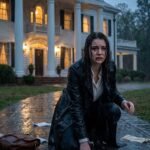
The 77th annual Primetime Emmy Awards delivered the usual fanfare of red carpets, glittering gowns, and Hollywood glamour. But among millions of viewers — and especially within conservative circles — the event left a glaring omission: not a single mention of Charlie Kirk, the conservative activist and founder of Turning Point USA, who was assassinated earlier this month while speaking at Utah Valley University.
For Kirk’s supporters, the silence was not simply oversight. It was a cultural statement — one that felt, in their words, “disgusting, hateful, and flat-out racist.”
A Death That Shook America
Charlie Kirk’s death on September 10, 2025, was headline news across the nation. At just 31, Kirk had become one of the most recognizable voices of the American conservative movement, a fixture on college campuses, cable news, and social media. His assassination was described by law enforcement as a political killing, and his funeral was attended by former President Donald Trump, Vice President JD Vance, and thousands of mourners.
In the wake of his death, vigils sprang up across the country. Turning Point USA announced that over 32,000 requests had poured in within 48 hours from students seeking to start new campus chapters in his honor. Erika Kirk, his widow, has delivered emotional addresses vowing to carry on his mission.
Yet when the entertainment world gathered at the Emmy Awards just weeks later, there was not a single word acknowledging Kirk’s passing.
“If He Had Been Black…”
That silence, critics argue, reflects a deep cultural double standard. Social media was flooded with commentary comparing the treatment of Kirk’s death to past tributes given to other figures.
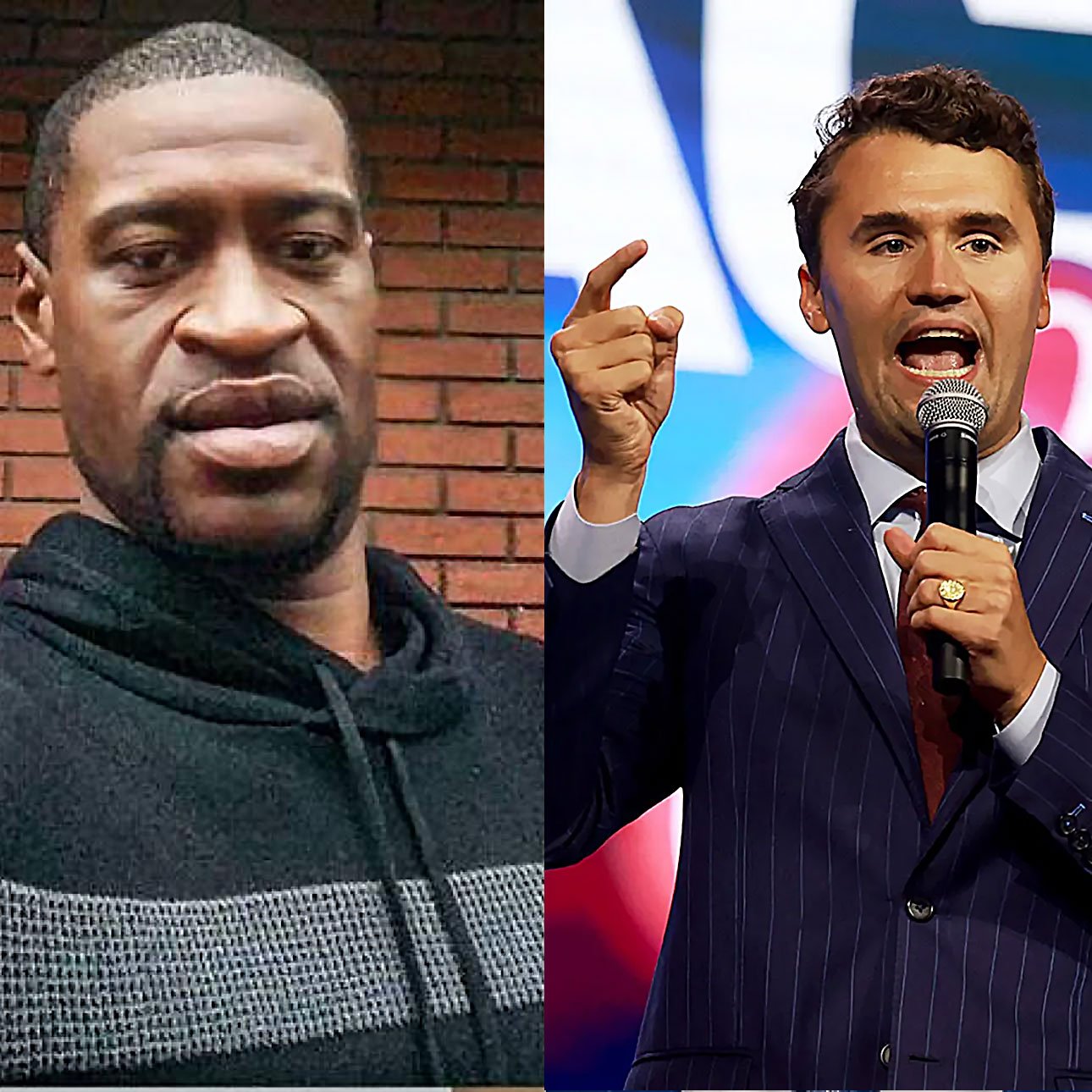
“If Charlie had been black, the treatment would’ve been completely different,” one viral post read. “Look back — George Floyd was mentioned over and over again at past Emmy shows. They had whole speeches dedicated to him. But when it comes to Charlie, a man who dedicated his life to fighting for America, they stay silent. That says it all.”
Indeed, during the 2020 and 2021 Emmy broadcasts, numerous actors and presenters invoked Floyd’s name and legacy in speeches about racial justice. Those moments were widely praised as Hollywood’s moral reckoning after Floyd’s killing sparked global protests.
But this year, when a prominent conservative activist was murdered in what has been called a political assassination, there was nothing.
Racism, Politics, or Hollywood’s Bubble?
The accusation that the Emmy’s silence was “racist” may sound incendiary, but for Kirk’s supporters it fits a pattern: mainstream cultural institutions treat conservative lives as less valuable.
“Hollywood has no problem elevating one narrative while burying another,” conservative commentator Candace Owens argued in a post. “The silence around Charlie proves that their compassion is selective. It’s political. And yes, it’s racist too.”
Others frame the issue less in terms of race and more in terms of politics and ideology. “Hollywood lives in a bubble,” said media analyst Daniel Kessler. “The industry leans overwhelmingly left. To them, Charlie Kirk was a controversial figure, not someone to be honored. But that doesn’t mean his life didn’t matter to millions. The absence was deafening.”
“Charlie Wouldn’t Have Wanted to Be Mentioned”
Some within Kirk’s circle took a different view. Erika Kirk has not directly addressed the Emmy controversy, but several close to her noted that Charlie himself had little regard for Hollywood.
“I don’t think Charlie would have wanted to be mentioned in that crowd,” said Tyler Bowyer, a senior Turning Point USA staffer and longtime friend. “He knew what they thought of him. He never looked to Hollywood for validation. His legacy isn’t in acceptance speeches. It’s in the students he mentored and the movement he built.”
This sentiment has resonated with many who see the silence less as an insult and more as a reminder of the cultural divide Kirk spent his life fighting against.
The Power of Symbolism
Still, symbolism matters. Major award shows like the Emmys, Oscars, and Grammys have long used their platforms to send cultural messages. Moments of silence, tributes, and name-checks can shape how society remembers individuals.
When Kirk’s name went unspoken, it wasn’t lost on his supporters. For them, it confirmed what they already believed: mainstream cultural institutions not only disagree with their politics but actively wish to erase their heroes.
“The Emmys didn’t just forget Charlie,” conservative writer Mollie Hemingway argued. “They erased him. They made a choice. And that choice tells you everything about the cultural battlefield we’re in.”
Hollywood’s Double Standards
The controversy around the Emmys has reignited long-standing criticisms of Hollywood’s selective activism.
-
When George Floyd died, award shows, music ceremonies, and film festivals featured dedications, speeches, and even entire segments highlighting racial injustice.
-
When Charlie Kirk — an activist who dedicated his career to mobilizing young conservatives — was assassinated, the silence was total.
Critics argue this reflects Hollywood’s unwillingness to extend empathy to figures outside its ideological comfort zone. “It’s easy to grieve when it fits the narrative,” Owens said. “It’s harder when it challenges your worldview. That’s when silence becomes the weapon.”
Remembering Charlie Elsewhere
If Hollywood stayed silent, other institutions have not. Religious leaders, political figures, and student organizations have held countless memorials and vigils. Vice President JD Vance even hosted The Charlie Kirk Show in Kirk’s honor, telling listeners: “You ran a good race, my friend. We’ve got it from here.”
At the Kennedy Center, Karoline Leavitt delivered a powerful tribute, praising Kirk for offering young people “an alternative path” at a time when culture pushes them away from faith, family, and country. Across the nation, Turning Point USA events have become rallying points for thousands who view Kirk not just as an activist but as a martyr.
In that sense, Hollywood’s silence may matter less than the grassroots response swelling across America.
The Heaven Argument
Some supporters have also emphasized that recognition on earth, whether from Hollywood or Washington, is not what ultimately defines Kirk’s legacy.
“His name is known in Heaven,” one Turning Point USA staffer wrote. “That’s what matters. And his name is known in the hearts of the millions he influenced. The Emmys can stay silent. History won’t.”
This framing shifts the focus from outrage to inspiration: a reminder that legacies are not built on award shows but on impact.
Reactions From the Entertainment World
Within Hollywood, few have commented directly on the absence. Some insiders quietly suggested that producers may have feared politicizing the show further. “It was already going to be a tense broadcast,” one Emmy staffer told Variety. “Mentioning Kirk would have brought politics into the room in a way that could have backfired.”
But to critics, that logic rings hollow. “They weren’t afraid to mention George Floyd. They weren’t afraid to mention Ukraine or climate change. So why the fear now? It’s not fear. It’s bias,” argued conservative strategist Matt Schlapp.
The Broader Cultural Divide
The Emmy controversy is not just about Charlie Kirk. It is about what — and who — America chooses to honor.
To millions, Kirk’s omission was symbolic of a broader cultural divide: one America that celebrates progressive causes on the grandest stages, and another America that feels its voices are silenced and its heroes ignored.
“This is why people don’t trust Hollywood,” said one attendee at a Phoenix vigil for Kirk. “They only see value in one half of the country. The rest of us don’t exist to them.”
Looking Ahead
Whether the Emmys will address the backlash in future broadcasts remains uncertain. But for conservatives, the damage is done. The silence has already become part of the narrative, a rallying point for those who believe cultural institutions are stacked against them.
At the same time, many in Kirk’s inner circle are urging supporters not to dwell on Hollywood’s rejection but to channel their energy into continuing his mission.
“Charlie would say, don’t get distracted by nonsense,” Erika Kirk said at one vigil. “Keep fighting. Keep building. Keep believing.”
Conclusion: A Legacy Beyond Hollywood
In the end, the Emmy Awards’ silence may matter less in the long run than the groundswell of activism and remembrance rising in Kirk’s name. For his supporters, the double standards and omissions only highlight the stakes of the cultural battle he dedicated his life to fighting.
Yes, Hollywood stayed quiet. But in churches, campus halls, and living rooms across America, Charlie Kirk’s name is spoken daily — with reverence, love, and determination to carry forward his cause.
As one mourner put it: “Charlie’s example is alive. His name is etched in Heaven. And no award show can erase that.”