‘You Can Move To The Laundry Room Or Leave,’ My Dad Announced At Thanksgiving Dinner. ‘You Understand, Don’t You?’ My Brother Smirked. I Walked Out. But Days Later, Dad Panicked: ‘Wait… Camila Covered Everything?’
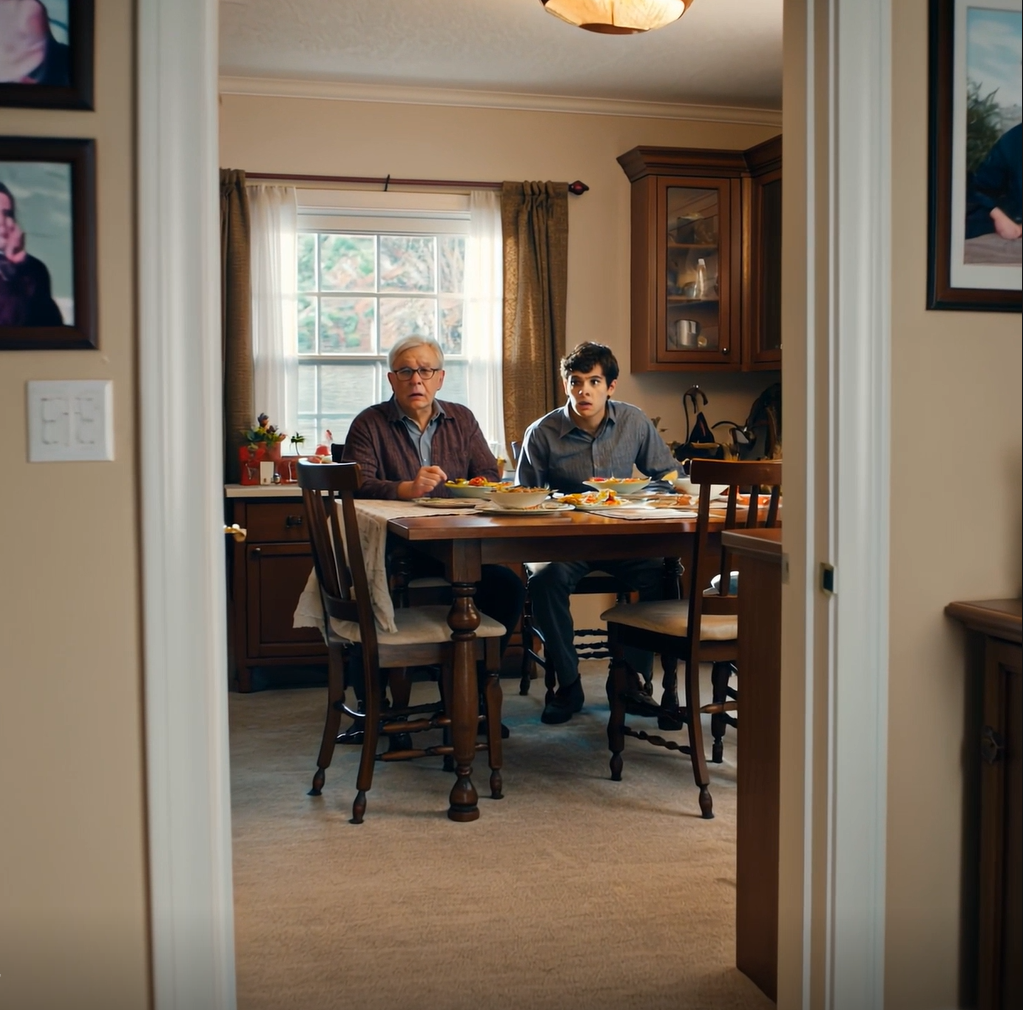
“You can move to the laundry room or leave,” my dad announced at Thanksgiving dinner.
“You understand, don’t you?” my brother smirked.
I walked out, but days later, Dad panicked. “Wait, Camila covered everything, even my medication.”
My name is Camila. I’m 27 years old, and I’ve been living with my dad in Kansas City, Missouri, for the past five years. Most people would find that arrangement unusual for someone my age, but there was a reason I stayed. My dad had been diagnosed with diabetes and high blood pressure three years ago, and his medications were expensive. Really expensive. Between his prescriptions, the house bills, groceries, and everything else, I’d been covering most of our living expenses while working as a dental hygienist at a clinic downtown.
My brother Jacob was 32 and had been living in Denver with his wife Stephanie for the past eight years. He rarely visited—maybe twice a year if we were lucky—and never offered to help financially, not once. When Dad got sick, Jacob’s response was to send a fruit basket and a card that said, “Get well soon.” That was it. No phone calls asking how the treatment was going. No offers to split medication costs. Nothing.
I didn’t mind taking care of Dad. Honestly, I didn’t. After Mom passed away when I was 19, Dad had been there for me through everything. He’d helped me through nursing school, encouraged me when I switched to dental hygiene, and never once made me feel like a burden. So when he got sick, stepping up felt natural. It felt right.
But Jacob had different ideas about family responsibility. The trouble started three weeks before Thanksgiving when Jacob called Dad out of nowhere. I was in the kitchen making dinner when I heard Dad’s voice get excited in the living room.
“Jacob, what a surprise. How are you?”
I couldn’t hear Jacob’s side of the conversation, but I watched Dad’s expression change from happy to concerned to something I couldn’t quite place. When he hung up, he looked uncomfortable.
“Everything okay?” I asked, bringing him his evening pills with a glass of water.
“Jacob and Stephanie are having some trouble,” Dad said slowly. “Financial trouble. He didn’t give me all the details, but it sounds serious. They might need to move back here for a while. Just temporarily,” he said. “Maybe a few months while they get back on their feet.”
My stomach dropped. “Move back here—into this house?”
“Well, yes. Where else would they go?” Dad looked at me with those tired eyes that always made me feel guilty for questioning anything. “He’s my son, Camila. Family helps family.”
Family helps family. The words stung because I’d been helping family for five years straight, but apparently that only counted when it was convenient.
“Okay,” I said quietly.
“When?” I asked.
“Mid-November, before Thanksgiving, probably.”
That gave us less than three weeks. I tried to push down the anxiety that bubbled up in my chest. Our house wasn’t huge. Three bedrooms, one bathroom, a small kitchen and living room. I had the second bedroom. Dad had the master. And the third bedroom had been converted into a storage room years ago. Where exactly were Jacob and Stephanie supposed to sleep?
The answer came two weeks later when Jacob’s truck pulled up in our driveway on a cold Tuesday afternoon. I was just getting home from work, still in my scrubs, when I saw them unloading boxes. Lots of boxes. Jacob saw me and waved.
“Hey, sis. Surprise! We’re a few days early.”
Stephanie stood beside him, arms crossed, looking at our modest house like it was a prison sentence. She’d always been that way. Everything about our family, our house, our city was beneath her. I’d learned to ignore it over the years.
“Dad didn’t mention you were coming today,” I said, trying to keep my voice neutral.
“Last-minute decision. The landlord in Denver wanted us out by the end of the month, so we figured why wait.” Jacob started hauling boxes toward the front door. “Dad’s inside. He’s helping us figure out the sleeping arrangements.”
That phrase sent alarm bells ringing in my head. Sleeping arrangements. I followed them inside, my heart pounding. Dad was in the hallway looking stressed. When he saw me, he attempted a smile that didn’t reach his eyes.
“Camila, good—you’re home. We need to talk about rooms.”
“The storage room?” I suggested hopefully. “We could clear it out.”
“It’s full of junk and there’s no closet,” Stephanie interjected, wrinkling her nose. “That wouldn’t work at all.”
Jacob nodded. “We were thinking since you’re just one person, maybe you could take the laundry room. We could put a futon in there or something. It’s only temporary, after all. A few months at most.”
I stared at him. “The laundry room? You want me to sleep in the laundry room?”
“It’s not that small,” Jacob said defensively. “And like I said, it’s temporary.”
I looked at Dad, waiting for him to say something, to stand up for me, but he just stood there shifting his weight from foot to foot, not meeting my eyes.
“What about all my stuff?” I asked quietly. “My bed, my dresser, my clothes.”
“We can store most of it,” Stephanie said briskly, as if this was already decided. “You really don’t need that much space anyway.”
That night, I barely slept on the futon Jacob had set up in the laundry room. The space smelled like detergent and mildew, and every time the water heater kicked on, the whole room hummed. I lay there staring at the ceiling, my clothes hanging on a tension rod Jacob had installed over the utility sink. My entire life compressed into 100 square feet.
The next morning, I found Stephanie already in the kitchen making coffee. She’d rearranged everything. My favorite mugs were shoved in the back of the cabinet. The coffee maker I’d bought last year was replaced with some expensive espresso machine they’d brought from Denver.
“Morning,” I said, trying to find where she’d moved the bread.
“Oh, that’s in the pantry now. I reorganized. The old system didn’t make any sense.”
She didn’t look up from her phone. I found the bread and made toast in silence, then gathered my things for work. When I reached for my lunch bag in the fridge, it wasn’t there.
“Did you see a blue lunch bag?” I asked.
“Oh, that old thing. It was taking up space, so I tossed it. You can just buy lunch today.” Stephanie sipped her espresso. “Besides, you probably eat out all the time anyway, right? Working at a dentist’s office, you must make decent money.”
I didn’t bother correcting her about my job title. That lunch bag was mine. “It was falling apart. I’ll buy you a new one if it’s that important.” She waved her hand dismissively.
I left without another word. My jaw clenched so tight it ached.
The next few weeks became a masterclass in being made to feel unwelcome in my own home. Jacob and Stephanie took over everything. They rearranged the furniture, complained about the neighborhood, and treated the house like a hotel where I was the inconvenient staff member who kept getting in the way. Stephanie started making comments about my schedule.
“You’re home a lot for someone who works full-time,” she observed one evening as I made dinner. “Don’t dental offices work long hours?”
“I work eight to five, Monday through Friday,” I replied, stirring pasta. “Pretty standard.”
“Hmm. Jacob works remote now—sixty hours a week minimum. That’s a real work ethic.”
I bit my tongue and said nothing.
The breaking point came on Thanksgiving Day. I’d been looking forward to it because I thought maybe, just maybe, we could have one normal family meal. I’d volunteered to cook the turkey and make my grandmother’s stuffing recipe, the one Dad loved. But when I came out of the laundry room that morning, I found Stephanie had already started cooking. She’d taken over the entire kitchen.
“I’m doing Thanksgiving this year,” she announced. “No offense, but I have standards.”
“I was going to make Grandma’s stuffing,” I said quietly.
“That old recipe? Way too much butter. I’m doing a quinoa version. Much healthier.”
Dad walked in and saw my face. “Camila makes wonderful stuffing,” he said weakly.
“Dad, you have diabetes and high blood pressure,” Jacob interjected, coming up behind him. “Stephanie’s way is better for you. You should thank her for caring about your health.”
I wanted to scream that I’d been caring about Dad’s health for three years—making sure he took his pills, monitoring his diet, taking him to every doctor’s appointment. But I swallowed it down.
The dinner itself was tense. Stephanie’s quinoa stuffing was bland, and the turkey was dry, but Jacob praised everything like it was a five-star meal. Dad picked at his food, occasionally glancing at me with an apologetic expression I was getting tired of seeing. After dinner, while I was washing dishes—because, of course, no one else volunteered—Jacob and Stephanie cornered Dad in the living room. I couldn’t hear everything, but I caught fragments.
“Not just a few months.”
“Makes sense.”
“Already settled.”
“Fair. She’s taking up space.”
My hands froze in the soapy water. I dried them and walked to the living room doorway.
“What’s going on?”
Dad looked uncomfortable again. That expression was becoming permanent on his face. “Jacob and Stephanie were just explaining that their situation in Denver is more complicated than they thought. They might need to stay longer.”
“How much longer?”
“Indefinitely,” Stephanie said, not even pretending to sound apologetic. “Until we figure things out.”
“Which brings us to a related topic,” Jacob added, looking at Dad instead of me. “The house is getting crowded. Three adults is manageable, but four is pushing it. And let’s be honest, Camila is the only one without a spouse here. It doesn’t make sense for her to take up a whole bedroom when she could easily get her own place.”
I felt like I’d been slapped. “This is my home.”
“It’s Dad’s home,” Jacob corrected, “and he needs to think about what’s best for him long term. Stephanie and I are planning to stay and help him. Really help him, not just throw money at the problem.”
“Throw money at the problem.” My voice came out sharper than I intended. “Is that what you think I’ve been doing?”
“We’re just saying that Dad needs more than financial support,” Stephanie chimed in. “He needs family around who care about more than just paying bills.”
Dad finally spoke, but his words shattered something inside me. “Camila, maybe they have a point. You’re young. You should be building your own life, not spending your twenties taking care of your old father. And Jacob and Stephanie are here now. They can help.”
Help. The word was laughable. They’d been here three weeks and hadn’t contributed a single dollar to groceries, utilities, or anything else.
“So, what are you saying?” I asked Dad directly. “You want me to leave?”
“Not leave exactly,” he hedged. “Just—maybe it’s time to think about your future. You could get your own apartment, live your life.”
Jacob nodded enthusiastically. “Exactly. Or you could take the laundry room if you really want to stay. We just need a proper bedroom.”
The words hung in the air like poison. I looked at my father, the man I’d spent the last five years caring for—the man whose medical bills I’d paid without complaint, whose medications I’d picked up every month, whose doctor’s appointments I’d rearranged my work schedule to attend. And he was telling me to move to the laundry room or leave.
“You can move to the laundry room or leave,” Dad said finally, unable to meet my eyes.
“You understand, don’t you?” Jacob repeated, smirking.
He actually smirked, like this was all some kind of game he’d won.
I didn’t cry. I didn’t yell. I just walked back to that miserable laundry room, packed my clothes into the two suitcases I’d brought from college, and called my friend Kelly. She’d been telling me for months that I could crash at her place anytime. I’d always laughed it off, never thinking I’d actually need to take her up on it.
“Come over,” Kelly said immediately when I explained the situation. “Stay as long as you need.”
An hour later, I was loading my car. Dad came outside as I was putting the last suitcase in the trunk.
“Camila, you don’t have to do this right now. Sleep on it. We can talk more tomorrow.”
“There’s nothing to talk about,” I said calmly. “You made your choice. Jacob and Stephanie need the space more than I do. I get it.”
“It’s not like that.”
“It’s exactly like that.” I closed the trunk. “I’ll still help with your medications, Dad. I’m not abandoning you, but I’m not staying where I’m not wanted.”
I drove to Kelly’s apartment in Midtown, my hands shaking on the steering wheel. Kelly had a spare bedroom she’d been using for storage, and she helped me clear it out that night. We didn’t talk much. She just hugged me when I finally broke down crying at midnight.
The next few days were a blur. I went to work, came home to Kelly’s, and tried to figure out what to do next. I’d been paying for everything at Dad’s house, which meant my savings account was pretty thin. I’d need to find my own place eventually, but apartments in Kansas City weren’t cheap.
On the fourth day after I left, I got a call from Dad. His voice sounded off.
“Camila, I need your help with something.”
“What is it?”
“I’m trying to refill my prescriptions, but the pharmacy says there’s an issue with payment. They’re saying the card on file was declined.”
My stomach tightened. “That’s my card, Dad. I haven’t had a chance to update it yet with my new address.”
“Can you call them? I need these medications. I’m almost out.”
“Sure, I’ll take care of it.”
I hung up and sat there on Kelly’s couch staring at my phone. Then something occurred to me. A conversation I’d had with Dad years ago, right after his diagnosis, came flooding back. He’d been stressed about the cost of everything until I explained that I’d handle it. But somewhere in that conversation, he’d made an assumption.
“Thank goodness for Medicare,” he’d said. “At least that covers most of it.”
I’d started to correct him—to explain that Medicare didn’t cover everything and that the supplemental plan and prescriptions were expensive—but he’d been so relieved that I’d let it slide. Over time, I realized he’d somehow convinced himself that the government was covering his health care costs. He never asked about the bills, never questioned where the money came from. He just assumed, and Jacob and Stephanie definitely assumed it, too. That conversation at Thanksgiving about me throwing money at the problem made that clear. They thought I was just contributing some extra cash here and there, not that I was literally paying for everything.
I called Kelly over. “I need to show you something.”
I pulled up my bank statements from the past three years on my laptop. The numbers were staggering when you looked at them altogether. Dad’s medications alone ran about $800 a month. Then there was his supplemental insurance premium—another $300. The mortgage payment was $900. Utilities averaged $200. Groceries, gas, household expenses—another $400 at minimum.
“Camila,” Kelly breathed, looking at the screen. “You’ve been paying over $2,500 a month. Sometimes more. When he needed the endocrinologist visits, those were expensive even with insurance. Does your dad know? Does Jacob?”
“I don’t think so. Dad never asked about the bills. He just assumed Medicare covered everything. And Jacob’s never been involved enough to know any different.”
Kelly sat back. “So they kicked you out thinking you were just helping a little bit, not realizing you were funding his entire life, pretty much. What are you going to do?”
I thought about it for a long moment. The vindictive part of me wanted them to figure it out the hard way, but the responsible part—the part that still loved my dad despite everything—knew I couldn’t just abandon him.
“I’m going to talk to him,” I said finally. “But not yet. Let them handle things for a few weeks. Let them see what it actually costs to take care of Dad. Then we’ll have a conversation about expectations and responsibilities.”
Kelly grinned. “I like this plan.”
The pharmacy called again the next day and the day after that. Each time I told them I was working on the payment issue. By day seven, Dad called me three times in one day.
“Camila, I really need those medications. The pharmacy says they can’t fill them without payment.”
“I know, Dad. I’m figuring it out.”
“Can’t you just call them with your card number?”
“It’s not that simple. There are some things I need to take care of first.”
He sounded frustrated. “I don’t understand why this is so complicated. Can’t Jacob just pay for it and you reimburse him?”
There it was. The assumption that these medications cost maybe $50 or $100, not the $800 they actually ran.
“Sure, Dad. Have Jacob call the pharmacy and put his card on file.”
Jacob called me two hours later, and his voice had none of the smug confidence it had carried on Thanksgiving.
“Camila, what the hell? The pharmacy just quoted me $800 for Dad’s medications. That can’t be right.”
I kept my voice steady. “That’s the monthly cost. Sometimes it’s more depending on what the doctor prescribes.”
“Eight hundred? Are you serious? I thought Medicare covered this stuff.”
“Medicare Part B covers some things. The supplemental plan covers more, but there are still co-pays and medications that aren’t fully covered. The diabetes medications alone are expensive.”
“How long have you been paying this?”
“Every month for the past three years.”
Silence on the other end. I could practically hear the calculations running through his head.
“That’s like—that’s almost $10,000 a year just on medications.”
“More, actually, when you factor in the doctor visits and the supplemental insurance premium.”
More silence. “Then why didn’t you tell us? Why didn’t Dad tell us?”
“Dad doesn’t know the actual numbers. He thinks Medicare handles everything. I never corrected him because what was the point? The bills needed to be paid regardless of who knew about them.”
“Well, we can’t afford $800 right now. We just moved across the country. We’ve got expenses.”
“Then I guess you’ll need to figure something out,” I said calmly. “Maybe talk to Dad about applying for assistance programs or look into cheaper generic alternatives. The pharmacist can help with that.”
“Camila, come on. You can’t just stop paying for this. He needs these medications.”
“I’m not stopping permanently. I’m just taking a break while you and Stephanie handle things. You said you were there to help him. This is helping.”
“That’s not what I meant, and you know it.”
“Then what did you mean, Jacob? When you said you were there to really help, not just throw money at the problem, what exactly did you think helping looked like?”
He didn’t have an answer for that. I hung up and immediately felt guilty. But Kelly, who’d been listening to the whole conversation, shook her head.
“Don’t you dare feel bad. They literally kicked you out of your home. They can handle Dad’s bills for a few weeks.”
She was right, but it didn’t make the guilt go away. That night, I couldn’t sleep. I kept imagining Dad without his blood pressure medication, his glucose levels spiking, ending up in the emergency room. By 3:00 in the morning, I’d convinced myself I was being cruel. But then my phone buzzed with a text from Stephanie.
“This is ridiculous. Your father’s health is at stake, and you’re playing games. Grow up.”
The guilt evaporated. I turned off my phone and went to sleep.
The next morning, I got a call from Dad’s doctor’s office. They needed to confirm his appointment for the following week and verify insurance information. I’d always handled his appointments, keeping everything organized in a binder I’d left behind at the house.
“I’m not managing his care anymore,” I told the receptionist. “You’ll need to speak with Jacob or Stephanie.”
“Oh, okay. Do you have their contact information?”
I gave them Jacob’s number and hung up. An hour later, Jacob texted.
“Why is Dad’s doctor calling me? Where’s his insurance card? Where are his medical records?”
I didn’t respond.
Two days later, the mortgage payment bounced. I’d been paying it directly from my account through automatic withdrawal, but I’d canceled that the day after I moved out. The bank called Dad, who called me in a panic.
“Camila, the bank says the mortgage payment didn’t go through. There must be some mistake.”
“It’s not a mistake, Dad. I canceled the automatic payment.”
“Why would you do that? The house could go into foreclosure.”
“Then Jacob and Stephanie should make the payment. It’s $900 due on the first of the month.”
“Nine hundred? I thought it was less than that.”
“It’s been $900 for years, Dad. I’ve been paying it every month.”
The silence on his end was deafening. Finally, he said quietly, “How much have you been paying altogether?”
“For what?”
“For everything. The mortgage, the medications, all of it.”
I took a deep breath. “Around $2,500 to $3,000 a month, depending on the month. More when you had specialist appointments or needed extra medications.”
“Twenty-five hundred.” His voice trailed off. “Camila, I didn’t know. I thought Medicare was covering most of it. I thought you were just helping with groceries and utilities.”
“I know you thought that, Dad. I didn’t correct you because you were stressed enough about being sick. I figured it didn’t matter as long as the bills were paid.”
“But that’s—over the past three years—that’s around $90,000, give or take.”
He didn’t say anything for a long moment. When he spoke again, his voice was shaky.
“I need to talk to Jacob.”
“Good idea,” I said, and hung up.
Kelly came home from work that evening to find me stress-eating ice cream on her couch.
“Rough day?”
“I told Dad how much I’ve actually been paying. I think he’s in shock.”
“Good. He should be.” Kelly grabbed a spoon and joined me. “What do you think Jacob’s going to do?”
“Probably panic. He and Stephanie have been living beyond their means for years. That’s why they had to move back. There’s no way they can afford to cover everything.”
“So, what’s your endgame here? Just curious.”
I thought about it. “Honestly, I want them to understand what I’ve been doing. I want them to appreciate that I wasn’t just throwing money at a problem. I was sacrificing my own future, my own savings, my own life to take care of Dad. And I want an apology for being treated like I was the burden.”
“Fair enough. Think you’ll get it?”
“Probably not from Jacob. Maybe from Dad.”
The next few days were quiet. Too quiet. No calls, no texts, nothing. I started to worry that something had happened—that Dad had ended up in the hospital or worse. But I forced myself to wait. They’d asked for this. They’d wanted me out of the way so they could handle things.
On day twelve after I’d left, Stephanie showed up at Kelly’s apartment. I saw her through the peephole, arms crossed, face furious. I almost didn’t open the door.
“We need to talk,” she said when I finally let her in.
“About what?”
“About the fact that you’ve left your father high and dry. About the fact that his utilities are about to be shut off because apparently you were paying those, too. About the fact that he’s almost out of his medications, and Jacob and I don’t have $800 to spare right now.”
I gestured for Stephanie to sit down, but she remained standing, her arms crossed tightly across her chest. Kelly had quietly moved to her bedroom to give us privacy, though I knew she was listening.
“You’re right,” I said calmly. “I was paying the utilities and the medications and the mortgage and the groceries and pretty much everything else.”
“Well, you can’t just stop. That’s abandonment.”
“Is it? Because from where I’m standing, I was abandoned. Kicked out of my home so you two could have a comfortable bedroom. Told to sleep in the laundry room or leave. Those were my options. Remember?”
Stephanie’s face flushed. “That was different. We needed the space.”
“And I needed a home. But nobody cared about that.”
“You’re being dramatic. We didn’t kick you out. We just suggested you might be more comfortable elsewhere.”
“You threw away my lunch bag. You took over my bedroom. You treated me like hired help who was getting in the way. And when I finally left, nobody stopped me. Nobody said, ‘Wait, we need to talk about this.’ Nobody apologized.”
My voice was rising now. All the anger I’d been suppressing for weeks bubbled to the surface.
“You wanted me gone, so I’m gone. Now you get to handle everything I was handling.”
“Your father could die without his medications.”
“Then you’d better figure out how to pay for them.”
“We don’t have that kind of money right now. We’re still recovering from Denver.”
“And I don’t have that kind of money anymore either. I’ve spent $90,000 over three years taking care of Dad. My savings are gone. I’m 27 years old with almost nothing in my bank account because I prioritized his health over my own future. I can’t afford to keep doing this.”
Stephanie’s expression shifted slightly. “Ninety thousand, give or take?”
“Want to see the bank statements?”
She sat down then, heavily, on Kelly’s couch. “Jacob said it was expensive, but I didn’t realize.”
“Nobody realized—that was the problem. You all assumed I was just chipping in a little here and there. You had no idea what it actually cost to keep Dad healthy and the house running. And instead of asking, instead of being grateful, you treated me like I was the problem.”
“What do you want from us?” Stephanie asked finally.
“I want an apology. I want acknowledgment of what I’ve done. And I want to know that if I come back to help, things will be different.”
“Come back? You’d move back in?”
“Maybe, if I’m treated with respect, if my contributions are recognized, if I get my bedroom back.” I paused. “But honestly, Stephanie, I don’t think that’s going to happen. I think you and Jacob are going to resent me even more now that you know the truth. You’re going to feel guilty and defensive, and that’s going to turn into anger directed at me.”
She didn’t deny it. That told me everything I needed to know.
After Stephanie left, Kelly emerged from her bedroom.
“You handled that well.”
“Did I? I feel like I just made everything worse.”
“You set boundaries. That’s healthy.”
That night, Dad called. His voice sounded older somehow—tired in a way I’d never heard before.
“Camila, I need to apologize.”
“Okay.”
“I had no idea how much you’ve been doing. No idea what you’ve been paying. Jacob showed me some numbers and I—I couldn’t believe it. All this time I thought Medicare was covering things. I thought you were just helping out a little bit.”
“I know, Dad.”
“Why didn’t you tell me?”
“Because you were already stressed about being sick. I didn’t want to add financial stress on top of that. I thought I was helping by just quietly taking care of things.”
“You were helping. You’ve been saving my life, Camila—literally. And I repaid you by—” His voice broke. “By choosing Jacob over you, by letting them push you out. I’m so sorry.”
The apology should have felt better than it did. Instead, I just felt tired.
“What are you going to do, Dad? About the bills, the medications, everything.”
“Jacob and I had a long talk. A really long talk. He’s going to take over the mortgage payment. Stephanie is going to start paying for groceries. They’re going to contribute while they’re living here.”
“That’s good. But the medications, the insurance, the medical bills—”
“Camila, that’s more than they can handle right now. They’re already stretched thin. I talked to my doctor about cheaper alternatives and we’re working on that. I also applied for some assistance programs, but in the meantime—”
“You want me to keep paying for the medications.”
“Just until we figure out the assistance programs. I know I have no right to ask. I know I don’t deserve your help after what I did.”
I closed my eyes. This was the moment I’d been dreading—the moment where I had to choose between holding my ground and taking care of my father.
“I’ll pay for this month’s medications,” I said finally. “Just this month. After that, you need to have a plan in place. The assistance programs, cheaper alternatives—whatever it takes. I can’t keep draining my savings, Dad. I need to think about my own future.”
“I understand. Thank you, Camila. Thank you so much.”
“But, Dad, I’m not moving back. Not right now. Maybe not ever. I need space from all of this.”
“I understand that, too. I don’t blame you.”
After we hung up, I sat on Kelly’s couch and cried—not from sadness exactly, but from the sheer emotional exhaustion of it all. Kelly sat beside me and didn’t say anything. She just handed me tissues and let me cry.
The next morning, I called the pharmacy and paid for Dad’s medications. $847 that I couldn’t really afford but couldn’t not pay. When I checked my bank balance afterward, I had less than $2,000 left in savings. Years of work, years of sacrifice. And this is where I’d ended up.
But something shifted in me that day. I realized I couldn’t keep living like this—couldn’t keep putting everyone else first at the expense of my own well-being. I started looking for a second job, something I could do on weekends to rebuild my savings. I also started looking for my own apartment—something small and affordable that would be truly mine.
Kelly found me scrolling through apartment listings that evening.
“You sure about this? You can stay here as long as you need.”
“I know, and I’m grateful, but I need my own space. I need to build my own life, separate from all the drama with my family.”
“Good for you. You deserve that.”
Two weeks later, I found a studio apartment in Midtown, not far from Kelly’s place. It was small but clean, with hardwood floors and good natural light. The rent was manageable, especially with the weekend job I’d picked up doing administrative work for a catering company. Moving into my own place felt like starting over. I didn’t have much furniture—just a bed, a small table, and some kitchen basics. But it was mine. Nobody could tell me to move to the laundry room. Nobody could throw away my things or rearrange my space. For the first time in weeks, I could breathe.
Dad called a few days after I moved in.
“Camila, I got approved for one of the assistance programs. It’s going to cover about 60% of my medication costs.”
“That’s great, Dad.”
“It is. And Jacob and Stephanie have been contributing to the household expenses like they promised. Things are better.”
“I’m glad.”
“Will you come over for dinner sometime? I’d like to see you—see your new place.”
“Maybe. I need a little more time.”
He accepted that without argument, which surprised me. Maybe he was finally starting to understand the damage that had been done. But understanding didn’t mean things were fixed. A week later, I got a call from Stephanie.
“We need to talk about Thanksgiving.”
“Thanksgiving? That’s months away.”
“I’m planning early. I want to make sure everyone’s on the same page. We’d like you to come. Obviously, it would mean a lot to your father.”
“I’ll think about it.”
“Also, we’re going to need help with the cost of the meal. Jacob and I are still getting back on our feet financially. If you could contribute maybe $200 or $300 for groceries, that would help.”
I nearly laughed out loud. “No.”
“No? But you always help with family expenses.”
“I’m not family anymore, remember? You made that pretty clear.”
“Don’t be ridiculous. Of course you’re family.”
“Family doesn’t get kicked out of their home, Stephanie. Family doesn’t get told to sleep in the laundry room. Family doesn’t get their contributions ignored and dismissed. You want to host Thanksgiving? Great. You pay for it. I’m not your ATM.”
I hung up before she could respond. Kelly found me pacing my apartment afterward.
“What happened?”
“Stephanie wanted me to pay for Thanksgiving dinner. Can you believe that? After everything, she actually had the nerve to ask me for money.”
“What did you say?”
“I said no—emphatically.”
Kelly grinned. “Good. You’re learning.”
But the phone calls didn’t stop. Over the next month, I got requests for help with various expenses. The water heater needed to be replaced—could I chip in? The car needed new tires—could I help? Dad needed to see a specialist—could I cover the copay? Each time I said no. Each time it got a little easier.
Then something unexpected happened. Jacob showed up at my apartment one Saturday morning looking haggard and defeated.
“Can I come in?”
I almost said no, but something about his expression stopped me. He looked genuinely distressed—not angry or entitled, just tired.
“Fine, but I have plans in an hour, so make it quick.”
He sat at my small kitchen table and put his head in his hands. “Stephanie left.”
“What?”
“She left. Went back to Denver three days ago. Said she couldn’t handle living in Dad’s house anymore.”
“Couldn’t handle Kansas City?”
“Couldn’t handle being broke.”
I sat down across from him, stunned. “Are you serious?”
“Dead serious. She said I could stay and deal with Dad on my own. She’s filing for divorce.”
“Jacob, I’m sorry.”
“Don’t be. She was right to leave. This whole thing has been a disaster from the start.” He looked up at me, and I saw something I’d never seen in my brother’s face before. Humility. “I screwed up, Camila. Big time. I thought moving back here would be easy. I thought Dad didn’t need much help. I thought you were being dramatic about the bills and the expenses. I had no idea. And now you do.”
“Now I do. And I’m drowning. The mortgage alone is killing me. And I’m still looking for steady work. I’ve got freelance gigs, but nothing permanent. I can’t afford to keep living here, but I can’t afford to leave either.”
“What do you want from me, Jacob?”
“Nothing. I’m not here to ask for money or help. I’m here to apologize. Really apologize—not just say the words. What Stephanie and I did to you was wrong. Kicking you out, taking your room, dismissing everything you’d done for Dad—it was all wrong. And I’m sorry.”
The apology hung in the air between us. Part of me wanted to throw it back in his face, to tell him it was too little, too late. But another part of me, the part that remembered when we were kids and actually liked each other, wanted to believe he meant it.
“Thank you,” I said finally. “I appreciate that.”
“I’m going to move out,” he continued. “I found a cheap room to rent across town. Dad’s not happy about it, but I can’t keep living there. I’ll still help him with what I can, but I need to figure out my own life first.”
“That’s probably smart.”
“Yeah.” He stood to leave, then paused at the door. “For what it’s worth, you were a better child to Dad than I ever was. You actually showed up when it mattered.”
After he left, I sat in my quiet apartment and processed everything. Stephanie was gone. Jacob was moving out. Dad was essentially on his own again. And somehow, I didn’t feel guilty about any of it.
That night, Dad called.
“Jacob told you what happened.”
“He did.”
“I’m going to be by myself again. Jacob’s moving out next week.”
“I know.”
“I was thinking—maybe you could move back. I know that’s a lot to ask, but—”
“No, Dad. No, I’m not moving back. I have my own place now, my own life, and I like it.”
“But I need help. I can’t manage everything on my own.”
“Then hire help. There are services that help seniors with daily tasks, medication management, all of that. You can afford it now that you’re not supporting two extra adults.”
“That’s not the same as family.”
“Maybe not, but family is supposed to be a two-way street, Dad. It’s not supposed to be one person sacrificing everything while everyone else takes and takes. I’m done sacrificing. I’m 27 years old and I need to start living for myself.”
The silence on his end was long and uncomfortable.
“I understand,” he said finally. “I don’t like it, but I understand.”
Three months after that conversation, I was thriving. The second job with the catering company had turned into a full-time opportunity as their office manager, which paid significantly more than my dental hygienist position. I kept both jobs—working some evening and weekend shifts at the dental clinic—because I genuinely enjoyed it. But the financial security of two incomes changed everything. My savings account, which had been nearly empty, started to rebuild. I bought actual furniture for my apartment. I treated myself to things I’d denied myself for years, like decent clothes and the occasional dinner out with Kelly. For the first time since Mom died, I felt like I was living my own life instead of existing in service to someone else’s needs.
Dad and I spoke occasionally—brief phone calls where he’d update me on his health and I’d offer polite responses. He’d figured out the assistance programs, found cheaper medication alternatives, and hired a part-time aide who helped with grocery shopping and household tasks. He was managing, though he made sure I knew it wasn’t easy. Jacob had indeed moved out and was slowly rebuilding his life. His divorce from Stephanie was proceeding, though not amicably. He’d found steady freelance work as a graphic designer and seemed genuinely humbled by the whole experience. We’d grabbed coffee a few times—awkward attempts at rebuilding some kind of sibling relationship—but we weren’t close. The damage ran too deep.
Then one Tuesday in February, I got a call from an unknown number.
“Is this Camila?”
“Yes. Who’s this?”
“This is Margaret from Community Home Health Services. I’m the aide assigned to help your father. I’m calling because I’m concerned about some things I’ve observed during my visits.”
My stomach tightened. “What kind of things?”
“Your father has mentioned several times that you abandoned him, that you refuse to help him despite being financially capable. He’s told me you’re selfish and that you’ve left him struggling while you live comfortably. I normally wouldn’t get involved in family matters, but I thought you should know what he’s been saying.”
Heat flooded my face. “He said I abandoned him?”
“Multiple times. He seems quite bitter about it.”
“Did he mention that he kicked me out of the house to make room for my brother and sister-in-law—or that I paid nearly all his expenses for three years before that happened?”
Margaret was quiet for a moment. “No, he didn’t mention any of that.”
“Of course he didn’t.” I took a deep breath. “Thank you for calling, Margaret. I appreciate you letting me know.”
After I hung up, I sat staring at my phone, anger building in my chest. Dad was telling people I’d abandoned him. He was painting himself as the victim and me as the villain, conveniently leaving out every detail that made him look bad. I called Jacob.
“Have you talked to Dad lately?”
“Yeah, last week. Why?”
“Has he been complaining about me to you?”
Jacob hesitated. “He’s mentioned that he wishes you were more involved, that he feels like you’ve cut him off.”
“He’s telling his home health aide that I abandoned him—that I’m selfish and refusing to help.”
“Camila, I’m sure he’s just—”
“Just what? Just rewriting history to make himself look good? Just playing the victim after he kicked his own daughter out?” My voice was shaking now. “I gave him three years of my life, Jacob. Three years and $90,000. I put my own future on hold to take care of him. And this is how he repays me.”
“What are you going to do?”
“I don’t know yet, but I’m done protecting his feelings.”
That weekend, I drafted a detailed email. I included scanned bank statements showing every payment I’d made over the past three years—mortgage payments, utility bills, medication receipts, insurance premiums—everything. I wrote a timeline of events from the day Jacob and Stephanie moved in to the day I moved out. I included the text messages from Stephanie calling me ridiculous for not paying for Dad’s medications immediately. Then I sent it to Dad, Jacob, and a few extended family members who Dad had apparently been complaining to about my supposed abandonment—aunts, uncles, cousins who’d been hearing his one-sided story.
The subject line read, “Setting the record straight.”
The email was clinical and factual—no emotional appeals, no dramatics—just dates, amounts, and receipts. The numbers spoke for themselves.
The responses started coming in within hours. My aunt Patricia called first.
“Camila, I had no idea. Your father made it sound like you just stopped caring about him.”
“I’m sure he did.”
“These numbers, honey—this is incredible. You’ve been supporting him all this time.”
“I was—until I couldn’t anymore.”
“I’m so sorry. We’ve been feeling sorry for him. And all along—”
“All along, I was the one being taken advantage of.”
More calls and emails followed. Family members who’d heard Dad’s version of events were shocked by the reality. Some apologized for believing him without question. Others just expressed disbelief at the amounts I’d been paying.
Dad didn’t call. Not that day, not the next. But a week later, I got a text from him.
“We need to talk in person.”
I waited two days before responding. “Fine. Kelly’s Coffee Shop on Main Street, Saturday at 2 p.m.”
Saturday arrived cold and gray—typical February weather in Kansas City. I got to Kelly’s coffee shop 15 minutes early and claimed a corner table where I could see the door. My stomach was in knots, but I’d mentally rehearsed this conversation a dozen times. I knew what I wanted to say.
Dad walked in exactly at 2 p.m., looking older than I remembered. The past few months had aged him. He spotted me and made his way over slowly, leaning heavily on his cane.
“Thank you for meeting me,” he said, sitting down across from me.
“You said we needed to talk, so talk.”
He flinched at my tone. “That email you sent—that was unnecessary.”
“Was it? Because from what I hear, you’ve been telling everyone who will listen that I abandoned you. That seems pretty unnecessary, too.”
“I was venting. I was hurt.”
“You were lying.” I leaned forward. “You left out every single detail that made you look bad. You didn’t mention kicking me out. You didn’t mention the money I’d spent. You just painted yourself as a poor abandoned father and me as the selfish daughter. Did you really think I’d just let you do that?”
“I didn’t think you’d air our family’s private business to everyone.”
“It stopped being private when you started spreading lies about me. You made this public, Dad. I just corrected the record.”
He was quiet for a moment, stirring his coffee without drinking it. “I was angry. You have to understand—from my perspective, you just left. You stopped helping. I felt abandoned.”
“You told me to move to the laundry room or leave. Those were my only options. What did you expect me to do?”
“I expected you to understand that we were family. That we work through problems together.”
“Like how you and Jacob and Stephanie worked through the problem of me being in the way—by kicking me out.”
“We didn’t kick you out. We just needed the space.”
“Dad, stop.” I set down my coffee cup harder than I intended. “Just stop rewriting history. You chose them over me. You let them take my room, my space, my home. And when I left, none of you tried to stop me. You all seemed relieved I was gone.”
“That’s not true.”
“Isn’t it? Tell me honestly. When I loaded up my car and drove away, were you sad, or were you relieved that the awkward situation was resolved?”
He didn’t answer, which was answer enough.
“Here’s what I don’t understand,” I continued. “I spent three years taking care of you. I sacrificed my savings, my social life, my own future to make sure you were okay. And the minute your golden child showed up needing something, you threw me away like I was nothing. Like those three years meant nothing.”
“They did mean something. You meant something.”
“Not enough, apparently.”
Dad’s hands shook as he wrapped them around his coffee cup. “What do you want from me, Camila? An apology? Fine. I’m sorry. I’m sorry for all of it.”
“I don’t want an apology. Not anymore. I wanted one three months ago when it might have mattered. Now, I just want you to understand what you did and stop playing the victim.”
“I do understand. That email made everything very clear. You’ve been more than generous.”
“Generous?” I almost laughed. “Is that what we’re calling it now? Not sacrifice, not dedication—just generosity. Like I was doing you a favor instead of acting as your daughter.”
“What do you want me to say?”
“I want you to admit that you took me for granted. I want you to admit that you treated me like I was expendable while treating Jacob like he was precious. I want you to admit that you failed me as a father.”
The words hung heavy between us. Dad’s face crumpled, and for a moment, I thought he might cry.
“You’re right,” he said quietly. “I did take you for granted. I did treat Jacob differently. I’ve always treated him differently.”
“Why?”
“Because he needed it more. He was always struggling, always needing help. You were always so capable, so together. You didn’t seem to need anything from me.”
“Everyone needs their father, Dad. Even capable daughters. Maybe especially capable daughters who keep carrying everyone else’s weight.”
“I see that now.”
“Do you? Or are you just saying what you think I want to hear?”
He looked me straight in the eye. “I see it now, and I’m ashamed. You deserved better from me. You deserved better than being treated like the family ATM. You deserved better than being kicked out of your home. You deserved a father who appreciated you instead of taking advantage of you.”
It was the most honest thing he’d said in years, maybe ever.
“Thank you for saying that.”
“Does it change anything?”
I considered the question carefully. “It doesn’t change what happened, but it means something that you can finally see it.”
“Can we start over? Build something better?”
“Maybe eventually, but not now. I need more time. And I need you to understand that our relationship going forward is going to look very different. I’m not your caretaker anymore. I’m not your financial support. I’m your daughter. And that’s all I can be right now.”
“I understand.”
“Do you? Because understanding means not calling me when the bills are tight. Understanding means not guilt-tripping me about not visiting enough. Understanding means letting me live my own life without making me feel bad about it.”
“Yes, I understand.”
We finished our coffee in uncomfortable silence, but it felt like something had shifted. Not fixed—maybe never fully fixed—but shifted toward something more honest. As I drove home, I felt lighter somehow. The anger I’d been carrying for months had loosened its grip. I’d said what I needed to say, and Dad had actually listened. That was more than I’d expected.
Life moved forward. Spring arrived in Kansas City, bringing warmer weather and new possibilities. The catering company promoted me to operations manager, which came with a significant raise. I started taking community college classes in business management, thinking about maybe opening my own catering business someday. Kelly had become more than just a friend who’d given me a place to crash. She’d become my chosen family—the person who showed up for me without being asked, who supported me without expecting anything in return.
Dad and I spoke once a week—brief calls where we kept things surface level. He’d stopped complaining about his situation and stopped asking for money. Progress, even if it was small. Jacob had slowly become a better brother. Not perfect, but better. He’d learned from his mistakes with Stephanie, was seeing a therapist, and working on himself. We weren’t close, but we were civil, and occasionally we’d grab lunch and have real conversations.
Then one day in June, I got a call from Aunt Patricia.
“Camila, I wanted to let you know something. Your father’s been telling people about what really happened—about how much you did for him, how you supported him for years, how badly he treated you.”
“He has?”
“Yes. He’s not making excuses anymore. He’s being honest about his mistakes. I thought you’d want to know.”
After we hung up, I sat with that information for a while. Dad was finally telling the truth—not to win me back, not to make himself look better—just because it was the truth. A week later, he called.
“Would you come to dinner? I’m making pot roast. Your favorite. Just you and me. Just us. No ambushes, no guilt trips—just dinner with your old man.”
I went. The house looked different without Jacob and Stephanie’s clutter everywhere. Dad had cleaned it up, made it feel more like a home again. My old bedroom had been turned into a guest room—neutral and impersonal. Dinner was good. We talked about safe topics at first—my jobs, his health, the weather. Then, as we were cleaning up, Dad said something unexpected.
“I’ve been thinking about selling the house.”
“Really?”
“It’s too big for just me. Too many memories, too much maintenance. I found a nice senior apartment complex across town. One bedroom, all on one floor, easier to manage. I think it’s time.”
“That sounds like a good idea.”
“The equity from the house will help me be more financially stable. I won’t need to rely on anyone.” He paused. “I won’t need to take advantage of my daughter’s generosity anymore.”
“Dad—”
“Let me finish. I’ve been selfish for years. I’ve been selfish—not just with you, but with myself. I’ve been making excuses instead of making changes. That stops now. I’m taking responsibility for my own life.”
I felt tears prick my eyes. “I’m proud of you.”
“I should be saying that to you. You’ve done something incredible with your life despite everything. You’re stronger than I ever was.”
We hugged then—really hugged—for the first time in almost a year.
Six months later, I stood in the living room of my new apartment. Not the studio, but a real one-bedroom place with a balcony and enough space to actually entertain. Kelly was helping me hang pictures on the walls.
“This place is perfect,” she said, stepping back to admire our work.
“It really is.”
My phone buzzed with a text from Dad. “Settled into the new apartment. It’s perfect. Thank you for helping me pick it out.” I’d gone with him to tour senior living options, offering advice, but letting him make the final decision. Our relationship had evolved into something healthier—boundaried, but warm.
Jacob texted in our sibling group chat. “Dinner this weekend, my treat. Want to celebrate your promotion?” The catering company had made me a partner, giving me a stake in the business and a path toward eventually opening my own location.
I looked around my apartment at the life I’d built from scratch after losing everything—the furniture I’d saved up for, the degree I was working toward, the career that was finally taking off. None of it would have happened if I’d stayed in that house, stayed in that role of the sacrificial daughter who gave everything and received nothing.
Getting kicked out had been the best thing that ever happened to me. Jacob eventually found steady work and started contributing to Dad’s care in meaningful ways. Stephanie remarried in Denver and, from what I heard, was someone else’s problem. Now, Dad thrived in his senior apartment, making friends and finally taking responsibility for his own well-being.
As for me, I learned that setting boundaries wasn’t selfish, that walking away from toxicity wasn’t abandonment, that sometimes the greatest act of love is loving yourself enough to leave. I’d spent years being the good daughter. And where had it gotten me? Kicked out and broke. Now I was the daughter who chose herself, and I’d never been happier.




Leave a Reply