My Sister Texted That She’d “Sold The Family Beach House For $5 Million” And Thanked Me For Being Abroad – But When The New Owners Started Renovating, They Found My Name On Every Paper, And As I Landed Back In Florida, The Sheriff Put Her On Speakerphone And Said, “Ma’am, The Real Owner Just Walked In, You’re Under Arrest For Fraud, And This Time Your Family Secrets Won’t Save You.”

My sister texted, ‘Sold the family beach house for $5 million. Thanks for being abroad.’
My name is Autumn Reed, and the day my plane landed back in Florida, my phone lit up with that message and it felt like a slap.
Sold the family beach house for $5 million. Thanks for being abroad.
Same line. Same little winking emoji she always used when she was being just snarky enough to claim she was joking later.
For a solid three seconds, I told myself it was a prank. Samantha loved being dramatic. Maybe she meant she got an offer, or some realtor had called, or she was daydreaming again about selling the place and moving to Miami.
Then I saw the screenshot attached.
Congratulations on your purchase of 214 Sandpiper Lane. Purchase price: $5,000,000. Estimated closing: complete.
I stared at the picture of our house in the email header, the same photo my grandmother had framed on her mantle, now sitting underneath a brokerage logo and the words SOLD in bright, smug red.
My throat went dry.
I didn’t even wait for my suitcase. I walked straight past baggage claim, out through the sliding doors, and rented a car with hands that kept slipping on the steering wheel. Somewhere between the airport and the coast, my phone buzzed again.
Sam: Don’t freak. It was the smart move. You can thank me when you’re not broke.
I almost threw my phone out the window.
Instead, I tightened my grip, took the exit toward the beach, and tried to breathe around the fact that in the time it had taken me to cross three time zones, my grandmother’s legacy had apparently turned into a line item on someone else’s balance sheet.
That house wasn’t just property. It was the one constant in a life that had been mostly airports and hospitals and field clinics for the last decade. It was where my grandmother taught me to swim by making me chase seashells through the shallows. Where we slept on the screened porch during summer storms, counting the seconds between lightning and thunder. Where she’d pressed my hands between hers and made me promise, over peach cobbler and black coffee, that no matter how far I traveled, I’d never let anyone turn the place into another faceless rental or a developer’s trophy.
‘I’m trusting you, Autumn-girl,’ she’d said, eyes sharp and kind all at once. ‘Not because you’re the oldest. Because you know what this house really is.’
Apparently, my sister had decided that five million dollars was what it really was.
By the time I turned onto the familiar side street that led to the water, my heart was pounding so hard I could feel it in my teeth.
Our quiet stretch of sand looked like a construction zone.
Trucks jammed the driveway. A portable toilet sat crooked in the yard. A crew was ripping up the old deck like it was nothing more than scrap wood, boards tossed into a pile that made my stomach twist. The split-rail fence my grandmother used to lean on while she watched us play was gone, replaced by a temporary metal barrier and a sign that read NO UNAUTHORIZED PERSONNEL.
I slammed the car door and marched up the path anyway.
‘Hey! What are you doing to my house?’ I shouted, my voice coming out higher and thinner than I wanted.
A man in a hard hat barely glanced up as he barked orders at his workers, nail guns popping in sharp bursts over the roar of the surf. To them, I was just some random woman yelling over a job they’d already been paid to do.
One of the workers shrugged and nodded toward the front steps.
‘Talk to the owner,’ he said.
Owner.
The word hit me harder than the humid air.
Someone in a crisp white blazer walked toward me from the porch, tablet in hand, sunglasses pushed up into a perfect blowout. She had that polite, practiced smile people wear when they’re ready to end a conversation before it starts. The kind of smile people wear when they think the paperwork is on their side.
In that second, I knew this wasn’t a prank. Somewhere, on some stack of documents, my sister had used my name to erase me.
When family mixes love with greed, the horror story doesn’t start with a ghost. It starts with a text.
And a stranger who calls your childhood home ‘an asset.’
The woman in the blazer stopped a few feet away from me, eyeing me like a problem she hadn’t planned on.
‘Can I help you?’ she asked, voice smooth but guarded.
I lifted my chin, fingers curling into my palms.
‘Yeah. You can stop tearing apart my grandmother’s house. This property belongs to my family.’
She blinked once, then glanced toward the construction crew as if weighing how much of her time I was worth, how much trouble I could really cause.
‘This property was purchased six weeks ago,’ she said finally. ‘We have a recorded deed and a full sales contract. Who exactly are you?’
The ocean roared behind her. Somewhere a gull screeched. For a heartbeat, I felt like a little kid again, barefoot on the hot boards of the old deck, trying to explain to some tourist that the private walkway really was private.
‘I’m the owner,’ I shot back. ‘My name is Autumn Reed.’
Something in her expression shifted. The smile slipped a fraction. She tucked the tablet against her chest as if suddenly aware it might be evidence.
‘That’s interesting,’ she said.
Without explaining, she motioned me toward the porch, away from the noise of saws and splintering wood.
‘Look, I don’t want a scene. My husband and I wired five million dollars for this place. We were told the sale was urgent, that the other heir had already signed everything from overseas.’
My stomach flipped.
‘What other heir?’
‘Your sister,’ she said carefully, as if the word might explode between us. ‘She said you’d agreed that you were too busy on humanitarian missions to deal with the paperwork. That you trusted her to handle it.’
My throat went sandpaper dry.
It was one thing to get that text. It was another to hear a stranger recite my life back to me like a sales pitch Samantha had rehearsed.
The woman slid a leather folder from under her arm and opened it just enough for me to see the top page. My full legal name stared back at me in bold print.
AUTUMN ELIZABETH REED, above a line labeled SELLER.
And beneath it, in clean, confident ink, was my signature.
Only I had never signed it.
The world tilted. For half a second, the porch boards felt like they might drop out from under my feet.
I had signed my name on so many things over the years – prescriptions, intake forms, grant applications, medical licenses, passport renewals. I knew the way my A looped, the way my R slanted on bad days when I was exhausted. Whoever had done this hadn’t just scribbled something close. They had studied me.
I felt my pulse in my ears.
If my fake signature had made it onto a deed, that meant county records, banks, lawyers. Everyone believed I’d willingly sold my grandmother’s legacy. And if that was true, then my sister’s little text wasn’t just a betrayal.
It was a crime.
I looked up at the woman and forced myself to speak calmly, even as adrenaline made my hands shake.
‘If that’s really my signature,’ I said, each word slow and steady, ‘then someone is in a lot of trouble. And I think you and I are both about to find out exactly who.’
She exhaled, some of her polished confidence chipping away.
‘I’m not trying to hurt you,’ she said quietly. ‘We fell in love with this place. We were told it belonged to two sisters who couldn’t keep up with the maintenance anymore. If there’s been a mistake, we’ll cooperate. But we’re not the ones who forged anything.’
Her words sank in. For the first time since I’d stepped out of the car, I saw the fear under her realtor-ready exterior. She had kids’ beach toys stacked by the door – a tiny shovel, a dinosaur bucket – and I realized they’d already started imagining their life here.
My anger shifted, sharper and colder.
‘Keep your crew off the original structure,’ I said. ‘Until this is cleared up, you touch one more beam and you might be demolishing evidence.’
Her eyes widened.
‘Evidence?’
‘Fraud. Forgery. Take your pick.’
I left the beach house before I did something stupid in front of the workers. Before I ripped that folder out of her hands and tried to tear the paper in half like I could rip the last six weeks off the calendar.
My hands were still shaking as I drove to the county courthouse, the tires humming over asphalt I’d driven a hundred times as a teenager. Back then it had been for prom dresses and movie nights, not emergency fraud checks.
The image of that leather folder was burned into my brain.
If my name and signature were really on those documents, I needed proof. Official proof. The kind that held up in front of judges and bankers, not just in front of a woman on a porch with nervous eyes.
Inside the records office, fluorescent lights hummed overhead while a clerk typed my information into her computer with slow, methodical taps. The room smelled like old paper and toner and the faint citrus of someone’s cleaning spray.
‘You’re looking for the deed transfer on the Reed beach property?’ she confirmed without glancing up.
‘Yes,’ I said, forcing my voice not to crack. ‘Anything related to its sale in the last year, and I need copies. Certified, if possible.’
She clicked a few more times, then stood and disappeared through a door marked RECORDS. The minutes she was gone stretched like hours. I stared at the faded posters about property tax deadlines and tried not to imagine worst-case scenarios.
What if Samantha had taken out loans against the house too?
What if there was more than one forged document with my name on it?
What if I was about to find out my financial life was a crime scene?
The clerk returned with a thin stack of papers and slid them across the counter as if they were nothing.
To me, they felt like evidence in a murder trial.
The murder of my trust.
I stepped aside, palms damp, and flipped through the pages.
There it was.
Purchase and Sale Agreement.
Seller: Autumn Elizabeth Reed.
Buyer: Washington Family Holdings, LLC.
My chest tightened as my eyes dropped to the bottom. The signature line carried my name in fluid, practiced strokes identical to the way I’d signed medical licenses and passport forms a hundred times before.
It looked like me, down to the slight curve in the A and the tight loop in the h.
But I had never seen this contract in my life.
‘This is a forgery,’ I whispered, the words scraping out of me.
The clerk looked up.
‘Ma’am?’
I swallowed hard and slid the page toward her with a trembling finger.
‘This signature. It’s not mine.’
She peered at it, then at the screen again.
‘The documents were notarized,’ she replied, her tone turning more cautious, professional distance sliding into place. ‘There’s also a witness and a notary seal. If you believe there’s fraud, you may want to speak with law enforcement or an attorney. We can’t adjudicate disputes here.’
I kept reading, following the line of legal jargon – grantor, grantee, consideration – until something else snagged my attention.
Witness: Liam Carter.
My vision blurred for a second, the letters swimming.
Liam Carter. The name I used to write next to mine with little hearts in the margins when we were engaged. The man who’d held my hand on this very beach and traced plans for a future in the sand with a piece of driftwood. The man who’d said he supported my decision to work abroad, even if it meant distance.
The man who’d quietly stopped calling after my third extended deployment, who’d chosen comfort and stability and staying put over waiting for a woman who kept stepping onto planes.
We hadn’t spoken in three years.
And here he was, inked onto the betrayal like a blood type.
I traced his signature with my fingertip. His handwriting had always been neat, almost old-fashioned. It sat there now in careful blue ink, right under my forged name, as if he’d watched me sign.
He hadn’t just watched my sister steal from me.
He’d signed his name beneath it to make it official.
I snapped photos of every page, my movements precise now, almost surgical. Frame, focus, click. Frame, focus, click. It was muscle memory from war zones and disaster sites where documentation meant the difference between help and neglect.
This wasn’t just a family argument anymore.
This was conspiracy. Forgery. Fraud.
Words that came with prison sentences.
As I walked out of the courthouse into the heavy coastal air, one thought cut through the chaos in my head like a scalpel.
My sister hadn’t done this alone.
And the next time I saw her, I’d be bringing the truth with me.
I didn’t want to go straight back to the beach house and explode in front of construction workers and strangers who’d just wanted a vacation home. I needed witnesses. People who knew us. People who could force Samantha to look at herself without the usual family spin.
So I texted my oldest friend, Emily.
I’m back. It’s about the beach house. I need you.
She replied almost instantly.
Come over now.
Emily had grown up three houses down from ours. We’d spent childhood summers bouncing between porches, trading secrets and popsicles, sneaking out at midnight to lie on the sand and talk about everything we’d do when we got out of this sleepy town.
She opened the door before I even knocked.
‘You look like you haven’t slept in days,’ she said, pulling me into a quick hug that smelled like sunscreen and laundry detergent. ‘What’s going on?’
I didn’t bother with appetizers.
In her dining room, under the same crooked light fixture we’d once decorated with paper lanterns for a middle school dance afterparty, I spread the courthouse copies across her table.
‘Samantha sold the beach house without me,’ I said. ‘These are the papers. That’s my signature. Except it isn’t.’
Emily leaned over the pages, her brows knitting together, her fingers tracing the notary seal.
‘You’re sure you never signed any remote power of attorney forms? Nothing for her to act on your behalf?’
‘Em, I’m a doctor, not an idiot,’ I snapped, the edge in my voice sharper than I intended.
She didn’t flinch.
I blew out a breath.
‘Sorry. I just… I would never sign away that house. Not in a hundred lifetimes.’
She nodded slowly.
‘Okay. Then this is bad.’
Her eyes moved down the page.
‘Very bad. That’s a recorded deed. That’s not some fake printout she mocked up in Canva.’
Before Emily could say more, the front door swung open without a knock, the way it always had for the people who belonged in her life.
‘You texted me. “Emergency,”’ a voice called.
Samantha stepped inside like she owned the place, sunglasses perched on her head, phone in hand, keys jingling against a designer bag. She was all long legs and glossy hair and effortless Instagram casual in a matching loungewear set that probably cost more than my last month’s rent overseas.
Her smile froze when she saw me at the table.
‘Wow,’ she said slowly. ‘Look who finally came home.’
I slid one of the contracts toward her, the paper whispering against the wood.
‘You want to explain this?’
For a split second, pure panic flickered in her eyes. I saw it – the widening pupils, the tiny catch in her breath – before she rolled them and let out a laugh.
‘Oh my God. Is that all? I thought someone had died.’ She waved a hand. ‘Autumn, you’re being dramatic. We sold the house. It was sitting there falling apart. And you’re never even here.’
‘We?’ I repeated. ‘You mean you sold it using my name.’
‘You signed digital forms,’ she insisted, sliding into the chair across from me like this was a routine budget discussion. ‘Remember those documents I emailed you months ago? You told me to handle it.’
Memory flickered – me in a tent clinic, half a world away, skimming attachments on a weak satellite connection. Tax documents. Insurance renewal forms. Boring adult chores I’d trusted her to manage for a few weeks.
‘Those were tax documents,’ I said coldly. ‘Not a five million dollar sale.’
Samantha’s tone sharpened.
‘I did what was best for us. We’re drowning in student loans, medical bills, repairs. That place needed a new roof, new plumbing, everything. You think volunteers and good intentions fix rot?’
‘Don’t you dare pretend this was for me,’ I cut in. ‘Where’s the money, Sam?’
She crossed her arms, chin lifting.
‘Invested. Managed. It’s complicated. You wouldn’t understand.’
Emily cleared her throat, pointing at the bottom of the page.
‘If this was all so legitimate,’ she said, ‘why is there a notarized signature from someone who clearly wasn’t there?’
Samantha’s gaze darted down.
I followed her eyes to the witness line.
Liam Carter.
Emily frowned.
‘Who is Liam?’
My throat tightened. The room felt smaller, the walls closer.
‘He’s my ex,’ I said, each word slow and sharp. ‘The man who once promised to marry me, and apparently the man who watched my sister sign my name on a contract I never saw.’
Silence fell over the table like a heavy cloth.
The color drained from Emily’s face.
Samantha looked between us, her confidence slipping, her mouth tightening in a way I knew meant she was scrambling for a story.
I gathered the papers into a folder, my decision solidifying with every breath.
‘You didn’t just cross a line, Sam,’ I said. ‘You broke the law. And if you think I’m going to let this slide because we share DNA, you have no idea who you just picked a fight with.’
Her jaw clenched.
‘You’re really going to turn this into some legal crusade? Over wood and drywall?’
‘Over fraud,’ I replied. ‘Over forging my name. Over turning Grandma’s promise into your personal bailout plan.’
Emily put a hand on my arm.
‘Autumn, breathe,’ she murmured.
Two days later, we met at the beach house.
Samantha’s idea.
Let’s talk where it all started, she’d texted, like this was some sentimental sisterly disagreement instead of a felony.
I brought Emily with me, because I wasn’t walking into that half-gutted house alone. And because I’d already emailed copies of the documents to an attorney and the sheriff’s office, just in case Samantha decided to spin this as some hysterical sister meltdown.
The construction crew had paused work pending clarification of ownership, which was a polite way of saying the new buyers didn’t want to be anywhere near a fraud investigation.
The house looked wounded.
Half-finished repairs, exposed beams, plastic sheeting fluttering in the salty breeze. The front door hung slightly crooked, like it had been forced open one too many times. Dust coated the old built-in shelves where my grandmother’s shells used to sit in careful, color-sorted lines.
It felt like her ghost could have walked out of the kitchen at any moment, wiped her hands on her apron, and demanded to know what we’d done.
Samantha waited in the gutted living room, arms folded, tapping her foot. She looked more tired than I’d ever seen her. No makeup, dark circles, an edge of rawness that didn’t match her usual curated perfection.
For a moment, I almost saw the kid who used to follow me down to the water in oversized life jackets, hair in pigtails, begging me to wait up.
Then she opened her mouth.
‘Finally,’ she said. ‘Can we be adults about this?’
‘Adults don’t forge signatures,’ I replied. ‘Adults don’t steal a house.’
She rolled her eyes, but didn’t fully meet my gaze.
‘You’re blowing this out of proportion. I had everything under control until you decided to make it a federal case.’
‘You committed a case,’ Emily muttered under her breath.
I placed the folder on the makeshift counter between us – a sheet of plywood balanced on saw horses.
‘Here’s what I know,’ I said. ‘You sold the beach house for five million dollars. You used my name and a forged signature. You roped in Liam as a witness. You misled the buyers. So I’ll ask you again. Where is the money?’
Samantha’s composure cracked. Her jaw tightened and she stared past me at the unfinished wall, eyes fixed on a nail head like it might offer a way out.
‘Gone,’ she whispered.
My stomach lurched.
‘What do you mean, gone?’
‘Debts, okay?’ she snapped. ‘Do you have any idea what it’s like drowning in credit cards, failing businesses, people calling at all hours? I paid off everything. Some of it was mine. Some of it was Liam’s. Some of it was people you don’t want to owe.’
She laughed bitterly, the sound harsh in the hollow room.
‘Five million doesn’t go as far as you think when you’re putting out fires.’
Images flashed – the fancy car she’d posted on Instagram, the ‘pop-up boutique’ that had lasted three months, the trips to Vegas with captions about manifesting abundance.
‘You stole a house to clean up messes you never told me about,’ I said, incredulous. ‘You could have come to me. I would have helped you plan, negotiate, consolidate, anything but this.’
‘You’re always swooping into disaster zones overseas to save strangers,’ she shot back, eyes bright with anger and something like hurt. ‘But I’m your sister, and I was right here, and you didn’t see me drowning.’
The words landed like small stones.
She wasn’t entirely wrong. I had missed things. Late-night calls I’d promised to return and forgotten between shifts. Hints in her posts that the glamor was fraying at the edges.
But missing signs wasn’t the same as endorsing a crime.
‘You didn’t ask for help,’ I said quietly. ‘You helped yourself to what wasn’t yours.’
Samantha’s shoulders sagged.
‘If you report this, I lose everything,’ she said. ‘My job, my license, my reputation. I could go to prison.’
‘You should have thought about that before you signed my name,’ I replied.
Emily shifted beside me.
‘Sam, she already has proof,’ she said gently. ‘This won’t just go away because you’re scared now.’
Samantha stepped closer, her voice dropping to a frantic whisper I’d heard before – the same tone she’d used at sixteen when she’d begged me not to tell Mom she’d dented the car.
‘Autumn, please. We can fix this,’ she said. ‘I’ll pay you back. I’ll… I’ll sign whatever you want. Just don’t bring the law into this.’
I held her gaze, feeling years of shared memories flicker between us. Childhood sleepovers in this very living room. Whispered secrets on the porch swing. Promises we’d made over melted ice cream when Grandma said the house would be ours someday.
And then I remembered the text.
Thanks for being abroad.
Like she had counted on me being far enough away not to fight back.
‘It’s already bigger than you and me,’ I said. ‘The buyers, the bank, the county – they were all lied to. This isn’t a family favor. It’s fraud.’
Somewhere outside, a car door slammed.
Emily’s eyes flicked toward the window.
‘Autumn,’ she murmured. ‘I think your decision just showed up.’
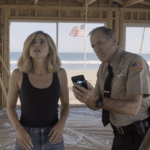
We all turned as heavy footsteps approached the open doorway. A uniformed deputy stepped inside, followed by a man in plain clothes with a badge clipped to his belt. The air in the room shifted, going from tense to electric.
‘Miss Reed?’ the man with the badge asked, looking at me. ‘I’m Sheriff Daniels. You filed a fraud report regarding this property?’
Samantha’s head snapped toward me.
‘You already called the sheriff,’ she said, her voice cracking.
‘I told you this was bigger than us,’ I replied, my voice steady even though my hands weren’t. ‘Yes, Sheriff. I’m Autumn Reed.’
He nodded and held up a tablet in a protective case.
‘We’ve reviewed the documents you emailed,’ he said, ‘plus the original filings from the recorder’s office. We also spoke with the buyers, the notary, and Mr. Liam Carter.’
At the mention of Liam’s name, Samantha flinched.
‘He demanded—’ she started.
Sheriff Daniels turned his attention to her, eyes level, voice calm in a way that made it clear he’d done this hundreds of times.
‘You must be Miss Samantha Johnson,’ he said.
She tried to square her shoulders, to pull that old confidence back around her like a coat.
‘I am,’ she said. ‘This is all just a big misunderstanding. Families handle things informally all the time. My sister and I—’
‘This goes a bit beyond informal, ma’am,’ he said, not unkindly. ‘We have a notarized deed and sales contract signed under your sister’s name. The notary states she never met Dr. Reed in person and relied solely on identification and assurances provided by you. Mr. Carter has admitted you told him your sister had authorized the sale, but he never actually saw her sign.’
Color drained from Samantha’s face.
‘He said that he did,’ she whispered.
‘He said that he did,’ the sheriff replied, ‘until he was under oath. And financial records show that the majority of the five million dollars was wired into an account controlled exclusively by you, then rapidly dispersed to various creditors and casinos. That pattern is consistent with fraud and money laundering, not a legitimate family arrangement.’
The word casinos hit me like another slap.
Samantha looked at me, eyes wide now, panic finally replacing arrogance.
‘Autumn, say something,’ she pleaded. ‘Tell them you don’t want to press charges. Tell them this is just a misunderstanding between sisters. We can fix it. We always fix things.’
My heart ached, but my voice didn’t waver.
‘I told the truth,’ I said. ‘I never agreed to sell this house. I never signed those papers. You took my name, my inheritance, and used them like a credit card. I can’t make this vanish for you.’
For a moment, the only sound was the plastic sheeting rustling in the breeze and the distant crash of waves.
Sheriff Daniels took a slow breath, then spoke the words that had been echoing in my head since I read that text at the airport.
‘Ms. Johnson,’ he said. ‘Based on the evidence we’ve reviewed, you’re under arrest for fraud, forgery, and theft by deception. Please turn around and place your hands behind your back.’
‘No,’ she whispered, backing away until her shoulders hit an unfinished wall. ‘You can’t. You can’t do this. She just landed. She doesn’t even understand. The real owner just landed.’
The sheriff replied quietly, nodding toward me.
‘And the paperwork says you sold a house that wasn’t yours to sell.’
The deputy stepped forward and gently but firmly took her wrists. As the cuffs clicked shut, Samantha’s eyes filled with tears. Not the manipulative kind I’d seen before when she wanted out of a speeding ticket or a bad grade.
Raw, terrified ones.
‘Autumn, please,’ she choked out. ‘We’re sisters.’
I swallowed hard.
‘We were,’ I said softly. ‘Before you sold me out for five million dollars and a stack of bad debts.’
They led her past the half-ripped walls and out onto the porch where we used to watch storms roll in over the water. I followed them to the doorway and stood just inside as I listened to the Miranda rights being read over the crash of waves.
You have the right to remain silent.
For once in her life, Samantha was.
Something inside me finally, painfully clicked back into place.
My house was still a mess. My family was shattered. But for the first time since that text, I felt like reality was on my side again.
And Samantha – she was finally facing something she couldn’t lie or sign her way out of.
Six months can feel like a lifetime when your world’s been turned upside down.
In half a year, the legal storm around the beach house went from chaos to a hard final verdict. I spent mornings on the phone with my attorney between hospital rounds, afternoons signing my real name on affidavits and statements, evenings reading case law I never wanted to know existed.
The buyers sued to unwind the sale. With the fraud exposed, the court voided the deed and returned legal ownership to me. The Washingtons got their money back from the title insurance and the bank. My attorney pushed for damages, and the judge agreed. Samantha owed me restitution on top of everything else she already owed the world.
I saw her in court exactly twice.
The first time, she wore a plain navy dress instead of her usual designer armor. No jewelry. No false lashes. Just a woman whose world had shrunk to the four walls of a courtroom and the conditions of her plea deal.
Liam sat two rows behind her, shoulders hunched, hair shorter than I remembered. He didn’t look at me. When he took the stand, he answered questions in a flat, exhausted voice.
Yes, he’d signed as a witness.
No, he hadn’t seen me sign.
Yes, Samantha had told him I’d authorized the sale.
No, he hadn’t verified that with me.
When the prosecutor asked if he’d benefited financially, he hesitated just long enough to make the answer obvious.
‘I received partial repayment of personal loans,’ he said. ‘I didn’t ask where it came from.’
The second time I saw Samantha, she stood before the judge as he read out the terms.
The plea deal kept her from serving years in prison, but it still included a felony record, strict probation, mandatory counseling, and a mountain of restitution she’d be paying off for what was likely the rest of her life.
Her accounts were empty, her credit destroyed. Her professional license was suspended pending a review. The friends who’d once filled her comment sections with fire emojis and heart eyes had gone quiet.
After the hearing, she tried to catch my eye in the hallway.
I walked past her to the exit, the papers in my hand heavy and light at the same time.
Meanwhile, the house slowly came back to life.
I used a modest settlement from a separate malpractice case overseas – not my favorite memory, but still mine – to repair the roof, rebuild the deck, and restore the old blue shutters my grandmother had loved. Insurance covered some of the structural damage the construction crew had already done. Friends showed up on weekends with paintbrushes and tool belts.
We pulled up ruined boards and found little treasures underneath – a marble we’d lost as kids, a rusted bottle cap from some long-forgotten cookout, a heart carved into a beam with the initials A + L that made my chest ache and then, finally, ease.
The place no longer felt like a crime scene.
It felt like a promise I’d finally kept.
On a warm evening in late summer, lanterns glowed along the new railing, casting soft light across the sand. Laughter drifted from the back patio where my friends and colleagues from the hospital gathered around tables covered in food. Someone had made my grandmother’s cobbler recipe, the one she’d written in shaky cursive on an index card now framed in the kitchen.
Inside, there was a simple white dress hanging on the closet door. After everything, I’d found someone who loved me without needing to use my name on anything but a wedding invitation.
No grand jet-setting romance. Just a fellow doctor who’d held my hand in an overcrowded ER and said, very quietly, ‘You deserve to go home to somewhere that feels safe.’
As music floated through the open windows, I stepped out toward the front gate to catch a breath of quiet and let it all sink in – the lights, the laughter, the fact that the house was full again, but with people who knew how to stay.
That’s when I saw her.
Samantha stood on the other side of the fence, thinner than I remembered, wearing a plain cotton dress instead of her usual curated outfit. No jewelry, no carefully constructed image, just a woman with tired eyes and a probation ankle monitor hidden badly by too-short pants.
She didn’t try to open the gate.
Part of her plea deal included a restraining order keeping her an agreed distance from me unless I chose otherwise. She stopped right at the line, toes in the sand, hands wrapped around the metal bars like they were the only thing keeping her upright.
‘You look different,’ she said softly.
‘So do you,’ I replied.
We stared at each other through the fence. Behind me, someone called my name, followed by a burst of laughter when the music switched to an old song from our childhood – the one we used to dance to in this very living room, bouncing on the couch cushions until Grandma yelled at us to knock it off.
‘I heard about the sentence,’ I said. ‘How’s community service?’
She gave a humorless little huff.
‘Picking up trash on roads I used to speed down in a convertible is… poetic,’ she said. ‘I used to look at those orange vests and think, “At least that’s not me.”’
For a moment, we almost smiled.
Almost.
Then I remembered her text.
Thanks for being abroad.
‘Why are you here, Sam?’ I asked. ‘To remind me you still exist? The courts already did that.’
She swallowed, throat bobbing.
‘I wanted to see the house one last time before they transfer me to another program,’ she said. ‘And I wanted to say, “I’m sorry.”’
The words hung between us, fragile and late.
‘Sorry doesn’t give me back the months I spent trying to untangle the mess you made,’ I said quietly. ‘It doesn’t erase the fact that when you had a choice between asking for help and forging my name, you picked the one that paid faster.’
Her eyes shone in the low light.
‘I know,’ she said. ‘I think about it every day. I see your signature in my dreams. I hear the sheriff’s voice. “Ma’am, you’re under arrest for fraud.” I replay that text and wish I could unsend it a thousand times.’
I looked past her, out at the dark water beyond the dunes, where the waves rolled in steady and indifferent.
‘You didn’t just steal money,’ I said. ‘You stole our grandmother’s trust. You stole years of peace. You turned the place we loved into evidence.’
She blinked, tears spilling over.
‘And now?’ she asked, voice barely audible. ‘What is it now?’
I glanced back at the glowing windows, the silhouettes of people who’d chosen to stand beside me, not above me or on my back. I thought of the deed with my real signature on it, filed in the same office that had once held her lies.
‘Now it’s mine,’ I said simply. ‘Legally, emotionally, completely. You made sure of that when you tried to cut me out.’
She nodded slowly, accepting a verdict that had nothing to do with court.
‘Do you hate me?’ The question was small, almost childlike, like the girl who’d once crawled into my bed after nightmares about hurricanes.
I thought about it longer than she probably wanted me to.
The nights I’d lain awake wondering if I’d overreacted.
The mornings I’d woken up from dreams where everything was normal again, only to remember that there was a case number attached to my sister’s name.
‘No,’ I answered finally. ‘Hating you would mean you still get to live in my head rent free. I’m done letting you own anything of mine.’
Her shoulders trembled. She wiped at her eyes with the heel of her hand.
‘Can I ever come in again someday?’ she asked. ‘Not now. Just… someday. When I’m not this version of me anymore.’
I looked at the gate between us, at the house behind me, at the ghosts of who we used to be in its rooms.
‘That depends on who you decide to be when all this is over,’ I said. ‘Right now, the answer is no.’
A single tear rolled down her cheek. She didn’t argue, didn’t beg, didn’t throw Grandma’s name at me like a weapon.
She just nodded, taking the refusal like it was another part of her sentence.
As she turned to leave, the porch lights flared brighter behind me, spilling warmth across the sand inside the fence but not quite reaching her. I watched my sister’s shadow stretch and thin as she walked away from the house she’d tried to sell out from under me, hands empty, future uncertain.
Then I closed the gate, turned back toward the laughter and light, and stepped fully into the life she’d once tried to rewrite with a forged signature and a careless text.
In the end, her punishment wasn’t just the record, the debts, or the years of rebuilding.
It was standing on the outside of the one place she thought she could steal and realizing it would never truly belong to her.






Leave a Reply