It is a story that feels almost unbelievable, yet it has become all too familiar in recent years: a young man from a normal middle-class family, raised in an environment of stability and opportunity, excelling in school, heading off to college with promise — only to return home as something unrecognizable. An Antifa extremist. A killer.
The transformation appears sudden, but the underlying process is more insidious. Families and communities across the country are asking: how does someone go from a bright student to a radicalized extremist in just a few years? And more urgently: is the education system itself to blame, or is something deeper at work?
A Normal Beginning
The profile starts like many others. Good grades. Decent friends. Parents proud to see their child head off to college — the symbol of upward mobility for middle-class America. But somewhere along the way, the trajectory shifted.
Within a short time, the once-stable student began parroting extreme rhetoric. Social media feeds filled with rage against police, capitalism, and the very foundations of American life. Protests turned into riots. Debate turned into violence. And in this case, a descent into criminality that ended in bloodshed.
The Role of Academia
For critics, the explanation is simple: the hard left has embedded itself in the American education system. Radical professors, activist administrators, and politicized curricula create an environment where students are taught not how to think, but what to think.
Ideas of personal responsibility and civic pride are replaced with doctrines of systemic oppression and revolution. What begins as an introduction to “critical theory” can evolve into a worldview that sees violence as justified resistance.
“Colleges are no longer places of learning, they are indoctrination factories,” one commentator remarked. “The radical left poisons minds faster than parents ever imagined.”
Beyond the Classroom
But is education alone to blame? Experts warn that focusing solely on classrooms ignores the broader ecosystem of radicalization.
-
Social Media Algorithms: Platforms reward outrage and amplify extremist voices. A freshman may be exposed to radical ideologies within weeks of joining activist groups online.
-
Peer Networks: College campuses provide the perfect setting for peer reinforcement. Once a student joins a radical group, the sense of belonging and identity can outweigh family ties.
-
Cultural Shifts: In an era where institutions are distrusted, narratives of systemic collapse resonate powerfully with young adults searching for purpose.
Radicalization, then, is less a single event than a convergence of influences — ideological, technological, and social.
Parents’ Fear
For parents, the transformation feels like betrayal. “We raised our son with values,” one mother lamented after her child was arrested at a violent protest. “But college turned him against us, against his country, against everything he knew.”
This fear resonates widely. A recent survey found that 42% of parents worry their children will be exposed to extremist politics in college, while nearly 60% believe universities prioritize ideology over balanced education.
The fear is not simply about losing influence as parents. It is about watching an entire generation shaped by forces they do not trust.
Is Education Broken?
So the central question remains: is the education system itself broken?
Evidence suggests that while not every college indoctrinates, the presence of activist-driven departments and politicized professors has created pockets where radical ideas flourish unchecked. In many institutions, alternative viewpoints are stigmatized, creating echo chambers that drive students further left.
But pointing only at schools risks oversimplification. The real danger lies in the interaction between education, culture, and technology. Universities may provide the spark, but social media and activist networks provide the fuel.
A Larger Battle for America’s Youth
Ultimately, the transformation of students into extremists is not just a family tragedy; it is a national crisis. A society cannot survive if its next generation believes its institutions are illegitimate, its history shameful, and its future hopeless.
Charlie Kirk himself often warned of this danger before his assassination. He argued that colleges had become “factories of grievance” rather than engines of opportunity, and he dedicated his life to building counter-networks of young conservatives to resist the tide.
Now, his death has only sharpened the debate.
Where Do We Go From Here?
The challenge for America is twofold:
-
Reform Education: Universities must be held accountable for ideological bias. A true education means exposure to multiple perspectives, not just one.
-
Rebuild Family and Community Influence: Parents and local communities must stay engaged, providing a counterbalance to radical narratives. The antidote to extremism is not censorship but stronger voices of reason and faith.
Conclusion
From a normal middle-class upbringing to an extremist bent on violence — the journey is tragically real for too many families. The speed with which radical ideologies can transform a life should alarm every parent, every educator, and every policymaker.
Is education the problem? Yes — but it is not the only one. It is a frontline in a larger cultural battle where families, technology, and politics collide.
The stakes are high. For many parents, the fear of sending their children to college is no longer about tuition or job prospects. It is about whether their child will come back a stranger.
“‘He already had everything, so why?’ — The most heartbroken cop in America broke down in tears after the most painful act of his duty as a father. And when the $600,000 home suddenly became the nation’s focal point, the hidden truths of the last conversation between father and son slowly came to light.”
“He Already Had Everything, So Why?” — The Most Heartbroken Cop in America Burst Into Tears After the Most Painful Act of His Duty as a Father. And When the $600,000 Home Suddenly Became the Nation’s Focal Point, the Hidden Truths of the Last Conversation Between Father and Son Slowly Came to Light.
The Breaking Update
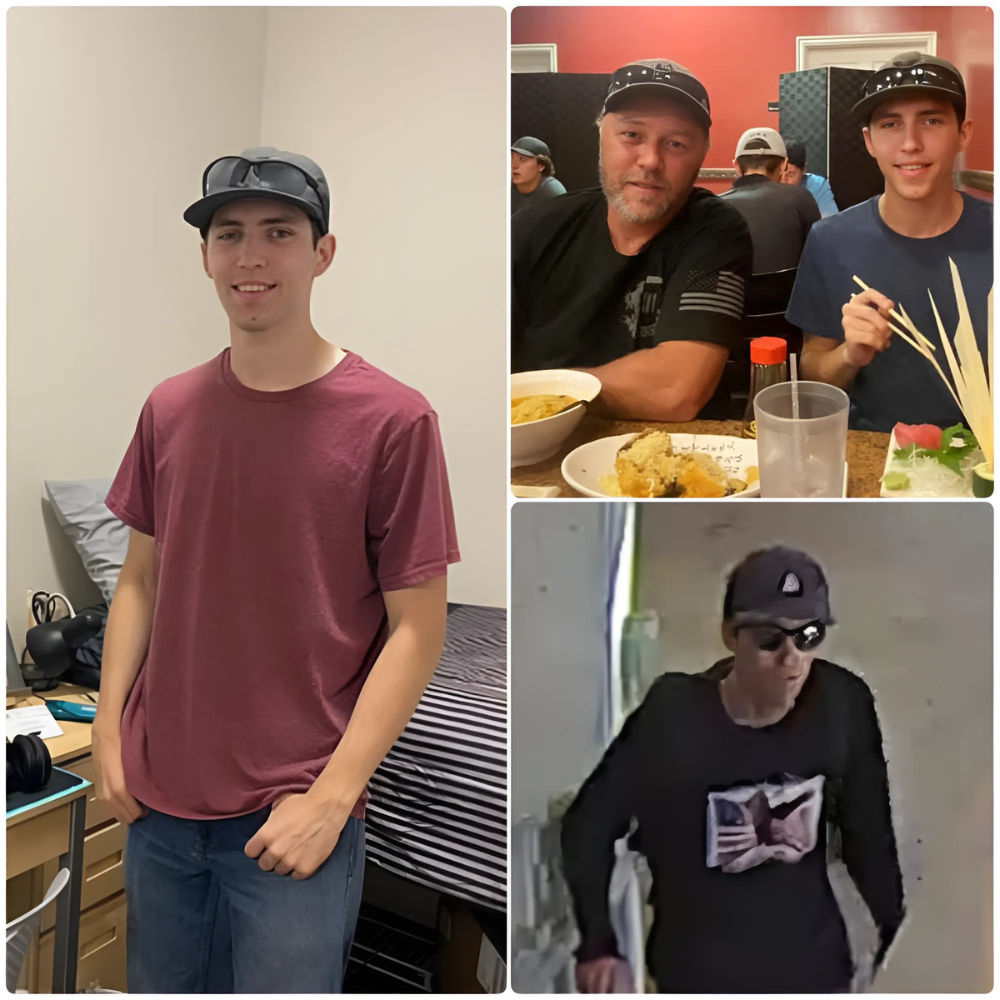
Authorities have officially identified the suspect in the tragic incident involving commentator Charlie Kirk as Tyler Robinson, a 22-year-old student from Utah.
Robinson was taken into custody late Thursday night at his family’s six-bedroom residence — valued at $600,000 — in Washington, Utah, around 260 miles south of the campus where Kirk collapsed during a public event.
According to sources, the dramatic turn came not from surveillance alone but from inside Robinson’s own family. The young man allegedly admitted involvement to his father, Matt Robinson, a 27-year veteran of the county sheriff’s department. In an agonizing decision, the father contacted authorities and personally ensured his son was handed over safely.
It was the most excruciating act of his career — and of his life as a father.
The Father’s Agony
“In a brief conversation,” one insider recalled, “Matt could only whisper: ‘He already had everything, so why?’”
The words hung heavy, not in a courtroom, not in a press conference, but in the quiet of a devastated home. They pierced deeper than any official statement, echoing the torment of a man who had spent nearly three decades upholding justice, only to watch that same justice demand the ultimate sacrifice from his own family.
Witnesses described Matt Robinson as inconsolable, breaking down in tears as he recounted how his son’s short admission shattered not only a family but also the community’s image of stability.
A House in the Spotlight
The Robinson residence, once just another comfortable home in suburban Utah, is now under the glare of the nation’s cameras. Neighbors who remembered backyard barbecues and family photos posted on social media now watched as vehicles pulled up to the driveway, officers moving quietly around the property where the suspect was led away.
That $600,000 house — with its manicured lawn and spacious rooms filled with family portraits — became an unexpected stage for America’s latest tragedy. What once symbolized achievement and security now stood as a monument to contradiction: a promising student inside those walls had allegedly turned into the focus of a national investigation.
A Family That Seemed to Have Everything
To those who knew them, the Robinsons were the embodiment of a respectable American family.
Neighbors recall Matt Robinson, the father, as a steady presence — a man in uniform, his posture straight, his handshake firm. After 27 years with the county sheriff’s department, Matt was more than a law enforcement officer; he was a symbol of reliability in a town where people still left their doors unlocked.
Amber Robinson, his wife, devoted her professional life to Intermountain Support Coordination Services, helping disabled individuals secure the care they needed. Her colleagues described her as compassionate, methodical, and someone who “always put family first.”
And then there was Tyler.
The eldest of three brothers, Tyler Robinson had earned a scholarship to Utah State University, a point of pride for the family. His photos showed him grinning with friends, hiking with his brothers, or beaming as he celebrated his acceptance letter. He was, by all appearances, the kind of son who made a father proud.
A Scholarship Student Turned Suspect
The announcement that this young man was now the prime suspect in one of the most shocking campus tragedies in recent memory has left the community speechless.
“He wasn’t just any kid,” said one former teacher. “He was bright, motivated, and seemed destined for something good. It’s unimaginable that he’s now accused of this.”
Imaginable or not, the unimaginable turn is now reality.
What makes it even more jarring is the contrast: a family anchored by a lawman, a mother devoted to public service, a son granted the gift of education — and yet, within that framework of privilege, an incident emerged that has shaken the nation.
The Veteran Cop
For Matt Robinson, the irony is unbearable. For nearly three decades he patrolled streets, broke up disputes, intercepted crimes, and testified in courtrooms. He carried the weight of protecting strangers’ children, and believed, with every fiber of his being, in the integrity of his badge.
Now, his badge offered no protection from the anguish of watching his own son accused of causing the collapse of a public figure.
Colleagues describe Matt as “tough but fair,” someone who believed deeply in accountability. But accountability, when demanded of your own blood, cuts deeper than any arrest ever made.
“In all those years,” a fellow deputy said, “Matt always talked about drawing lines between right and wrong. No one thought he’d have to draw that line at his own front door.”
The Campus Tragedy
On Wednesday afternoon, Charlie Kirk was addressing a crowd at Utah Valley University when chaos erupted.
Witnesses recall him lowering his microphone to answer a student’s question when he suddenly collapsed to the ground. Students screamed and scrambled for cover. Videos showed hundreds rushing toward exits, some tripping over chairs, others clutching friends in fear.
Authorities later confirmed that Kirk had been struck from a distance during the event. Surveillance images released in the hours after showed a figure on a rooftop, leaping down and sprinting into a nearby neighborhood.
The incident triggered a massive lockdown. For the next 36 hours, helicopters circled, checkpoints multiplied, and tips flooded hotlines. At one point, two unrelated individuals were detained before being cleared, adding to the confusion and panic.
The Arrest
By Thursday night, the tension broke. At approximately 11 p.m., Tyler Robinson was taken into custody at his family home.
The arrest was not the dramatic takedown many expected. There was no chase, no violence, no resistance. Instead, the young man walked quietly out of his home, escorted by officers who already knew the truth: his father had called them first.
For Matt Robinson, the decision was devastating but unavoidable. He had listened to his son’s trembling admission. He had asked his anguished question. And then, with tears in his eyes, he had dialed the number that ended the search and shattered his own heart.
The Final Conversation
Accounts of that night point to a brief but unforgettable exchange.
“Dad,” Tyler reportedly said, voice shaking, “I don’t know why. I don’t know what happened. But it was me.”
His father, a man who had heard countless confessions over nearly three decades, froze. This one was different. This one was his own son.
“You had everything,” Matt whispered. “Why this?”
Tyler had no answer. The silence that followed was more crushing than any words could have been.
Within minutes, Matt Robinson made the call. The call that transformed a father into the man who delivered his son to justice.
A Nation Divided
Since the arrest, the country has debated Matt Robinson’s decision.
Some call him a hero — a man who proved that no one is above the law, not even his own family. Others whisper that he betrayed his blood, that a father should never hand over a child, no matter the cost.
But all agree on one thing: no parent should ever have to face such a choice.
The House That Became a Monument
The Robinson home now stands as more than a residence. It is a symbol.
Every photograph of its walls, every drone shot of its roof, every image of its driveway carries the weight of contradiction: a family that seemed to have everything, undone by a few minutes of chaos on a university campus.
Inside, the bedrooms still hold childhood memories. Outside, the world sees only a stage of sorrow.
A Wound That Will Never Heal
Charlie Kirk is gone. Tyler Robinson is in custody, facing the maximum legal consequences. And Matt Robinson, once just another lawman in Utah, is now the most heartbroken father in America.
His words will echo long after the hearings and headlines fade: “He already had everything, so why?”
It was not the question of a sheriff. It was the cry of a father whose life changed forever in a single night.