Family Ignored Me at Christmas — Then Sent Me a $25,000 Bill for Sister’s Car, So I Took Action …
Family Ignored Me at Christmas — Then Sent Me a $25,000 Bill for Sister’s Car, So I Took Action …
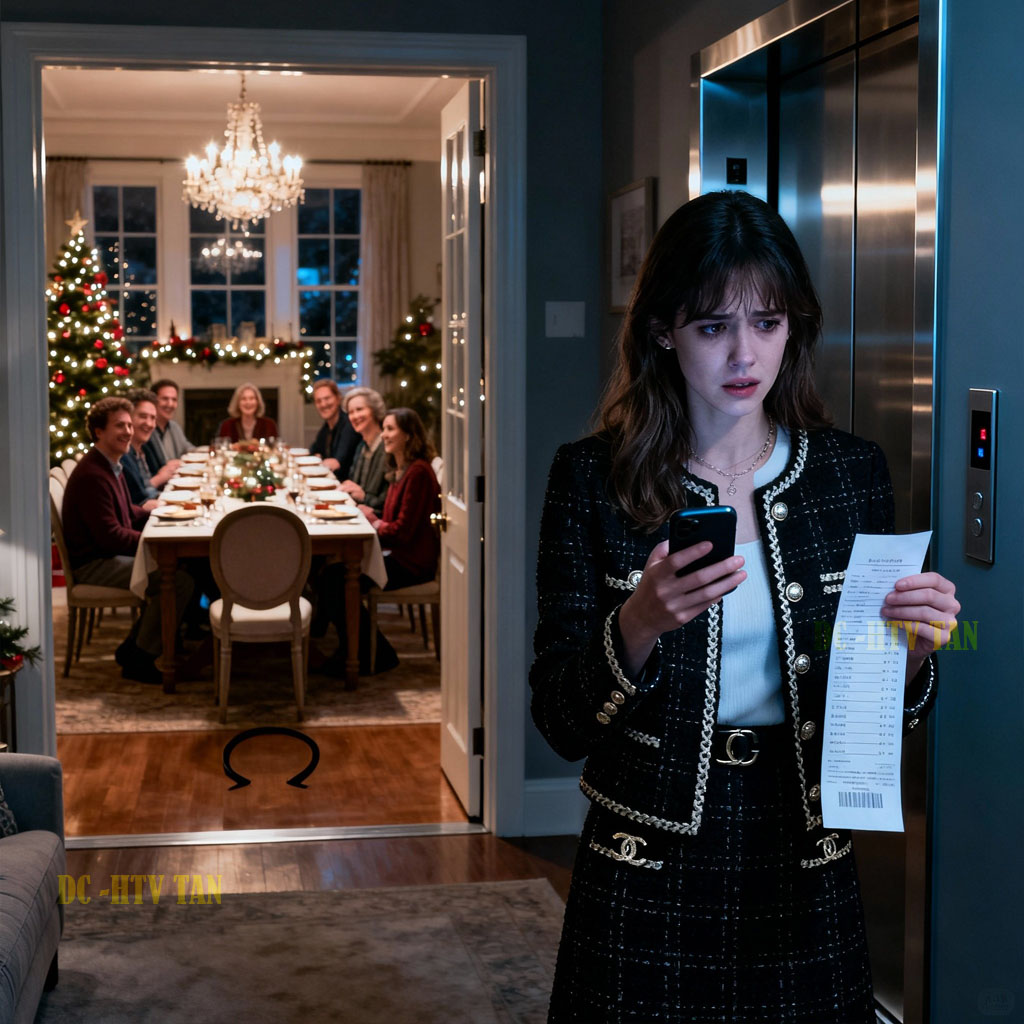
I saw the message while the elevator doors were closing. A single line from my family group thread bright against to the dark screen. Dinner starts at 7:00. Don’t be late. Under it was a photo every seat filled except mine. No one had told me they’d moved Christmas without me. By the time I reached my apartment, another notification appeared.
A bill $25,000 for Serena’s car. No greeting, no explanation, just a demand. I set my keys down, the silence tightening around me. They hadn’t invited me home, but somehow they still expected me to pay. I grew up in a house where silence carried more weight than words. My father, Grant Rowan, liked to speak in short commands, never explanations.
My mother, Elise, softened every edge he created, but never stepped between us. And my younger sister, Serena, lived in the spotlight he held up for her. Even as kids, she wore it easily. One winter afternoon when I was 11, I dragged an old computer tower from the garage onto the kitchen table.
The casing rattled dust, lifting into the sunlight. I had no idea what I was doing. I only knew it felt like something that belonged to me. I bent over the open panel, studying the pieces as if they were a language I could learn. Grant walked in coat still on. He didn’t ask what I was building. He didn’t even come closer. He glanced at the wires at me, then shook his head.
“Waste of time,” he said, hanging his keys on the hook. “Do something real.” Behind him, Serena, two years younger, but always two steps ahead in his eyes, slid onto a chair, swinging her legs. “Dad, look what I made.” She held up a drawing of a horse wearing a crown. Grant smiled, ruffled her hair.
“That’s talent,” he said. His voice never sounded like that with me. I remember touching the motherboard lightly as if my fingers could hide my embarrassment. I closed the panel quietly and carried the computer back to the garage. That day, something shifted. A quiet understanding lodged itself beneath my ribs.
I wasn’t the one he wanted to see succeed. When I turned 16, Serena got a used car for her birthday. I got a handshake and a reminder to be responsible. Two months later, she scraped the entire passenger side on a concrete pillar. Grant blamed me for not teaching her to park, though I’d never been in the car with her. Serena apologized once softly, but when dad was in the room, she let the story twist toward my carelessness.
It was easier for her that way. In high school, every science fair ribbon made Elise smile, but she tucked the certificates into a drawer as if afraid someone might see them. Serena’s cheer trophies lined the hallway. Guests admired them the moment they stepped inside. I learned to live in the spaces between applause.
In college, when I called home to share that I’d been accepted into a cyber security program, Grant sighed through the phone. So, you’re still chasing that chasing as if ambition was a mistake. Serena’s updates were different. New job offers, new celebrations, new praise. She kept me informed with a kind of polite pride.
the way someone might discuss weather patterns. Never cruel, never kind, just detached. Looking back now, I realize none of it surprised me when they didn’t invite me to Christmas. The pattern was older than any holiday. It was the life I had learned to survive in, but I never planned to stay in it forever.
The bill arrived an hour after the Christmas photo, $25,000. The subject line was blunt, almost careless, as if the amount meant nothing to anyone sending it. A short note followed written by my father, Grant Rowan, and copied to my mother, Elise, and my sister, Serena. Handled this before the end of the month. No context, no greeting, just expectation.
I stared at the message until the numbers blurred. Serena had crashed her car twice before minor scrapes, careless turns, but this was the first time they’d asked me to pay for anything that wasn’t mine. and they asked on a night they hadn’t invited me home. My phone buzzed again. A new text from Serena. Just take care of it. Dad’s stressed.
It’s not a big deal. Not a big deal. She always used that phrase when she wanted something to disappear. I set the phone face down the screen, lighting the table in pulses. Outside, snow drifted along the balcony rail. inside my apartment felt too still, too clean, as if waiting for a decision I wasn’t ready to name.
I tried to swallow the familiar ache, the one shaped like all the years I was expected to fill the gaps to be responsible to be useful. They had cut me out of Christmas, yet assumed I would step quietly back in line when they needed help. A quiet part of me wanted to ignore it the way I always had. Another part, the part that had been growing quietly for years, simply paused.
I picked up my phone again, scrolling through the group thread. Serena laughing at some joke. Elise holding a tray of cookies. Grant carving a roast. My seat empty. My name missing. The holiday complete without me. A knot tightened beneath my ribs, but not from sadness. Something slower, sharper. A realization settling like cold air in a quiet room.
It wasn’t that they forgot me. It was that they planned around my absence. I breathed in steady, exhaled. My fingers hovered over the screen, but no reply came. Not anger, not argument, nothing. I set the phone aside. Then I opened my laptop. The moment the screen lit up, I understood something I had never let myself admit.
They didn’t erase me by accident, and I didn’t have to stay written in pencil. I didn’t move at first. The laptop screen glowed in the dark kitchen, washing the countertop in a cold, even light. Snow tapped against the balcony glass, soft and rhythmic, the kind of sound that usually eased me.
Tonight, it only seemed to underline the silence. I opened my financial dashboard. Rows of numbers blinked back at me, steady and factual, everything my family always refused to acknowledge. years of contracts, payments, project bonuses, everything I had built on my own without them knowing, without them asking. My cursor hovered over the recent messages again.
The Christmas photo, the empty seat, the car bill. Handle this before the end of the month. My father Grant always wrote like that short clipped devoid of question marks. As if my life existed to patch the consequences of everyone else’s choices. As if my job was simply to absorb impact, I took a slow breath and leaned closer to the screen, elbows braced on the cool countertop.
When I was younger, I used to whisper explanations in moments like this, rehearsed reasons, excuses, anything to soften their silence. I didn’t owe explanations anymore. The first thing I did was pull up the bank account tied to the car loan. My name wasn’t on it. Of course, it wasn’t. Serena’s name was and my father’s.
Yet somehow, they’d decided the responsibility belonged to me. The cursor blinked beside the contact number. I didn’t call yet. Instead, I opened a notebook and turned to a clean page. I wrote three lines. Car loan. Due amount 25,000. Ownership Serena plus grant. The handwriting was steady. Not angry, just precise. I turned to the next page.
Christmas invite list not included. Message sent after dinner started. I flipped the page again. Pattern contribution expected presence optional. I sat back staring at those words. They didn’t sting, they clarified. For the first time, I felt the shape of the boundary forming not in emotion, but in logic, a clean cut, a necessary one. I closed the notebook.
In the quiet, the apartment felt different. Less like a refuge, more like a command center. I opened the drawer beside the sink and pulled out a folder. Inside were documents I hadn’t looked at in months. Partnership agreements, revenue summaries, projected valuations, all the things no one in my family had ever asked about because they never believed I had anything worth knowing.
I spread them out on the table one by one, aligning edges, until everything formed a neat grid. It looked like evidence. Or maybe it looked like a map where I had been and where I was going next. I didn’t need revenge. I needed distance. A clean separation measured in facts, not feelings. The bank’s number flashed on the screen again. I tapped it.
A calm automated voice answered. Please hold while we connect you. My fingers curled lightly around the edge of the counter. This wasn’t anger. It was clarity. The kind that settled deep, the kind you felt in your spine. A human voice came next. How can I assist you? I spoke evenly. I need to report a vehicle for repossession. The owner has defaulted.
The woman on the line asked for documentation. I gave her every detail tied to the loan, each one provided by my family in the forwarded bill. When she asked for my relationship to the owner, my answer came without hesitation. I’m not responsible for the loan, I said quietly. But the borrowers believe I’m still here to fix things for them. I’m not.
There was a pause, the kind where an operator doesn’t know if she should ask anything more. She didn’t. She simply processed the request. When she confirmed the next steps, I thanked her and hung up. It felt like clicking a light switch off. Clean, final. I didn’t feel triumphant. I felt settled. The apartment stayed still around me, the hum of the refrigerator rising and falling like a soft breath.
In the reflection on the balcony glass, I saw myself, shoulders straight hair, pulled back, eyes clear. I opened my email next. A new message from my father sat at the top. We need you to transfer the money tonight. I didn’t open it. Below it, one from Serena. Please don’t make this harder than it needs to be. I didn’t open that either. Instead, I clicked new email.
My fingers hovered then typed slowly to Grant Rowan CC Elise Rowan Serena Rowan subject regarding the car body. I won’t be covering the bill. This isn’t my responsibility. Please handle it directly. I read it twice, not for tone, but for accuracy. It wasn’t cruel. It wasn’t emotional. It was simply the truth. I pressed send.
The message left my outbox with a small soft sound. A tiny click, barely audible. Yet it felt louder than anything they had said to me all year. I shut the laptop gently, the screen fading to black. The apartment returned to its quiet rhythm. I walked to the window, leaning slightly toward the glass, the way I always did when thinking.
Snow drifted down in slow spirals, settling on the balcony railing like dust on an old memory. I didn’t feel guilt. I didn’t feel doubt. For the first time, I felt direction. A shape of a life where I wasn’t a placeholder. where I wasn’t the family’s quiet first responder, where I wasn’t the reliable shadow, a life where I was simply me.
I turned off the kitchen light. The room fell into soft darkness. Everything felt aligned. This time, I wouldn’t fix what they had broken. Morning light crawled across my apartment floor, thin and colorless. I woke to the vibration of my phone, steady as a heartbeat. Messages piled up one after another.
alerts, missed calls, new voicemails filling the screen before I even touched it. I didn’t need to read them to know who they were from. I made coffee instead. The steam rose in slow coils, softening the sharp edges of the kitchen. I sat at the table, hands wrapped around the mug, letting the warmth settle into my palms.
Only then did I pick up the phone. The first voicemail was from my father, Grant Rowan. His voice was clipped, controlled, on the verge of cracking. Emberly called me back immediately. The second was shorter. This is not how family behaves. The third longer tighter held a strain. He didn’t bother masking. There’s a problem with the car.
Call me now. I deleted them without listening to the rest. A message from Serena came next. Her words rushing across the screen in a frantic stream. What did you do? They came to the house. They’re taking it. Dad is furious. This is your fault. I read it once, then placed the phone face down on the table. Fault. That word had followed me since childhood, lingering behind every request, every unspoken expectation, every silence.
This time, it didn’t land. My coffee had gone lukewarm by the time the next notification appeared. A photo from an unknown number. It showed our old driveway in Seattle. Two men loading Serena’s car onto a flatbed truck. Serena standing on the porch in slippers, hair tangled arms crossed tight across her chest. Grant in the background jaw locked phone in hand, eyes furious, and pointed directly at the camera as if I had taken the picture myself. A text followed.
We need to talk. Answer your phone. I didn’t. I closed the photo and slid the device across the table until it rested beside the edge. Some things didn’t need to be confronted twice. By noon, I was at the office. Denver sunlight hit the building’s glass like a blade splitting into sharp reflections across the lobby floor.
I walked through it with the quiet certainty that had been building inside me all night. Upstairs, Kai Mercer, my co-founder, looked up as soon as I entered the engineering floor. You okay? He asked, voice low. I nodded once. Just a long morning. He studied me for a beat, but didn’t pry. That was the thing about Kai.
He knew when silence had weight. We had a meeting with the legal team, then a product review, then a quiet walkthrough of server updates. By 3:00, my phone hadn’t stopped buzzing in the drawer of my office. When I finally returned to it, I found a new slate of messages. Grant, you owe us an explanation.
Serena, I can’t believe you do this on Christmas week. Elise, my mother sent only one message. Are you safe? I opened hers, typed a single line. I’m okay. Then closed the phone again. That was the only reply anyone received. Around 5, the elevator chimed. The sound echoed faintly through the quiet hall outside my office. Footsteps followed hard, purposeful, too familiar.
I turned as the door opened slightly. Grant stood there, face tight with anger. Serena behind him, lips pressed into a thin line. Elise trailing softly, eyes downcast. Emberly, my father said, stepping inside without waiting. We need to discuss this. I stood still. There’s nothing to discuss. You had no right, he snapped.
You embarrassed us. I let the sentence settle in the quiet room. No, I said. I stopped being responsible for the consequences of choices I didn’t make. His jaw worked. Family helps each other. Family invites each other to Christmas. I replied calm. Even family doesn’t send a bill as a substitute for a seat.
Serena flinched. Elise looked up a single breath catching in her chest. Grant pointed at the phone on my desk. Call them. Fix this. I met his stare. The air between us felt cold, precise, inevitable. I’m done being used. The room stilled. Grant took a step back, not physically, but something in him pulled away recognition, cutting through his anger like a sudden draft.
For the first time, he realized, “I wasn’t negotiating. I wasn’t returning. I wasn’t his to command.” He turned sharply, muttering under his breath, and walked out. Serena followed, eyes burning breath unsteady. Elise lingered a moment, her fingers brushing the doorframe. “I’m glad you’re safe,” she whispered. Then she left, too.
The door clicked shut behind them, quiet, exact, final. I stood alone in the office, the city stretching wide beneath the glass. For the first time, the silence felt like authority. The apartment was dim when I returned that night. No messages lit the screen. No vibrations echoed across the counter.
The silence felt complete in a way it never had before. steady, almost structural, as if the quiet itself was holding the walls upright. I set my keys down and walked to the window, leaning slightly toward the glass, the way I always did when thinking. Denver stretched beneath me, calm and wide, the lights blinking like slowm moving constellations.
The city didn’t care who I had been to my family. It only reflected who I was becoming. I made tea and carried it to the balcony. The air was colder than earlier soft with the kind of stillness that comes only after a decision has already taken shape. I wrapped both hands around the mug and let the steam rise against my face.
My breath drifted out in thin pale ribbons dissolving into the night. There was no triumph in me, no rush, no surge of victory, just space. Enough space to finally see the years I had spent bending myself around other people’s expectations. Enough space to understand that stepping away wasn’t rebellion. It was survival. And enough space to feel for the very first time that my life belonged to me in a way it never had before.
Inside the apartment’s lights glowed faintly against the hardwood floor. A folded jacket lay on the back of a chair. A small stack of work files sat neatly on the table. Ordinary things, quiet things, uncomplicated by obligation. I thought of Elise, my mother, her soft voice, the careful question she’d asked earlier.
Are you safe? It echoed in me longer than anything else from the day. For years, I mistook distance for failure, silence for punishment. But standing there, feeling the cold wind move through my sleeves, I understood something uncomplicated and clean. Sometimes distance is the only version of love you can give yourself. A car moved along the street below headlights, sweeping like a slow arc across the buildings.
I watched it disappear into the dark, feeling no pull to anything behind me. The life waiting ahead was quiet, intentional, mine. I finished my tea, set the mug down, and let the night settle around me, light open free. I closed the balcony door behind me, the latch clicking softly in the quiet apartment. No voices followed, no footsteps trailed close, just the steady hum of a life I had finally chosen without permission.
People think the hardest part is letting go. It isn’t. It’s realizing how long you held on to a weight that was never yours. And in that realization, something shifts, clean, irreversible. Silence stops feeling like absence. It starts sounding like freedom.







Leave a Reply