One week before Christmas, I overheard my parents planning to use the $15,000 I send every year to throw a “perfect” holiday party without inviting me, so I quietly planned a different Christmas party at my two-million-dollar seaside villa, and by Christmas night my phone screen was glowing with 110 missed calls.
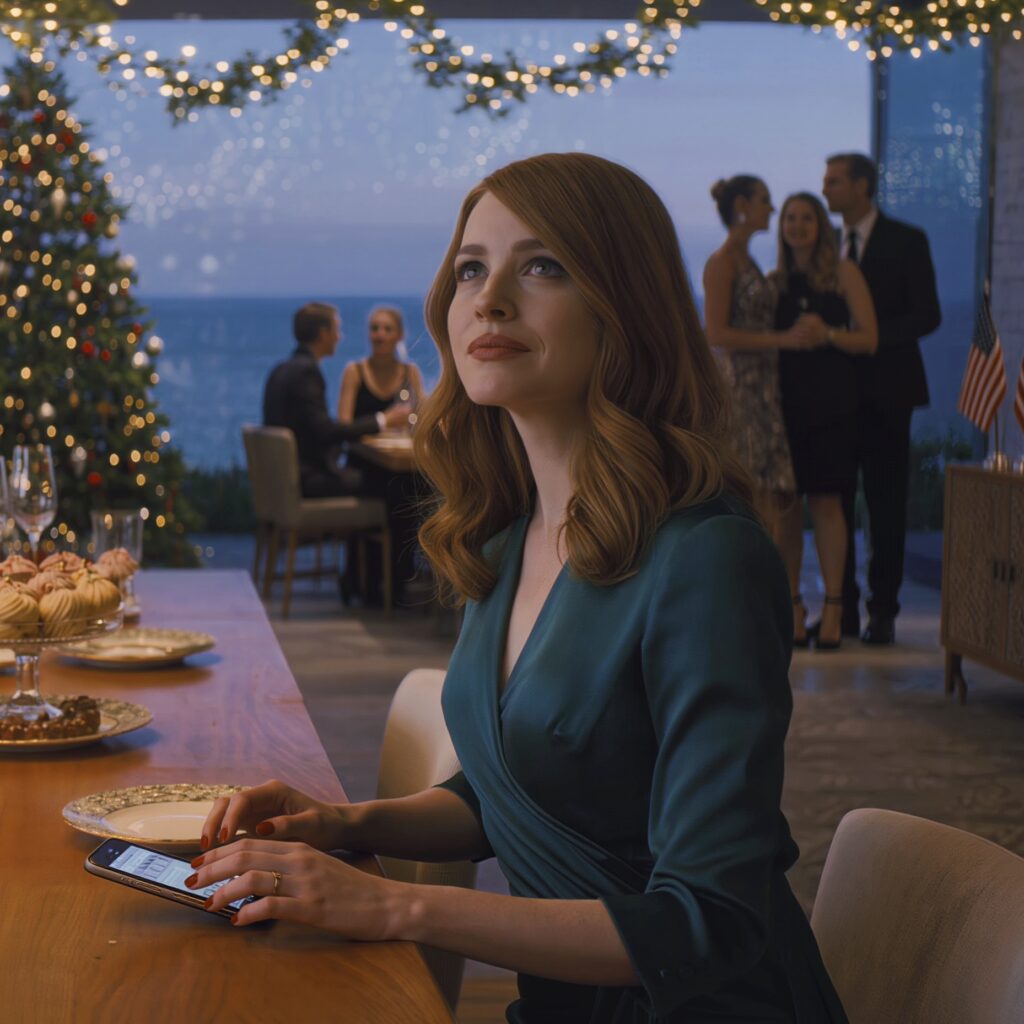
The Christmas They’ll Never Forget
They say you never truly know your family until money is involved.
I used to think that was just something people said when they were bitter and alone at the end of their lives, nursing a drink at a dark bar while everyone else went home to their happy holiday dinners.
Now I know it’s not a saying. It’s a warning.
I learned that lesson standing in a hallway I’d walked down a thousand times, trembling, listening to my parents and my sister laugh about how dumb I was, how easy it was to take my money year after year while keeping me out of every family photo, every moment that mattered.
My name is Claire Bennett. I’m thirty-eight years old. I built a successful consulting business from nothing. I live in a two-million-dollar villa on the California coast, a glass-and-stone house that sits on the edge of a cliff, staring straight out at the Pacific. People call it my “dream house.”
It’s not.
It’s a memorial.
To every year I spent believing that if I just worked hard enough, gave enough, showed up enough, my family would finally see me.
One week before Christmas, I stopped believing.
And on Christmas night, while my parents’ perfect party collapsed into humiliation in their hilltop estate, my phone lit up with 110 missed calls as my own house filled with the sound of real laughter.
That’s when I finally understood: sometimes the bravest thing you can do is stop begging for a seat at someone else’s table and build your own.
But I’m getting ahead of myself.
The day it started was December 18th.
California winter is a strange thing. The air was cool and sharp when I left Malibu, but the sky over the Santa Monica Mountains was the kind of soft blue people in postcards call perfect. The radio played nonstop Christmas music—crooners talking about chestnuts and snow while I navigated a world of palm trees wrapped in twinkle lights.
I’d just left a client meeting in Santa Monica. My bag was heavy with my laptop, folders, a neatly wrapped box with a silk ribbon—an early gift for my parents. A stupid, hopeful part of me still believed that if I just kept showing up as the good daughter, one day they might show up as good parents.
I took the familiar exit off the freeway and drove up into the hills, toward the Bennett estate. The house I grew up in was everything people picture when they hear “California money”: long driveway, iron gates, manicured hedges, white columns, a circular fountain in front that served no purpose except to say, We have more than you.
I’d been there a thousand times and still felt like I needed an invitation every single time I pulled up.
I parked in the visitors’ spot—never in the circle, that was “for guests”—and grabbed the bag with my parents’ gift. As I stepped out of the car, I could already see the Christmas decorations.
Wreaths on every window. White lights tracing every line of the roof. An enormous tree perfectly framed in the front window of the living room. The whole place looked like it had been ripped from a magazine spread titled “Holiday Elegance in the Hills.”
I let myself in with the key they’d given me years ago.
“Hello?” I called out, shutting the door behind me. “Mom? Dad?”
No answer.
The house smelled like cinnamon and evergreen and something floral. I could hear the faint sound of music somewhere—instrumental carols drifting down the hallway. I stepped onto the marble and my boots echoed softly as I walked past the formal living room, past the dining room with the long polished table, past framed photos of the “perfect” Bennett family.
My father in a tuxedo with his arm around my mother in a floor-length gown.
My sister Evelyn in a glittering dress, her champagne glass raised, the center of the frame every single time.
Me, if I was there at all, in the background. Half turned away. Half cropped out.
I reached the hallway that led to the kitchen and that’s when I heard it.
“…she’ll transfer it by tomorrow. She always does.”
My father’s voice.
I stopped walking. My hand rested on the edge of a console table; my fingers brushed the frame of yet another picture of the three of them grinning on some beach in Maui. No me.
“Fifteen thousand dollars for the Christmas party,” Evelyn’s voice floated down the hall. “Her fifteen thousand. And she’s not even invited.”
My heart stuttered.
“She’s too dumb to notice,” my father said. “She thinks she’s part of this family.”
A chair scraped against tile. I pictured him leaning back, one hand wrapped around a crystal tumbler.
My sister laughed. That bright, sharp laugh that had always sounded like a bell to my parents and like a knife to me.
“Cute,” she said. “I almost feel bad.”
“Don’t start growing a conscience now,” my mother replied, her tone light, amused. “We’re too close to Christmas.”
They all laughed.
Something inside my chest cracked, clean and quiet.
I should have walked into that kitchen. I should have slammed the gift down on the marble island and demanded an explanation. I should have shouted, cried, screamed, done something dramatic and cathartic.
Instead, I froze.
The hallway felt suddenly too narrow, the air too warm. The garland wound around the banister, the tasteful white ribbons, the smell of pine—everything blurred around the edges.
I backed away on instinct, heels silent now, gift bag swinging at my side. By the time I reached the front door, my throat hurt from swallowing words I’d never say.
I stepped outside, pulled the door closed behind me, and stood on the porch staring at my car.
Fifteen thousand dollars.
My fifteen thousand dollars.
Taken as casually as someone asking to borrow a sweater.
And I wasn’t even invited.
I made it to my car before the shaking started. My fingers fumbled with the keys. Once I slid into the driver’s seat, I just sat there, gripping the steering wheel, staring at my parents’ house.
I watched my own reflection in the rearview mirror. Dark brown hair pulled into a neat low bun. Brown eyes ringed in faint shadows. Subtle makeup, tailored blazer from my meeting, little diamond studs I’d bought for myself after landing my first six-figure contract.
I didn’t look like my family.
My father and Evelyn both had blond hair, pale blue eyes, sharp cheekbones that caught the light. My mother had those aristocratic features too, softened by years of good serums and better lighting.
When the three of them stood together, they looked like a movie poster: The Golden Family.
I’d always been the extra. Pulled in at the edges for background texture.
I’d told myself it didn’t matter. I had my business, my life, my own house. I told myself that being “independent” was a badge of honor, not the polite word my family used when they meant We don’t need you emotionally, only financially.
But sitting in that driveway, listening to my heartbeat pound in my ears, “independent” suddenly felt like another word for “alone.”
It took me twelve minutes to drive back down to the main road, past the security gate, past the guard who waved me out with the same indifferent nod he gave every Range Rover and Porsche that passed through.
By the time I hit the freeway heading back toward the coast, I’d stopped shaking. Something else had settled in its place.
Not anger.
Not yet.
Clarity.
I didn’t remember pulling into my own driveway. One moment I was changing lanes, watching the blue line on my GPS bend west. The next I was staring at the garage door of my villa, the Pacific stretched out beyond the cliff, the sky over the water turning from soft blue to streaks of orange and pink.
I killed the engine but stayed in the car for a long time, hands still on the wheel. The gift bag sat on the passenger seat like an accusation.
Finally, I took a breath, grabbed my laptop, and went inside.
My villa is beautiful. People tell me that all the time. Walls of glass, open floor plan, white oak floors, a kitchen with marble counters and a view that makes people go quiet the first time they see it. At sunset, the light pours in like liquid gold and turns everything soft.
That night, the beauty felt almost obscene.
I put the gift on the kitchen island and opened my laptop.
For a second, I just stared at the screen, the cursor blinking on an empty desktop. The silence in the house felt alive.
And then I opened Excel.
New spreadsheet.
Title: Project Christmas – Evidence Log.
The title made me pause. Project Christmas. It sounded like a holiday marketing campaign. But the longer I looked at it, the more right it felt.
Because that’s what this was going to be. A project. An experiment in finally telling myself the truth.
I started scrolling through old bank statements.
It was amazing how fast the pattern emerged once I let myself see it.
April 2016 – Easter Brunch
$4,372.15 paid to “Harborview Catering.” Memo line: “Easter family brunch.”
I remembered that day. The weather had been perfect. Evelyn had arrived in a pastel dress, my mother had worn pearls. I’d spent most of the afternoon making sure the servers refilled the champagne flutes.
September 2018 – Richard’s 60th Birthday
$12,046.89 at “Spago Beverly Hills.” My card. My signature.
I could still hear my father’s toast that night:
“To family,” he’d said, raising his glass. “The only investment that really matters.”
People laughed and clinked glasses while I signed the bill, tucked the receipt into my purse, and told myself this is what good daughters do.
June 2020 – Anniversary Party
$6,380.50 to “Pacific Events.” Flowers, linens, bar service, string quartet.
“Just help us out this once, sweetheart,” my mother had said over the phone. “It’s our fortieth anniversary. You know how much it means to your father.”
Twelve lines in my spreadsheet, then fifteen, then twenty. Dates, amounts, vague memos that suddenly felt razor sharp.
Subtotal: $147,000.
One hundred and forty-seven thousand dollars.
There, in stark black-and-white numbers, was the story of my adulthood.
I had built a business from nothing, taken on risk, worked late nights, signed my own name on contracts, and every time I started to get ahead, my family opened a new vein and took another pint.
And I’d let them.
Because I wanted to belong.
I sat back and rubbed my eyes.
On the far wall, the glass door to the deck showed me my own reflection, double exposed over the ocean. A woman with dark hair and tired eyes sitting in a kitchen she could technically afford, in a life she had technically chosen, realizing that the people she wanted most to impress didn’t even think she was smart enough to notice when they stole from her.
Something shifted then.
It was small.
If you’d walked into the room, you might not have even seen it.
But inside my chest, something that had been bent for thirty-eight years finally snapped into place.
I grabbed my phone and opened my messages.
There, near the top, was a thread from my mother. Dozens of texts over the last few years: Need help with the deposit, honey. Can you cover the band and we’ll reimburse you? Your father forgot about the wine, can you just pay and we’ll sort it later?
“Later” had never come.
As if summoned, my phone buzzed.
New message from Mom.
Honey did you transfer the 15K for the caterer? They need it by Wednesday.
I stared at the text. This time, something in me didn’t flinch.
I typed back:
Of course, Mom. Anything for family. 
I hit send.
Then I opened a new document and typed at the top:
PROJECT CHRISTMAS – MASTER LOG
Underneath, I began pasting screenshots.
The text I’d just sent.
The request from her.
Old messages. Old emails. Photos of parties where I’d been cropped out, with captions like Grateful for my beautiful family.
I organized everything into folders. Financial. Emotional. Social media.
It felt clinical. Detached.
But under the clinical motions, a plan was forming.
If they wanted to treat me like a business transaction, I was finally going to respond like the businesswoman I was.
The next morning, my mother forwarded the invoice.
Subject line: Fwd: CHRISTMAS CATERING – FINAL INVOICE.
I opened it.
Golden Coast Catering, Inc.
Subtotal: $14,000.
Service Charge, Tax, Gratuity: $1,750.
Total Due: $15,750.
At the bottom, in neat black letters: Payment to be made by Claire Bennett.
Not “the Bennett family.”
Not “Richard and Diane Bennett.”
Just me, like I was an institution, not a person.
I called the number at the top.
“This is Golden Coast Catering, Jennifer speaking.”
“Hi, Jennifer. This is Claire Bennett. I’m calling about the Bennett Christmas party invoice.”
“Oh, Ms. Bennett. Yes, thank you for calling. We have you listed as the billing contact.”
“Just to confirm, this is for fifty guests?”
“Yes, ma’am. Fifty guests, seated dinner, plated service, plus passed hors d’oeuvres during the cocktail hour. Same address as previous events.”
Previous events.
Of course.
“Thank you, Jennifer,” I said. “I’ll be in touch.”
I hung up.
Then I did something that would have felt unthinkable a year earlier.
I did nothing.
No payment.
No transfer.
No check.
I left the invoice sitting there in my inbox, unpaid.
Instead, I opened my messages and scrolled to the contact that had saved my sanity more than once:
Maya Torres.
We’d met fifteen years earlier when we were both assistants at a consulting firm that thought paying us in “experience” was enough. She’d quit after three months, started her own marketing agency. I stayed longer, soaking up everything I could, then left and built my own thing too.
Maya was the kind of friend who saw through my “I’m fine” text messages. She was also the only person who really understood that my parents’ money didn’t mean safety for me.
I called her.
She picked up on the second ring.
“If you’re calling before ten a.m., either you got engaged, you’re pregnant, or your family did something,” she said. “Judging by the fact that you hate phone calls, I’m guessing door number three.”
I laughed, the sound coming out more like a choked breath.
“They’re using me to pay for Christmas again,” I said. “Fifteen thousand dollars. They were laughing about it. Laughing about how dumb I am.”
Maya went quiet for a second. I could almost see her in her little bungalow in Silver Lake, sitting at her kitchen table in leggings and a sweatshirt, hand on her mug of coffee, jaw tight.
“Okay,” she said. “Tell me everything. From the beginning.”
I told her about the hallway, the overheard conversation, the spreadsheet, the total at the bottom. I told her about the invoice, the line with my name.
When I finished, there was another pause.
Then Maya said, “You know what I’m going to say.”
“I know.”
“I love you, so I’m going to say it anyway.”
“Go ahead.”
“You don’t fix this by giving them more of what they want. You fix this by taking something back. Your time. Your money. Your power. Something.”
“I’m not paying,” I said. Saying it out loud felt like jumping off a cliff.
“Good,” Maya said. “What are you going to do instead?”
The plan came out of my mouth before I’d fully thought it through.
“I’m going to host my own party,” I said. “Same night. Same time. At my house. With people who actually want me there.”
Maya’s laugh burst through the phone, delighted and a little vicious.
“Oh, that’s beautiful,” she said. “Christmas Eve vigilante justice. I approve. When do we start planning?”
“We already have,” I said, glancing at my laptop screen, at the Project Christmas folder. “I just didn’t know it.”
Over the next few days, I watched two versions of Christmas grow side by side like competing plants.
On one screen, my mother’s Instagram bloomed with carefully curated holiday content. A photo of swatches for linens laid out on a marble island. A Boomerang of champagne being poured into tall flutes. A story showing a florist holding up two different centerpieces and my mother asking, “Which one? Silver or gold?” with a poll for her followers.
Evelyn posted too.
A close-up of her manicured hand holding a gold-rimmed wine glass.
Caption: Finalizing details for the Bennett Christmas Party. So excited to celebrate with our favorite people! #hostesslife #blessed
I screenshotted every post.
On another screen—my laptop—I planned my own party.
I called a boutique catering company that had done small intimate dinners for a couple of my clients. We talked about menus that felt comforting but special: roasted chicken with lemon and herbs, a caramelized vegetable tart, mashed potatoes with chives, a winter salad with pears and candied walnuts.
“That’s a lot of food for one,” the woman on the phone said gently. “How many guests are we planning for?”
I glanced at the scribbled list on my notepad.
Maya and her husband, Rafael.
Mrs. Chen from down the street, who always brought me homemade dumplings when she saw my lights on late.
Sophie, my web designer, whose dog I’d watched last summer when she broke her ankle.
Three younger consultants I’d mentored over the years.
The barista at the coffee shop who always spelled my name right and had once slipped me a free drink on a day I’d looked particularly wrecked.
Forty names by the time I was done.
“Forty,” I said. “Forty people. And I want it to feel like… like home. Not like a gala.”
“We can do that,” the caterer said.
“Budget is $8,500,” I told her. I gave her my card number, and the money left my account in one clean motion.
I booked a local jazz quartet for $1,500. Found a photographer who specialized in capturing “candids and real moments.”
My invitation was simple.
Text and email both, because I knew not everyone in my life lived in their DMs.
You’re invited to Christmas at my home. December 25th, 7 p.m. Come as you are. No dress code, no gift expectations. Just food, music, and real company.
I hit send forty times.
Within twenty-four hours, every single person had responded.
Yes.
Hell yes.
Wouldn’t miss it.
I cried once. Quietly. At my kitchen counter, phone in hand, reading a message from Mrs. Chen:
Thank you for including me. I was going to be alone this year. I will bring my best dumplings.
Meanwhile, my mother’s posts collected comments like ornaments.
Can’t wait!
What’s the dress code? Black tie?
Is there valet?
What’s the expected gift price range?
No one asked, “How are you really doing?”
No one said, “I’m just happy to see you.”
I screenshotted those, too.
Two parties.
Two definitions of “family.”
Same night.
Same time.
On December 20th, the text came.
Honey, about Christmas dinner. We’re having it at 6 p.m. You can come, but try not to draw attention. Evelyn has some important guests.
I stared at it for a long time.
You can come. As if my attendance at my own parents’ house was a favor they were doing me.
Try not to draw attention. As if I had ever been allowed to.
I took a screenshot and dropped it into the Evidence Log.
Then I typed back:
Of course, Mom. Whatever works best for Evelyn’s event.
Three dots appeared immediately.
You’re so understanding. This is why you’re my favorite daughter.
My lips twisted into something that wasn’t quite a smile.
At the time, I thought, I’m your only biological daughter.
I didn’t know how wrong I was.
Later that afternoon, an email from Evelyn popped up.
Subject: FINAL GUEST LIST – CHRISTMAS.
I clicked it.
Fifty names in neat alphabetical order. Business associates, golf buddies, couples my parents had known for years, new people Evelyn and her husband had collected in their orbit.
I scrolled once, twice.
My name wasn’t there.
I hit Reply All.
I don’t see my name on the guest list.
A minute later, there was a new email.
From: Evelyn Bennett
To: Claire Bennett
CC: Everyone
Oh, we assumed you’d be busy. You’re always so independent.
I felt the familiar flush of humiliation rise at the back of my neck as I pictured all those people reading the exchange. People who probably thought they knew our family. People who would shrug and think, Claire’s the weird one. Claire’s the one who moved away.
Independent.
The word my family used when they meant inconvenient.
Unnecessary.
Unwanted.
I added the email chain to my log.
That evening, my father called.
“Quick question about the wine,” he said, without preamble. I could hear clinking in the background, the rustle of paper. “Some of our guests are connoisseurs. We should upgrade to the premium tier. It’s only three thousand more.”
“Dad, will I be sitting at the main table?” I asked.
Silence.
“What?”
“For dinner,” I said. “Where am I sitting?”
Another pause. I pictured him frowning, annoyed I’d introduced something as messy as emotion into a logistical conversation.
“We’ll figure it out,” he said. “Just send the money for the wine upgrade, okay? The caterer needs final numbers by tomorrow.”
“I’ll think about it,” I said.
“Think about it?” His voice sharpened. “Claire, we need to know by tomorrow.”
“Then you should have asked me earlier,” I said. “I have to go, Dad.”
And I hung up.
It was a small click. A tiny sound in the quiet of my kitchen.
But it sounded like a door closing in my chest.
I stared at the phone for a long time, waiting for it to ring again. It didn’t.
Instead, my laptop chimed.
New email from my accountant: RE: CREDIT CHECK.
I had asked him a week earlier to pull a full report, just to be safe. I’d heard my father on the phone talking about “the loan under my daughter’s name,” and a knot of dread had settled in my gut.
I opened the attachment.
Seventeen pages.
Mortgage. Auto loan. Business card balances, all current.
Then page nine.
Pacific Business Credit Union – Business Loan.
Principal amount: $175,000.
Origination date: March 15, 2019.
Current balance: $142,000.
Borrower: Claire Elizabeth Bennett.
Cosigner: Richard James Bennett.
My fingers went cold.
I scrolled down to the signature page.
There it was.
My name. In ink.
Except… not.
The loops were wrong. The pressure inconsistent. The “C” didn’t hook the way mine did when I was in a hurry.
I called my accountant.
“I never signed this,” I said. “I never applied for this loan.”
“I thought as much,” he said. “I compared it to your mortgage paperwork. There are… discrepancies. I recommend you speak to a forensic document examiner and a lawyer. If this is fraud, we’re not talking about a small error.”
After I hung up, I sat on the floor in front of the couch, my back against the cushions, my laptop open on the coffee table.
The villa around me was quiet except for the crash of waves against the rocks below and the faint hum of the refrigerator.
I stared at my forged signature until it blurred.
My father hadn’t just used me as a silent wallet.
He had stolen my name.
The forensic examiner responded faster than I expected.
She agreed to rush the analysis for an extra fee. I sent her copies of my real signature and scanned images of the loan documents.
Two days later, an email popped into my inbox.
Preliminary examination indicates a high probability that the signature marked “Claire Bennett” on the Pacific Business Credit Union loan documents is not genuine. Evidence suggests it was produced by someone attempting to simulate your handwriting.
I printed the report. My hands shook as I stapled the pages together and slid them into a clear folder.
Evidence.
I added it to the growing stack in a manila envelope labeled PROJECT CHRISTMAS.
I’m a consultant by trade. My brain likes flowcharts and timelines. So that’s what I did next.
I drew two columns on a legal pad.
LEFT: What they think is happening.
RIGHT: What is actually happening.
LEFT: Claire is paying for Christmas.
RIGHT: The caterer has received no payment. The deposit check bounced. The invoice remains unpaid.
LEFT: Claire is quietly funding the life they think they deserve.
RIGHT: Claire has evidence of $147,000 in unreturned payments, a forged loan, and written proof she’s excluded from “family” events.
LEFT: Claire is too dumb to notice.
RIGHT: Claire is done playing dumb.
At the bottom, I wrote:
Christmas – 6 p.m.: Their party begins.
Christmas – 7 p.m.: My party begins.
Christmas – 7:15 p.m.: Scheduled Instagram post.
And underneath, in smaller letters:
December 26th – Attorney.
On Christmas Eve, my phone started buzzing before I even got out of bed.
Missed calls.
Texts.
From Mom, from Dad, from Evelyn.
The voicemail icons stacked up like tiny red ornaments.
I didn’t listen.
I brewed coffee. I watched the surfers below my deck, black dots on blue water, chasing waves under a cloudless sky.
Around ten, I called Grandma Rose.
My grandmother lived in Arizona, in a single-story adobe-style house with a cactus in the front yard and wind chimes that sang in the desert wind. She’d been a programmer in the seventies, then founded a software company nobody took seriously until she sold it for eight figures.
She was the one who’d taught me that being underestimated was a weapon if you knew how to use it.
“Claire-bear,” she said when she picked up. “To what do I owe the honor?”
“I’m finally doing it,” I said. “I’m standing up to them.”
I told her everything. The overheard conversation, the unpaid invoice, the forged loan. The party I was throwing at my house.
She listened quietly.
When I finished, my voice hoarse, she exhaled slowly.
“Took you long enough,” she said.
I laughed, the sound wet with unshed tears.
“I know.”
“I’m proud of you,” she said simply. “More proud than you know.”
“Thanks, Grandma.”
“Claire?” she added, her voice softer now. “You do know about the villa, right?”
My stomach tightened.
“What about it?”
“I thought your mother told you,” she said. “Of course she didn’t.” I could hear the eye roll. “I bought that house ten years ago and put it in your name.”
I went very still.
“What?”
“You called me in 2015,” she said. “Crying so hard I could barely understand you. You’d sold your condo to pay off one of your father’s ‘business emergencies.’ You said you felt like you were drowning. Do you remember?”
I did. I remembered sitting on the floor of my tiny apartment, back against the wall, clutching the phone like a lifeline while I told her through sobs that I didn’t know how to say no to them.
“I’d just finalized the sale of my company,” Grandma Rose continued. “Eight million dollars sitting in my account. So I did what any woman with a brain and a spine would do. I found that villa, bought it cash, and put it in a trust in your name that your parents can’t touch.”
“I thought I bought it,” I whispered.
“You did,” she said firmly. “With thirty-eight years of surviving them. I just made sure the paperwork matched what you deserved.”
I pressed my thumb and forefinger to the bridge of my nose.
“All this time,” I said. “I thought the villa was proof I’d made it on my own. That I didn’t need anyone.”
“You don’t need them,” she corrected. “Needing people and needing them are two different things.”
I let out a shaky breath.
“Grandma?”
“Yes, sweetheart.”
“Why do they… why have they always treated me like this?” I asked. “Like I’m… extra. Useful, but extra. I mean, I know I don’t look like them, but…”
The silence that followed was different. Heavier.
I could almost hear her decide something on the other end of the line.
“You really don’t know,” she murmured. “Of course you don’t.”
My heart thudded in my chest.
“Know what?”
She sighed.
“Your parents should have told you a long time ago,” she said. “But since they didn’t, I’m done covering for them.”
I gripped the edge of the counter.
“Claire,” she said, “Richard isn’t your biological father.”
The words landed like a punch.
For a second, I thought I’d misheard her.
“What?”
“You were born during a very… complicated time,” she said. “Your mother had an affair before she married Richard. She found out she was pregnant with you after they’d already set a date. They married anyway. He agreed to raise you as his if she agreed to never speak of it again.”
My knees felt weak. I slid onto one of the barstools.
“Does he know?” I whispered.
“Oh, he knows,” she said. “He’s always known. Your mother knows. I know. The only person who didn’t know was you.”
I thought of the way he’d looked at me growing up. Polite, distant, like I was a favor he was doing someone else. The way he’d called me “kiddo” instead of “princess,” a title reserved only for Evelyn.
I thought of my mother’s constant anxiety about appearances, about what the neighbors thought, about being “proper.”
“Oh my God,” I said.
“I wanted to tell you when you were eighteen,” Grandma Rose said. “Your mother begged me not to. She said it would destroy the family.”
I let out a bitter laugh.
“Newsflash,” I said. “The family is already destroyed.”
“I know this is a lot,” she said. “But listen to me, Claire. None of this makes you less. You are not the mistake. You are the miracle your mother got out of a bad situation. Richard chose to raise you. His resentment is his problem, not yours.”
“I don’t feel chosen,” I said.
“I know,” she said softly. “That’s why I made sure you had something that was truly yours. The villa. The trust. Money they can’t touch. I can’t rewrite the past, but I can stack the deck in your favor for the future.”
I pressed my knuckles to my mouth.
“Why didn’t my mother ever tell me?”
“Because she’s a coward,” Grandma Rose said bluntly. “And because she cares more about the picture in the Christmas card than the people in it. She chose the performance of a perfect family over the reality of an honest one.”
I closed my eyes.
“Thank you for telling me,” I said finally. My voice sounded far away in my own ears.
“I love you,” she said. “I’m here. You have family, Claire. It just doesn’t always come from where you expected.”
After we hung up, I sat there for a long time, the phone heavy in my hand.
My father had forged my name on a loan.
My mother had spent decades pretending nothing was wrong.
I had bent myself into shapes trying to earn a place in a family that had started with a lie.
And the only person who had given me anything without strings attached was the woman everyone called “eccentric” for living alone in the desert with her money and her wind chimes.
The villa didn’t feel like a memorial anymore.
It felt like a line in the sand.
Christmas Day came bright and crisp.
The ocean glittered. The air held just enough chill to make sweaters feel cozy.
I woke up early, made coffee, and turned on a playlist of old jazz Christmas songs. I moved through my house in soft socks and a worn T-shirt, straightening pillows, adjusting candles, checking on tables.
In the kitchen, the catering team arrived at three. The chef, a woman named Carmen with kind eyes and tattooed forearms, walked me through the timing.
“Appetizers will be out by 6:45,” she said. “Dinner at 7:30, if that works for you.”
“That’s perfect,” I said.
The jazz quartet arrived at five to set up in the corner of the living room. The saxophonist stood by the window, testing notes, while the drummer adjusted his snare. Fairy lights twined around the exposed beams, and the tree in the corner glowed with white lights and mismatched ornaments people had given me over the years.
I printed forty handwritten cards and slipped them into envelopes at each place setting.
Thank you for being the kind of person who shows up.
Thank you for making this year bearable.
Thank you for seeing me when my own family didn’t.
At 5:30, I went upstairs to get dressed.
I stood in front of my open closet, fingers brushing past sequined dresses and sleek black jumpsuits.
I chose a simple dark green dress that hit just below my knees. Soft fabric. Sleeves that hid the faint scars on my arms from a childhood accident my mother always said ruined family photos.
I did my makeup slowly, watching my reflection in the mirror. Brown eyes. Brown hair. A face that didn’t match the Bennett family portraits.
For the first time, I didn’t try to fix that.
I just looked at myself and thought, Okay. This is who’s hosting tonight.
At 5:55, the first car pulled up.
Maya and Rafael stepped out, each holding a casserole dish.
“I told you not to bring anything,” I said, opening the door.
“We don’t show up empty-handed,” Rafael said. “It’s in my culture and in my marriage contract.”
Maya hugged me tight.
“You look beautiful,” she said. She pulled back and studied my face. “How are you?”
“I’m… here,” I said.
“That’s enough,” she said.
Guests trickled in after that.
Mrs. Chen with a tray of dumplings.
Sophie with a tin of homemade cookies and her arm looped through her girlfriend’s.
Three consultants I’d mentored, all wide-eyed at the view, laughing and nervous.
The barista from the coffee shop, whose name was Luca, carrying a small potted plant.
“Thanks for inviting me,” he said. “My roommates went home and I thought I’d just be ordering takeout tonight.”
“Not on my watch,” I said.
Every time the door opened, I felt a little more air fill the house. A little more warmth seep into the corners.
The jazz quartet started playing as the sun sank below the horizon, painting the water in shades of orange and violet.
People drifted to the deck, glasses in hand, murmuring about the view. Someone started a conversation about worst holiday gifts, and soon everyone was laughing, telling stories about ugly sweaters and disastrous office parties.
At 7:00, I stood near the head of the table and cleared my throat.
“Can I say something?” I asked.
The room quieted. Forty faces turned toward me. Some I’d known for years, some for months.
My heart thudded.
“I want to thank you all for being here tonight,” I said. “Not because you had to be. Not because of obligation. But because you chose to be.”
My voice wobbled on that word. Chose.
“For a very long time,” I continued, “I thought family was something you just had to accept, no matter how it treated you. I thought that if I gave enough, paid enough, stayed quiet enough, one day I’d earn a seat at the table.”
Maya’s eyes glistened.
“But this year, I realized something,” I said. “Love without conditions doesn’t have to be earned. It’s given. Freely. And every single person in this room has given me some version of that. You’ve shown up for me in big ways and small ways. You’ve made me feel seen in a life where I’ve spent too much time being invisible.”
I swallowed.
“So tonight, I just want to say thank you,” I said. “For choosing to be here. For reminding me that family isn’t defined by matching last names or perfect Christmas cards. It’s defined by who shows up, who stays, and who doesn’t hand you a bill afterward.”
The room burst into laughter and applause.
Glasses lifted.
“To chosen family,” Maya called out.
“To chosen family,” everyone echoed.
We drank.
At 7:15, my phone, sitting facedown on the counter, buzzed.
Your scheduled post has been published.
I didn’t check it.
Instead, I walked over to the window and watched as Carmen and her team carried platters to the table. Roast chicken. Bowls of steaming potatoes. The tart glistening under the lights.
It was the meal I had paid for a hundred times in other houses, for other people.
This time, it was mine.
The calls started around 7:20.
Mom.
Decline.
Dad.
Decline.
Evelyn.
Decline.
Texts buzzed through.
Where are you?
What did you do?
Call me right now.
While my phone vibrated itself across the counter, Luca told a story about his grandmother’s lasagna, Mrs. Chen passed around a new batch of dumplings, and Rafael tried to convince everyone to sing along badly to the jazz version of “Silent Night.”
The house was full.
Full of voices, laughter, people reaching across plates to share dishes.
I’d never seen my parents’ house full like that.
I’d seen it crowded.
But not full.
I didn’t see what happened at the Bennett estate that night, but I heard about it.
Mrs. Patterson, one of my parents’ neighbors, told Mrs. Chen, who told Maya, who told me in between mouthfuls of caramelized carrots while trying not to choke on her own laughter.
“The guests started arriving at six,” Maya said, wiping tears from her eyes. “Everyone in black tie, dripping in jewelry. The house looked like something out of a movie.”
I could picture it.
White lights on every surface. The big tree in the foyer, eighty ornaments all in the same color scheme. The bar set up with mid-tier champagne and a pyramid of glasses waiting for a never-ending pour.
“In the dining room,” Maya continued, “the tables were set perfectly. Gold-rimmed plates, crystal, everything. But no food. Not a single tray. Not even a sad cheese board from Costco.”
I snorted.
“At first, your mom kept checking her watch,” Maya said. “Your sister kept making calls, all frantic but trying to sound polite. Around 6:30, one of your dad’s partners finally asked, ‘So when is dinner?’ and your mom said, ‘Any minute now, the caterer is just running a little behind.’”
“Classic Diane,” I murmured.
“Then your dad’s phone rings,” Maya said. “He answers, fumbles with the screen, accidentally puts it on speaker. And the entire room hears the caterer say, ‘Mr. Bennett, we will not be providing services tonight. We never received payment, despite multiple reminders. Additionally, the deposit check you provided bounced.’”
I pictured the look on my father’s face.
The way the room must have gone quiet and then not-quiet, the sound of whispered conversations spreading like wildfire.
“He tried to blame you,” Maya said. “Said, ‘My daughter paid you,’ and the caterer said, ‘No one has paid us, sir.’”
“Of course he did,” I said.
“By seven, people started leaving,” Maya said. “They made excuses, but everyone knew what was happening. Nobody wanted to stay at a party with no dinner and a scandal in progress.”
“Did my mother try to spin it?” I asked.
“Are you kidding?” Maya said. “She was on the phone with every restaurant in a fifty-mile radius, begging for help. Everything was booked. She tried to get a grocery store to do a rush order on those sad pre-cooked turkeys. They laughed at her.”
I almost felt bad.
Almost.
“But the best part?” Maya said, grinning now. “Someone checked their phone around 7:15. Saw your Instagram post. Within ten minutes, everyone still there had seen it.”
Now I picked up my phone and opened Instagram.
My post sat at the top of my feed.
Five photos.
The villa glowing with warm light, the ocean barely visible beyond.
The table set for forty, candles flickering.
A candid of Maya and me laughing, our heads tipped toward each other, something honest and unguarded in our faces.
A close-up of the $12,000 receipt from my caterer, the words PAID IN FULL highlighted.
And finally, me standing on the balcony, one hand on the railing, the other holding a glass, my hair lifted by the ocean breeze, a look on my face I barely recognized.
Peace.
The caption read:
They wanted my wallet. I gave it to people who wanted my heart. To my chosen family, thank you for showing me what love without conditions looks like. Merry Christmas.
The view count had already climbed past ten thousand. Comments were pouring in from friends, colleagues, strangers who followed my consulting content, people who saw themselves somewhere in my story even if they didn’t know all the details.
This.
Proud of you.
Family is who shows up.
My eyes stung.
At 7:35, a new text from Evelyn popped up.
You ruined Christmas. I hope you’re happy.
I looked around my house.
At the people talking and eating and leaning into each other.
At Mrs. Chen laughing with Luca.
At Sophie and her girlfriend dancing a little in the corner.
At Maya, watching me with a look that said, I told you so.
For the first time in thirty-eight years, I knew the answer.
I was happy.
My parents didn’t show up at my door that night.
They waited until the morning after.
December 26th.
The house still smelled like roasted chicken and cinnamon and wax from the candles. I was in sweatpants, hair in a messy bun, loading dishes into the dishwasher when the gate buzzer sounded.
“Yeah?” I asked, pressing the intercom button.
“It’s your mother,” came the crisp reply. “Open the gate.”
Once upon a time, I would have. Reflexively.
Now, I paused.
“Who’s with you?”
“Your father,” she said. “And your sister. Open the gate, Claire. This isn’t a request.”
The old me would have flinched at that last sentence.
The new me smiled.
“No,” I said. “If you want to talk, you can do it from the street. I’ll meet you there.”
I hung up before she could respond.
I pulled on boots and a coat, stepped outside, and walked down the driveway.
They were standing just beyond the gate when I reached it.
My mother, Diane, in a cream-colored coat that probably cost more than my car. Perfectly coiffed hair, sunglasses even though it was overcast.
My father, Richard, in a navy blazer over a sweater, jaw clenched so tight a muscle jumped in his cheek.
Evelyn, in leggings and a designer sweatshirt, arms crossed, expression a twisted mix of fury and exhaustion.
I hit the button to open the pedestrian gate but didn’t invite them any farther.
We stood facing each other, the metal between us like a physical metaphor for the past three decades.
“What the hell was that?” Evelyn demanded before my mother could speak. “Do you have any idea what you did to us last night?”
“Yes,” I said calmly. “For once, I know exactly what I did.”
“You embarrassed us,” my mother hissed. “In front of our friends. Our community. People were whispering. Leaving early. Do you know how that looked?”
“Accurate,” I said.
Her eyes flashed.
“This isn’t funny, Claire,” my father said. His voice had that low, dangerous tone he used when a deal went bad. “You committed fraud.”
I raised my eyebrows.
“Did I?”
“You told your mother you’d pay the caterer,” he said. “She told them you would. They considered the invoice settled. When you didn’t pay, it made us look like liars. That’s actionable.”
I almost laughed.
“Please stop,” I said. “You’re going to hurt yourself twisting that hard.”
His face darkened.
“This is about money, isn’t it?” Evelyn said. “Fine. We’ll pay you back for the parties. Eventually. Just stop posting things like that. Take the post down. Apologize to Mom and Dad. We can’t have you making us look—”
“Like who you really are?” I asked.
Their mouths snapped shut, three simultaneous reactions.
I reached into the folder I’d tucked under my arm and pulled out a copy of the forensic report.
“This,” I said, sliding it through the gap in the gate to my father, “is what fraud looks like.”
He stared at the paper without taking it.
My mother grabbed it instead.
“What is this?” she asked.
“An analysis from a forensic document examiner,” I said. “Confirming that the signature on the Pacific Business Credit Union loan is not mine. The loan you cosigned, Dad.”
My father’s eyes flicked to mine, then away.
“You have no idea what you’re talking about,” he said.
“Really?” I said. “Because it seems pretty clear. Someone forged my signature on a $175,000 loan six years ago. That same someone has used my credit, my silence, and my guilt to fund a lifestyle he couldn’t actually afford. That’s a felony.”
My mother went pale.
“Lower your voice,” she snapped, glancing at the street as if reporters might leap out from behind the hedges.
“No,” I said. “For once, I think my voice is exactly where it should be.”
“This is family business,” she said. “You don’t involve outsiders in family business.”
“You involved outsiders the second you used my legal identity to secure money,” I said. “You involved outsiders when you handed my name to caterers and vendors and told them I was paying.”
“Don’t be dramatic,” my father said. “It’s just money. You have more than you need.”
I stared at him.
“You’re not my father,” I said quietly.
The words hung in the air between us.
My mother flinched. Evelyn’s head snapped toward me. My father’s face went still in a way I’d never seen before.
“Who told you that?” he asked.
“Grandma Rose,” I said. “Apparently she was tired of keeping your secrets.”
My mother pressed a hand to her chest.
“She had no right,” she whispered.
“She had every right,” I said. “Because you certainly weren’t going to give me the truth. You were never going to sit me down and explain why I spent my entire childhood feeling like a guest in my own home. Why birthdays were forgotten. Why my scholarship was ‘nice’ but Evelyn’s party was an event. Why I was good enough to fund your life but not good enough for your Christmas card.”
“I didn’t want to hurt you,” my mother said weakly.
I laughed. It wasn’t a nice sound.
“You’ve been hurting me for thirty-eight years,” I said. “You just didn’t want to feel uncomfortable doing it honestly.”
“This is ridiculous,” Evelyn cut in. “So Dad’s not your biological father. Big deal. He raised you. He gave you everything.”
“He gave me nothing that didn’t come with a bill,” I said. “And he didn’t raise me. He housed me. There’s a difference.”
My father finally spoke, his voice tight.
“You have a roof over your head because of this family,” he said.
“No,” I said. “I have a roof over my head because my grandmother sold a company and decided to protect the one person in this family who never took from her. She bought that villa and put it in a trust with my name on it so you couldn’t get your hands on it. I know, Dad. I know exactly how much you resent that.”
The muscle in his jaw jumped again.
“Everything you’ve ever had is because of us,” he snapped. “We put you through school. We gave you connections for your business. We—”
I held up a hand.
“You didn’t put me through school,” I said. “I earned a full scholarship. You didn’t give me business connections. In fact, you threatened to pull your referrals when I refused to discount my rates for your friends. The only thing you’ve given me consistently is the chance to bail you out.”
I took a breath.
“Here’s what’s going to happen,” I said. “I’m meeting with an attorney this afternoon. I’m going to dispute the loan with the bank. I’m going to provide the evidence of the forged signature and the forensic report. I’m also going to show them the emails, texts, and invoices that prove a pattern of financial exploitation.”
My mother swayed a little.
“You wouldn’t do that,” she said. “You wouldn’t destroy your own family.”
“My family is sitting in my kitchen eating leftover mashed potatoes and dumplings,” I said. “They are not standing outside my gate demanding more of me than they deserve.”
My father’s eyes narrowed.
“What do you want?” he asked.
There it was.
Not an apology.
Not remorse.
What do you want.
Like we were in a conference room negotiating a contract.
“I want the loan out of my name,” I said. “Refinanced entirely under yours, or paid off. Within thirty days. I want written acknowledgment that you forged my signature and an agreement that you will never use my name for any financial instrument again. And I want you to understand that if any of that doesn’t happen, I will press criminal charges. I have nothing to lose.”
“You have your reputation,” my mother said desperately. “Think about your business. If people find out you dragged your own father into court—”
“They’ll know I don’t tolerate fraud,” I said. “That’s not exactly bad for business.”
Evelyn’s eyes were sharp now, calculating.
“You’re really willing to go nuclear,” she said.
“You went nuclear first,” I replied. “You just thought I’d keep absorbing the blast.”
“You’re doing this because we didn’t invite you to one party?” my mother asked, sounding suddenly small.
I looked at her.
“At some point,” I said, “you stopped inviting me to more than parties. You stopped inviting me into your lives. You wanted my money, not my presence. Last night, I gave my presence to people who wanted me, not my wallet.”
“You’re being selfish,” she whispered.
For a second, the old instinct flared in me. The need to back down, to apologize, to say You’re right, I’m sorry, I’ll fix it.
I let it burn.
Then I let it go.
“If self-preservation is selfish,” I said, “then yes. I’m finally selfish.”
My father took a step closer to the gate.
“If you do this,” he said, voice low, “you are no longer part of this family.”
Something in me went quiet.
“I was never part of this family,” I said. “I was an asset. A line item. I just didn’t want to see it.”
We stared at each other.
He thought he was threatening me with exile.
He didn’t realize I’d already left.
“I’ll have my attorney contact you,” I said. “You can go now.”
My mother opened her mouth. Closed it.
Evelyn shook her head in disbelief.
“You’re insane,” she said.
“Maybe,” I said. “But at least I’m no longer insane enough to keep paying for my own erasure.”
I pressed the button to close the gate.
They stood there as it slid shut between us, three figures framed in steel.
For the first time in my life, I didn’t feel like the one on the outside.
The attorney’s office sat on the twenty-second floor of a glass building in downtown Los Angeles, all clean lines and filtered light and a receptionist who smiled with her mouth but not her eyes.
Her name was Alicia Morales. Mid-forties. Sharp suit, sharper mind. I’d found her through a friend who said, “She eats financial fraud for breakfast.”
She read through my file without interrupting.
The spreadsheet.
The screenshots.
The forensic report.
The loan documents.
Occasional photos.
My family smiling in front of tables I’d paid for.
When she finished, she leaned back in her chair and steepled her fingers.
“This is bad,” she said.
“For them or for me?” I asked.
“For them,” she said. “For you, it’s survivable. If we move quickly.”
She walked me through the steps.
Dispute with the credit union.
Formal statement about the forged signature.
Submission of the forensic report.
Potential criminal complaint.
Civil action, if necessary, to recover funds spent under coercive circumstances.
She asked me a lot of questions, some practical, some personal.
“Are you prepared for this to get ugly?”
“Yes.”
“Are you prepared for them to smear you?”
“They already call me ungrateful behind my back.”
“Are you prepared,” she said finally, “for the possibility that this will end whatever relationship you have left with them?”
I thought of my parents outside my gate. My father’s threat. My mother’s horror at being exposed. Evelyn’s fury at losing her unending supply of invisible subsidies.
“It ended a long time ago,” I said. “I’m just formalizing it.”
She nodded.
“Then let’s begin,” she said.
It took months.
Banks move slowly.
So do court systems.
But slowly, surely, the tide shifted.
Pacific Business Credit Union accepted the forensic evidence. The loan was removed from my credit report pending further investigation.
My father, facing the prospect of criminal charges, agreed through his lawyer to assume full responsibility for the debt. There were heated emails I wasn’t allowed to see. My attorney summarized them in clean, unemotional language.
Publicly, the Bennetts acted like nothing was wrong.
They continued hosting smaller events, in a slightly less extravagant style. My mother’s Instagram became more restrained; no more champagne towers, more “simple dinners at home.”
But the whispers had already started.
In certain circles, people talk.
About bounced checks.
About parties without food.
About daughters who suddenly refuse to show up and pay.
Occasionally, I’d run into someone who used to attend those events.
At a coffee shop.
At a networking event.
On a flight.
They’d hesitate, then say something like, “I saw your Christmas post last year. It was… brave.”
Some of them had daughters of their own. Their eyes lingered on me a second longer.
I kept building my business.
I hired more staff.
I raised my rates.
I started working with more women-owned companies, more founders who had complicated relationships with their families and their worth.
I found myself saying the same words over and over again, in different contexts.
Just because you came from somewhere doesn’t mean you owe it everything.
You can love people and still enforce a boundary.
You are not a bottomless well they can drink from without ever refilling.
Sometimes, I wondered if I was talking to them or to myself.
It’s been a year now.
Another December.
Another Christmas on the horizon.
My mother sent one text in November.
Having a small gathering this year. Just immediate family.
I stared at the message for a long time.
Then I typed back:
I am immediate family—to myself. I’ll be spending Christmas at home again.
No hearts.
No emojis.
No explanations.
She didn’t reply.
I’m sure there will be a party.
Smaller.
More careful.
Paid for with their own money this time.
And on Christmas night, I’ll host mine again.
The same people, plus a few new faces.
Friends of friends.
Neighbors who became something more.
We’ll eat and laugh and pass dishes around my table. The jazz quartet has already confirmed. Mrs. Chen has already promised extra dumplings.
My villa, the house I once thought proved my independence, now feels like something different.
A home.
Not because of its price tag.
Not because of the view.
Because of the people inside it.
Because of the woman I finally let myself become there.
The woman who stopped begging to be chosen and chose herself instead.
I still think about that hallway sometimes.
The way my father’s voice sounded when he said, “She thinks she’s part of this family.”
The way Evelyn laughed and called it “cute.”
They were right about one thing.
I was dumb—for a long time.
Dumb enough to believe proximity to them meant I belonged.
Dumb enough to think paying their bills made me part of their story.
This is the part they didn’t see coming.
I wasn’t just listening in that hallway.
I was waking up.
And once you wake up, you can’t un-know what you know.
The forged signature.
The stolen money.
The secret about my father.
All of it added up to a truth I wish I’d learned earlier but am grateful I know now:
Sometimes, the family you’re born into is the biggest scam of all.
Sometimes, the most radical act of love is walking away.
They wanted my wallet.
They got my absence instead.
My heart, my time, my laughter, my holidays—I gave those to the people who earned them.
To my chosen family.
To myself.
And that is the Christmas they’ll never forget.







Leave a Reply