My husband’s final words were: “Look behind the frame, find Daniel.” A few days after the memorial service in the U.S., I took our wedding photo down and found an envelope tightly taped to the back, inside was a letter that began with “I’m sorry” and one sentence that made me realize I had married the wrong man, a man with a secret I never expected.
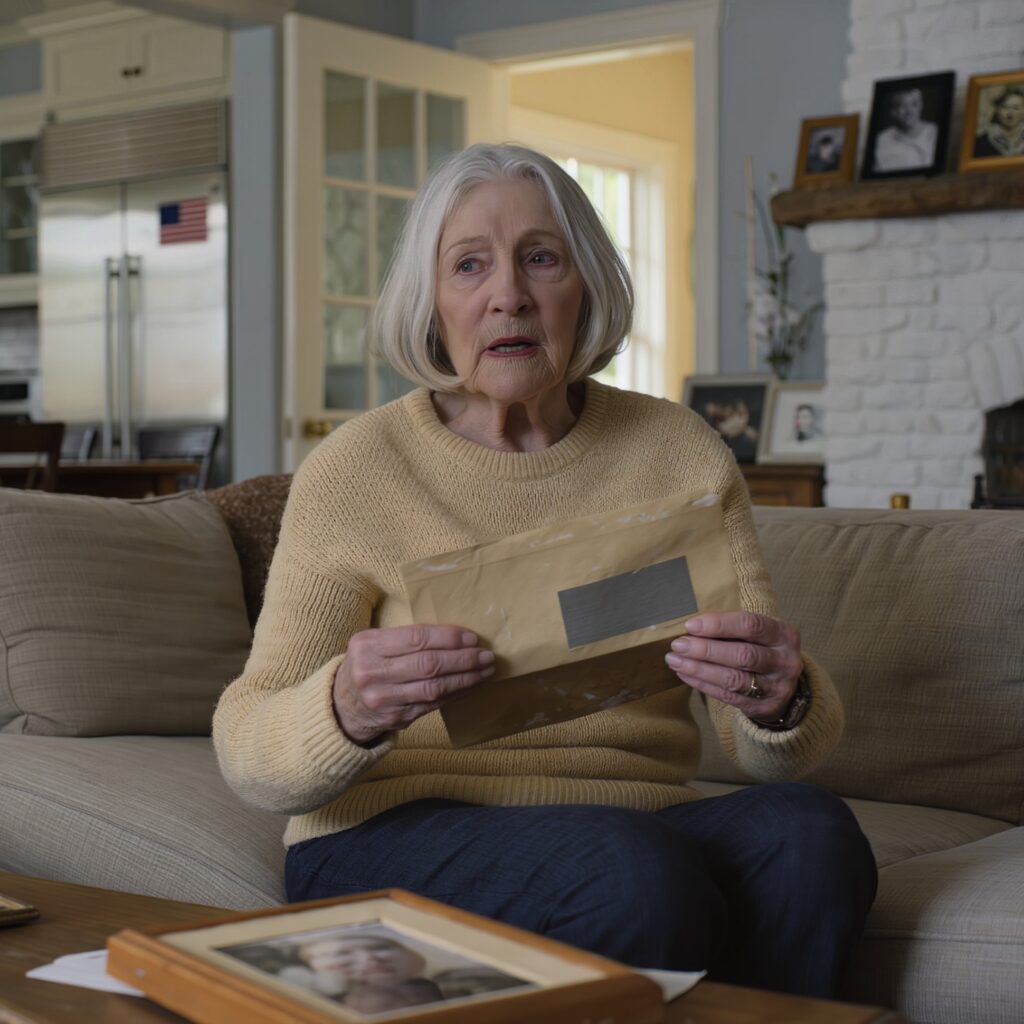
Look behind the frames, Maggie. All of them.
Those were my husband’s last words before he died. I thought it was the morphine talking. Dying people say strange things. But three days after his funeral, I couldn’t sleep. I took down our wedding photo and turned it over, cut away the backing, and found an envelope taped to the back. Fresh tape. Inside was a letter in his handwriting. It started with an apology, then one sentence about a name I’d never heard.
I stood in my kitchen at two in the morning, holding a letter from my dead husband, and realized I’d been married to a stranger.
My children had been acting strange for weeks. Mysterious phone calls. Whispered conversations. They stopped when I walked in. They searched through their father’s things when they thought I wasn’t looking. They knew something—something they weren’t telling me.
The letter said to look behind all the frames, every picture in the house.
So I did.
Birth certificates with names I didn’t recognize. Documents that made no sense. A bank account with more money than we should have had. And a business card for a private investigator. My husband had been hiding something, something big enough to take to his grave. Something that was about to tear my family apart or bring us together in a way I never imagined.
Before we continue, please leave a comment telling us where you’re watching from and subscribe to Never Too Old channel. We’re creating a community of people who know that our best chapters can happen at any age.
Now, back to the story.
The grass was still wet from the morning rain. I could feel it soaking through my shoes as I stood at the edge of Thomas’s grave, watching them lower the casket. The cemetery workers moved quietly, professionally. They’d done this before, many times.
I hadn’t.
Richard stood on my right, his hand on my elbow like I might fall over. Sarah was on my left, close enough that I could smell her perfume—something floral and expensive. She’d worn it to her wedding; I remembered because Thomas had sneezed during the vows.
People were talking to me. I could hear their voices, low and careful.
“So sorry for your loss. He was a good man. If you need anything…”
I nodded, said, “Thank you,” did whatever you’re supposed to do when your husband of forty-two years is being put in the ground.
Richard’s phone buzzed. He pulled it from his pocket, glanced at the screen, then put it away. Two minutes later, it buzzed again. This time, he stepped back and answered it, his voice too quiet for me to hear.
Sarah noticed, too. She watched him over my shoulder, her jaw tight.
“Who keeps calling him?” I asked.
“Work,” Sarah said, too fast. “You know how Richard is.”
I did know. Richard ran his own consulting firm and treated his phone like a lifeline, but he’d turned it off during the service. I’d seen him do it.
Sarah’s phone chimed. She didn’t answer it, just squeezed my arm and smiled—the kind of smile you give someone when you’re trying to distract them from something.
The service ended. People started to leave. I stood there for a while longer, watching the workers fill in the dirt. Richard and Sarah hovered. They didn’t speak to each other, but they kept looking at each other, having some kind of conversation I wasn’t part of.
“Mom,” Richard said, “we should go.”
I let them guide me to the car.
Three days earlier, I’d been sitting in a different chair in a different room, with the same two people hovering over me. The hospital room smelled like bleach and something underneath it that bleach couldn’t cover. Thomas was in the bed, small under the white sheets. They’d turned off most of the machines an hour before. Now it was just the one monitoring his heart, beeping slower and slower.
Richard and Sarah had gone to get coffee. I knew they were giving me time alone with him. I appreciated it, even though I didn’t know what to do with it.
Thomas’s hand was cold. I held it anyway. His eyes opened just a little. He tried to focus on my face.
“Maggie,” he said. His voice was almost nothing.
“I’m here.”
He squeezed my hand. It took him everything he had.
“Look behind the frames,” he said. Each word cost him. “All of them. Find Daniel.”
“Who’s Daniel?” I asked.
“Tell him I looked for him.” His eyes were wet. “Tell him I’m sorry.”
“Thomas, I don’t understand.”
But he was already gone. His hand went slack in mine. The monitor made a sound I’ll hear for the rest of my life.
Richard and Sarah came back and found me still sitting there, still holding his hand.
My house felt wrong when we got back from the cemetery. Too big. Too quiet.
“We’ll stay tonight,” Sarah said. She was already taking off her coat.
“You don’t have to do that.”
“We want to, Mom.”
Richard was heading toward the kitchen.
“I’ll make coffee.”
I sat on the couch and let them take over. Sarah brought me tea. I didn’t drink it. Richard moved around the house like he was looking for something. He went into Thomas’s office and stayed there for ten minutes. When he came out, he was frowning.
“What were you doing in there?” I asked.
“Just checking if Dad had any paperwork we need to deal with. Insurance stuff. I can handle that.”
“I know you can, but let us help,” Sarah said.
She sat next to me and took my hand.
“We’re worried about you. You shouldn’t be alone right now.”
“I’ve been alone before.”
“Not like this.”
She was right, but I didn’t say so. I let her hold my hand and pretend she was comforting me while her brother went through Thomas’s office.
They left around ten. Sarah hugged me at the door. Richard kissed my forehead. They both made me promise to call if I needed anything. Their phones buzzed as they walked to their cars.
I locked the door behind them and stood in the hallway, listening to the silence.
Thomas’s voice was still in my head.
Look behind the frames.
I’d spent three days telling myself it was the morphine. Dying people say strange things. Daniel was probably someone from his childhood or a cousin I’d never met. It didn’t mean anything.
But I couldn’t sleep.
At two in the morning, I was sitting on the couch in the dark, staring at the wedding photo on the mantle. We’d been so young. Thomas was twenty-nine. I was twenty-six. His suit was brown because that’s what his friend loaned him. My dress was my mother’s. We got married in a courthouse and went to a diner after.
Best day of my life.
I got up and took the frame off the mantle. It was heavier than I expected. I turned it over. The back was covered with that brown paper they use to seal frames. It looked old, untouched. I almost put it back.
Instead, I went to the kitchen and found a old knife, slid it under the edge of the paper, and cut it away.
There was an envelope taped to the back of the frame. The tape was fresh electrical tape, gray and industrial. Thomas had put this here recently.
My hands were shaking when I pulled it off.
Inside the envelope was a letter in Thomas’s handwriting. The sight of it made my throat close up. His writing was messy. Always had been. He wrote like a man in a hurry. There was also a business card, white and simple.
Frank Delgado, Private Investigator.
A phone number. An address in the city.
I sat down at the kitchen table and unfolded the letter.
My dearest Maggie,
If you’re reading this, I’m gone, and I’m sorry. I’m sorry for forty-two years of a lie I told by omission. Everything between us was real. The love, the life, the children, all real. But I wasn’t whole. I left part of myself behind to protect someone.
The man you married was Thomas Brennan, but I was born Henry Kovak. I changed everything about myself to keep someone I love alive.
I had a son before I met you. His name is Daniel, and I gave him up to save his life.
I was twenty-two, broke, and desperate. Elena, the woman I loved, was dying, pregnant with our child. I borrowed money from a dangerous man to try to save her. She died anyway. And the man came for me and our baby. To protect Daniel, I gave him up for adoption and disappeared. It was the only way to keep him safe.
I’ve searched for him for forty-eight years. I found him six months ago, but this disease found me first. I’m out of time.
You’re reading this because I trust you more than I trusted myself. Find him. Give him the letter I wrote for him. Tell him I never stopped looking. Tell him I’m sorry.
Richard and Sarah will be scared and angry. They won’t understand at first. Help them see that love doesn’t divide, it multiplies.
Frank Delgado helped me find Daniel. He’ll help you, too. You’re the strongest person I ever knew. Finish what I couldn’t.
I love you.
Forgive me,
Thomas
I read it three times. Then I put it down on the table and stared at the wall.
My husband had a son. A son who was forty-eight or forty-nine years old. A son he’d never told me about. A son he’d been looking for since before I met him. Richard and Sarah had a brother.
I had questions. Too many. But Thomas had left me answers.
“Behind the frames,” he’d said. “All of them.”
I looked around the kitchen. There were frames everywhere. On the walls, on the shelves, on the refrigerator. Forty-two years of marriage documented in photographs. How many of them were hiding something?
I picked up Frank Delgado’s card and held it up to the light. The paper was thick, expensive. A private investigator. Thomas had hired a private investigator.
I looked at the letter again.
You’re the strongest person I ever knew.
He’d always said that—when I went back to work after Sarah was born, when my mother died, when I had to put my father in a nursing home.
“You’re stronger than you think, Maggie.”
I folded the letter and put it back in the envelope with the business card. Then I went to the living room and started taking down frames.
Over the next three days, I opened every frame in the house.
The family photo from the beach came first. Richard at seven, Sarah at three, Thomas holding her on his shoulders. I turned it over and cut away the backing.
Inside was a birth certificate.
Henry James Kovak, born March 15, 1952.
Mother: Dorothy Kovak.
Father: James Kovak.
So that was his real name. Henry Kovak.
There was a photograph tucked behind the certificate. A young man I barely recognized, standing next to a young woman with dark hair. She was visibly pregnant, her hand resting on her belly. They stood in front of a brick building, both smiling. The back of the photo had two names written in faded ink.
Henry and Elena. April 1975.
Elena, the woman from the letter.
I set the photo aside and pulled out the next document: a death certificate.
Elena Maria Torres. Died July 18, 1975.
Cause of death was listed as complications from childbirth. She was twenty years old. Thomas would have been twenty-three. Henry—whatever I was supposed to call him now.
The last item was a smaller photograph, the hospital kind: a baby in one of those clear plastic bassinets. The card attached to it read:
Baby Boy Kovak, born July 18, 1975, 7 lb 2 oz.
Daniel, born the same day his mother died.
I spread everything out on the table and stared at it.
This was Thomas’s life before me. Henry’s life. A life I knew nothing about.
The third frame hung in our bedroom. His parents, both long dead. I hadn’t looked at that photo in years. I took it down and opened the back.
Inside was another envelope with newspaper clippings. The paper had yellowed and gone brittle. I unfolded the first one carefully.
An obituary.
Elena Maria Torres, aged twenty, died July 18, 1975, survived by infant son, family, and friends. Services at St. Antony’s Church.
The second clipping was smaller, from the legal notices section, just a few lines.
Petition for adoption, Baby Boy Kovak. Closed records, with a case number listed.
There was a photocopy of a legal document.
Henry James Kovak petitions for voluntary termination of parental rights, adoption to be closed and sealed.
The date was August 1975, barely a month after Elena died.
The last paper was another legal form, a name-change petition.
Henry James Kovak requests legal name change to Thomas Warren Brennan.
Granted September 1975.
Within three months, he’d lost Elena, given up his son, and erased himself.
I sat on the edge of the bed and looked at Thomas’s photo on the nightstand—our last anniversary. He was smiling, tiramisu on the table in front of him, even though he wasn’t supposed to have sugar.
Why didn’t you tell me? I thought. But I already knew. He’d explained it in the letter.
The fourth frame took me another day to work up to. The vacation photo from Cape Cod fifteen years back. We’d rented a cottage for a week with Richard and Sarah’s families. It rained four out of seven days, but Thomas said it was perfect anyway.
Inside the frame was a bank statement for our joint savings account—the one Thomas had opened in 1982, the year after we married. Both our names on it:
Thomas Warren Brennan and Margaret Anne Brennan.
I’d seen statements for this account over the years. Thomas always called it our emergency fund. I never paid much attention. He handled the finances, deposited money every month, said it was for our future. I trusted him.
The balance made me sit down hard.
$237,000.
I’d never looked at it this closely. Never added it up. The deposit records went back decades. Small amounts at first—fifty here, a hundred there. Later it increased. Two hundred a month, sometimes three. Regular as clockwork for forty years.
A note was attached in Thomas’s handwriting.
This is for Daniel. For medical bills, for his children. For the life I couldn’t give him.
Our “emergency fund.” Our savings. It had never been for us. He’d been saving for a son he couldn’t find for four decades. And I’d been signing tax returns and account papers for years without knowing what it was really for.
I picked up Frank Delgado’s business card from the kitchen counter where I’d left it. I’d been looking at that card for days.
I called the number.
A man answered on the second ring.
“Delgado.”
“This is Margaret Brennan. My husband was Thomas Brennan. He had your card.”
A pause.
“Mrs. Brennan. I’ve been hoping you’d call. I’m very sorry for your loss. Can we meet?”
“Of course. When and where?”
We agreed on a coffee shop downtown the next morning at ten.
I arrived early and took a corner table where I could see the door. Frank Delgado walked in right on time. Sixties, gray hair, worn suit, the kind of face that had seen things. He spotted me and came over.
“Mrs. Brennan.”
“Margaret, please.”
He sat across from me and pulled a folder from his bag, set it on the table between us.
“How much did Thomas tell you?” he asked.
“He left letters behind picture frames,” I said. “He said he had a son named Daniel, that he’d been searching for him and you helped.”
Frank nodded.
“I worked for your husband for fifteen years. He came to me back in 2010. Said he’d been searching on his own since the ’70s, getting nowhere. Wanted someone who knew what they were doing.”
“And did you?” I asked.
“I like to think so, but closed adoptions are hard. Sealed records. Took me all fifteen years to crack it.”
“How did you finally do it?”
“Laws changed in some states,” he said. “Made it easier for adoptees to access birth records if they petitioned. I kept monitoring those petitions, looking for anyone born July 18, 1975, searching for birth parents. Found Daniel’s petition about seven months ago.”
He opened the folder and pulled out a photograph. A man in his late forties standing outside a house. Tall, broad shoulders, dark hair going gray. He looked like Thomas. Same jaw. Same stance, with his weight on one leg.
“That’s Daniel,” Frank said. “Daniel Novak. The name his adoptive parents gave him. Lives about two hours from here. Works as an electrician. Two kids, both teenagers. Divorced about five years back.”
“Thomas knew all this?” I asked.
“I gave him the full report six months ago. He sat in his car in my parking lot and cried. Said he was going to write a letter, make a plan to meet Daniel face to face. Called me two weeks later and told me he’d been to the doctor.”
My throat went tight.
“The cancer,” I said.
“Yeah. He knew time was short. Asked me to help him put everything together for you. Said you were the only person he trusted to finish this.”
I looked at the photo of Daniel. He had kind eyes.
“Has Daniel been looking, too?” I asked.
“For years,” Frank said. “That’s how I found him. He hired his own investigator, tried to unseal his adoption records. When I found his petition, I knew it had to be him. Dates matched, location matched, everything.”
Frank pulled out more papers—contact information, Daniel’s address, phone number, a full background report.
“Your husband wanted you to have this,” he said. “He was putting it behind another frame, but ran out of time, so he left it with me to give to you.”
Frank’s eyes were sad.
“He really loved you. Talked about you every time we met. Called you the strongest person he knew. He kept saying that. He meant it.”
I took the folder and held it. Inside was everything I needed to find Daniel, a man I’d never met. A man who didn’t know I existed.
“Do my children know about this?” I asked.
Frank shifted in his seat.
“When Daniel couldn’t find his birth father through official channels, he did what people do. Found Richard and Sarah online. Reached out to them about three weeks ago, right before Thomas died.”
My stomach dropped.
“They knew,” I said.
They knew someone claiming to be their father’s son had contacted them. I don’t think they believed him. That explained the phone calls at the funeral, the searching through Thomas’s office. They knew and hadn’t told me.
I thanked Frank and left with the folder, drove home, and spread everything on the kitchen table next to the other documents. Then I called Richard.
“Can you and Sarah come over tonight? I need to talk to both of you.”
“Is everything okay?”
“Just come over.”
Around six, they arrived together. I heard them on the porch talking quietly before Richard used his key.
“Mom.”
He came into the kitchen and stopped when he saw the papers on the table.
“What is all this?” he asked.
“I was hoping you’d tell me.”
He looked at the documents spread across the table. His face went pale.
“Where did you get these?”
“Your father left them for me. Behind the picture frames, along with a letter explaining he had a son before he met me.” I kept my voice level. “A son who contacted you three weeks ago. A son you decided I didn’t need to know about.”
“Mom, it’s not like that—”
“Then what is it like?”
Sarah appeared in the doorway.
“We were trying to protect you,” she said.
“From what?” I asked.
“From some stranger trying to take advantage while you’re grieving,” Richard said.
He pulled out a chair and sat.
“This guy came out of nowhere claiming to be Dad’s son. We thought he wanted money.”
“He has a name. Daniel,” I said.
“We don’t know that’s really his name. We don’t know anything except he showed up at a very convenient time.”
“Your father knew about him,” I said. “Your father hired a private investigator to find him. Your father looked for him for forty-eight years.”
Sarah sat down, too.
“Dad never mentioned any of this.”
“No, he didn’t, because he was protecting Daniel from a dangerous man who would have killed them both.”
I pushed the folder across the table.
“Read it. Then tell me if you still think he’s trying to take advantage.”
They opened the folder. I watched Richard’s jaw clench and Sarah’s eyes fill. When they finished, Richard looked up.
“This is real,” he said.
“As real as we are,” I answered.
Sarah wiped her eyes.
“Dad had another son. We have a brother.”
“Half brother,” Richard said quickly. “A half brother we’ve never met.”
“That’s going to change,” I said.
Richard’s head snapped up.
“What do you mean?”
“I’m going to find him. Your father asked me to, and I will.”
“Mom, you can’t just call some stranger,” Richard said.
“He already knows he’s your father’s son. He’s been searching for his birth parents for years.”
Sarah looked at Richard. Something passed between them.
“What aren’t you telling me?” I asked.
Sarah spoke first.
“When Daniel contacted us, we had him investigated. A background check. We needed to know if he was legitimate. And everything checks out. He’s who he says he is. Dates match. Locations match. Born the same day as that birth certificate. Adopted by the Novak family. Been searching for his birth parents since his twenties.”
“So you knew he was telling the truth and still blocked him.”
Richard leaned forward.
“We didn’t know what Dad would have wanted. We didn’t know any of this existed.” He gestured at the papers. “We thought we were protecting you.”
“And now that you know?” I asked.
They looked at each other.
“Now we’re asking you to wait,” Richard said. “Let us look into this more.”
“Your father left me clear instructions. I’m going to follow them.”
I gathered the papers and put them in the folder, picked up the bank statements.
“I’m going to the bank tomorrow to handle the account. Then I’m calling Daniel. You can come with me or not. Your choice.”
I went upstairs and closed my bedroom door. Sat on the edge of the bed. Thomas’s photo was still on the nightstand. I picked it up.
“I’m going to find him,” I said to it. “I’m going to finish this.”
The next morning, I drove to the bank with the account information. The manager led me to a private room and helped me access everything. The money was there, just like Thomas had documented. Decades of deposits in the account we’d held jointly all those years.
There was also a safety deposit box I didn’t know about. The key had been in the folder from Frank.
Inside was a sealed envelope, heavy and thick.
For Daniel.
Written in Thomas’s shaky handwriting from his final weeks. His letter to his son.
There were also photographs, recent ones—the kind Frank must have taken during his investigation. Daniel outside a job site in work clothes, tool belt around his waist. Daniel with two teenagers at a diner, all of them laughing at something. Daniel’s house. A small ranch with a truck in the driveway.
Thomas had these for the last six months of his life. Had held them and looked at them and never met the person in them.
I put everything in my purse and drove home. Then I pulled out my phone and the contact information Frank had given me. The number rang twice before someone answered.
“Hello.” Deep voice, cautious, male.
“Is this Daniel Novak?”
“Yes. Who’s this?”
I took a breath.
“My name is Margaret Brennan. I’m Thomas Brennan’s widow. I think you tried to contact my children a few weeks ago.”
Silence. Then—
“Mrs. Brennan. Yes, I did. They told me not to call again.”
“I know. I’m sorry about that. They didn’t understand.”
I gripped the phone tighter.
“I found your father’s letters. I know who you are. I’d very much like to meet you.”
His breath caught.
“You believe me?”
“I do. Can we meet? I have things your father wanted you to have.”
“When?” he asked.
“As soon as you can.”
We agreed to meet the next day at a coffee shop halfway between us.
I hung up and sat at the kitchen table, hands shaking. I was going to meet Thomas’s son. Henry’s son.
The coffee shop was halfway between us—two hours for me, two hours for him. I got there thirty minutes early and chose a table near the window where I could watch the parking lot. I’d brought the folder Frank gave me. Inside was Thomas’s sealed letter to Daniel, the photographs from the safety deposit box, and copies of everything I’d found behind the frames—birth certificates, death certificates, adoption papers, proof.
A blue pickup truck pulled into the lot at exactly eleven. A man got out—tall, broad shoulders, wearing jeans and a work jacket. He stood by his truck for a minute, looking at the coffee shop like he was deciding whether to go in.
Daniel.
He looked so much like Thomas, it hurt. Same height, same build, same way of standing with his hands in his pockets. His hair was darker but going gray at the temples. He had Thomas’s jaw.
He finally walked toward the entrance. I watched him come through the door, saw him scan the room. Our eyes met. He knew. Somehow he knew it was me.
He came over slowly.
“Mrs. Brennan?”
“Margaret, please.”
“Daniel,” he said.
He held out his hand and I shook it. His palm was rough, calloused—working hands. He sat down across from me. Up close, I could see Thomas even more clearly. The shape of his eyes. The way he held his mouth when he was nervous.
“Thank you for meeting me,” he said. “I wasn’t sure you would.”
“I wasn’t sure either,” I admitted. “Not at first.”
A waitress came by and we both ordered coffee. Neither of us would drink it.
Daniel pulled a worn manila envelope from his jacket pocket and set it on the table between us.
“I brought everything I have,” he said. “Thought you might want to see it. Proof I’m who I say I am.”
“I believe you. But yes, I’d like to see it.”
He opened the envelope carefully and pulled out documents one by one. His adoption certificate.
Daniel Robert Novak. Adopted August 19, 1975. Birth parents listed as sealed records.
A photograph. An older couple holding a baby. The woman had kind eyes and graying hair. The man wore glasses and smiled at the camera.
“My parents,” Daniel said. “The Novaks. They adopted me when I was five weeks old. Raised me in Pennsylvania. They were good people. Were. They died twelve years ago. Car accident.”
His voice was flat.
“After that, I started looking,” he said, “trying to find out where I came from.”
He showed me more papers—court petitions to unseal his adoption records, letters from lawyers, a thick file documenting years of searching.
“I hired an investigator about four years ago,” he said. “Guy took my money and found nothing. Hired another one about two years back. He found the birth certificate. Baby Boy Kovak, born July 18, 1975. Mother Elena Torres. Father Henry Kovak.”
He looked at me.
“Your husband was Henry Kovak before he was Thomas Brennan, right?”
“Yes.”
“It took me another year to find the name-change records. Henry James Kovak became Thomas Warren Brennan in September 1975. I traced him here. Found the obituary online about a month ago. Saw he had a wife and two children.”
He stopped.
“I’m sorry about your loss. I know it’s recent.”
“Thank you,” I said.
“When I contacted your children, they thought I was lying or trying to scam you. I don’t blame them.”
I pulled my own folder out.
“Your father left me this behind picture frames in our house,” I said. “He hid pieces of his past life there for me to find after he died.”
I spread the documents on the table. Daniel leaned forward. His hand shook slightly as he picked up the birth certificate with his name on it.
Baby Boy Kovak.
“He kept this,” Daniel said. His voice broke a little. “He kept my birth certificate.”
“He kept everything he could,” I said.
I showed him the photograph of young Henry and Elena, his birth parents. Daniel stared at it for a long time.
“That’s my mother,” he said quietly. “Elena Torres. She was twenty years old. She’s beautiful.”
He touched the edge of the photo with one finger.
“What happened to her?” he asked.
This was the hard part. The part I’d been practicing in my head all morning.
“She died the day you were born,” I said gently. “Complications from childbirth.”
Daniel set the photo down carefully and closed his eyes for a moment.
“And my father,” he said. “Henry. Why did he give me up?”
“He was twenty-two. Broke,” I said. “Elena was sick during the pregnancy and needed medical care they couldn’t afford. Your father borrowed money from a dangerous man to pay for it—a loan shark. When Elena died anyway, he couldn’t repay the debt.”
Daniel opened his eyes and looked at me.
“The man came after him, threatened to kill him, then threatened to kill you to force payment,” I went on. “Your father realized that as long as you were connected to him, you were in danger. So he made a choice. He gave you up for adoption with sealed records so that man couldn’t trace you through him. Then he changed his name and disappeared. It was the only way he could keep you safe.”
Daniel sat back in his chair and stared at the ceiling.
“I grew up thinking he didn’t want me,” he said. “That he abandoned me.”
“He wanted you,” I said. “He just couldn’t keep you.”
“Did he ever try to find me?” Daniel asked.
“He tried for forty-eight years,” I said. “He hired investigators. He spent thousands of dollars. The adoption was closed and sealed. The laws made it almost impossible.” I paused. “He found you six months ago. Finally.”
Daniel looked at me sharply.
“He found me?” he repeated.
“His investigator found your petition to unseal your adoption records,” I said. “Tracked you down. Gave your father a full report six months ago.”
“Six months?” Daniel’s voice was hollow. “He knew where I was for six months and never contacted me?”
“He was going to,” I said. “He wanted to meet you face to face. Then he went to the doctor and found out he had cancer. Terminal. He had maybe a year, then six months, then weeks.”
“So he died before we could meet,” Daniel said.
“Yes.”
Daniel put his head in his hands. He sat like that for a long time. I waited.
When he looked up, his eyes were red.
“I was so close,” he said. “We were so close.”
“I know. I’m sorry.”
“What was he like?” Daniel asked. “Your husband. Thomas.”
I thought about how to answer that.
“He was kind,” I said. “Quiet. He worked hard. He loved his family. He was a good father to Richard and Sarah.” I hesitated. “He was also a man carrying a secret that weighed on him every day. I didn’t know it until after he died, but I felt it sometimes—a sadness in him I couldn’t reach.”
“Did he ever talk about me?” Daniel asked.
“Not to me,” I said. “Not directly. But he saved money for you. For forty years, he put it in an account in both our names and told me it was for emergencies. I signed the papers without knowing what it was really for. He was saving for you the whole time.”
“How much?” Daniel asked.
“Two hundred thirty-seven thousand dollars,” I said.
Daniel stared at me.
“That’s not possible,” he said.
“It’s possible,” I said. “I saw the records—deposits every month for forty years. He never stopped.”
“Why would he do that?” Daniel asked.
“Because he never stopped being your father,” I said.
Daniel looked down at his hands.
“I have two kids,” he said. “Teenagers. Lily’s sixteen. Connor’s fourteen. I’ve been struggling to pay for their college funds. Working double shifts sometimes.” He laughed, but it wasn’t happy. “And my father I never met was saving money for me this whole time.”
“He wanted you to have it,” I said. “He wanted you to have everything he couldn’t give you when you were born.”
I reached into the folder and pulled out the sealed envelope for Daniel, written in Thomas’s shaky handwriting.
“He left you this,” I said. “It’s a letter. I haven’t read it. It’s yours.”
Daniel took the envelope like it might break. Held it for a moment.
“Can I open it now?” he asked.
“Of course.”
He slid his finger under the flap and pulled out several pages. Thomas’s handwriting covered them, messier than usual from the pain medication and weakness of his final weeks.
I watched Daniel read, watched his face change, watched tears start and then fall. When he finished, he folded the letter carefully and put it back in the envelope, wiped his eyes with the back of his hand.
“He said he wished he could have been there for my graduation,” Daniel said quietly. “My wedding. When my kids were born. He said he would have given anything to watch me grow up.” His voice cracked. “He said giving me up was the hardest thing he ever did. That he did it to save my life.” He stopped, swallowed hard. “He said he was proud of me. That I turned out better than he could have made me. That he was sorry for every birthday he missed.”
“He meant all of it,” I said.
“He signed it ‘Henry,’ not ‘Thomas,’” Daniel added. “That was his real name. The name he was born with. He wanted me to know him as he really was.”
Daniel looked at me.
“Why are you doing this?” he asked. “You didn’t have to find me. You could have read his letter and thrown everything away. Your life would be simpler.”
“My husband asked me to do this,” I said. “He trusted me to finish what he couldn’t.”
“And that’s the only reason?” Daniel asked.
I thought about it.
“No,” I said. “I wanted to meet you. I wanted to know the person my husband spent forty-eight years searching for. I wanted to understand what mattered to him enough to carry it in silence for our entire marriage.”
“What about your children?” he asked. “Richard and Sarah. Do they know you’re here?”
“They know,” I said. “They’re not happy about it.”
“Are they going to be a problem?” he asked.
“Probably,” I said. “At first.”
I reached across the table and touched the photograph of young Henry and Elena.
“But they’ll come around,” I said. “You’re their brother.”
“Half brother,” Daniel said automatically.
“Brother,” I answered.
Daniel looked at the letter again, at the photographs, at all the evidence of a father who’d loved him from a distance for almost fifty years.
“What happens now?” he asked.
“That’s up to you,” I said. “Your father left you money. A lot of it. It’s yours. No strings attached.”
I paused.
“He also left you a family, if you want it,” I said. “I mean me and Richard and Sarah and their children—your nieces and nephews.”
I smiled a little.
“It’s complicated and messy, and they’re going to be difficult about it at first,” I said. “But if you want to be part of this family, you are. Your father made that clear in his letter to me.”
Daniel was quiet for a long time. Then he said, “I’ve spent my whole adult life wondering where I came from. Who I was. Why I was given up. Now I know.” He looked at me. “He gave me up to save my life. He spent his whole life trying to find me. And he left me you.”
“He did,” I said.
“Then yes,” Daniel said. “I want to meet them. Richard and Sarah. I want to know my family, even if they’re not welcoming at first.”
“Even then,” I said.
I gathered up the photographs and documents, put them back in the folder, except for the ones that belonged to Daniel—the letter, the photo of his parents, his birth certificate.
“Keep these,” I said. “They’re yours.”
He took them carefully.
“Thank you for believing me,” he said. “For coming here. For finishing what he started.”
“Thank you for searching,” I said softly. “For not giving up. He would have wanted you to keep looking.”
We stood up. The coffee we’d ordered sat cold on the table. Daniel walked me to my car. We stood in the parking lot and I looked up at him. He really was tall. Thomas had been tall, too.
“Can I call you?” he asked. “Maybe we could meet again. I have questions about him. About his life. What he was like.”
“Yes,” I said. “I’d like that.”
“I don’t want to make things harder for you with your children,” he said.
“Let me worry about that,” I answered.
He nodded and looked down at his hands, holding the letter and the photograph of his parents.
“I didn’t think anyone would believe me,” he said. “Your kids certainly didn’t.”
“They will eventually,” I said.
“You sound more certain than I feel,” he answered.
“I’m not certain about them,” I said. “But I’m certain about you.”
I pulled my keys from my purse.
“This is complicated, Daniel,” I said. “It’s going to take time. But your father wanted you to have a family, so that’s what I’m going to give you.”
He looked at me for a long moment, then suddenly stepped forward and hugged me—quick and awkward, but real.
“Thank you,” he said into my shoulder. “Thank you for not turning me away.”
I hugged him back. He smelled like sawdust and coffee, like work and worry and hope. When he pulled away, his eyes were red again.
“I’ll wait to hear from you,” he said.
“You will,” I promised.
I drove home with the folder on the passenger seat and Daniel’s phone number written on a scrap of paper in my wallet.
Thomas had a son.
And now I had another choice to make: tell Richard and Sarah I’d met him or give Daniel and myself time to build something real first.
I decided to wait.
I met Daniel four times over the next three weeks. Coffee at first, then lunch at a diner halfway between us, then a walk around a park when the weather turned warm. We talked about Thomas. I told him about the man I’d married—how he read the newspaper every morning with his coffee, how he hummed when he was fixing something in the garage, the time he drove through a snowstorm to bring Sarah her forgotten retainer before a school dance.
Daniel told me about the Novaks, his adoptive parents who’d loved him and raised him well. His mother, who made him practice piano even though he was terrible at it. His father, who taught him carpentry and how to fix a car engine. He showed me photos of Lily and Connor. Lily looked like Elena—dark hair and serious eyes. Connor had Daniel’s build, already tall at fourteen. They were good kids, dealing with the divorce, Daniel said. Living with their mother most of the time but spending weekends with him.
I didn’t tell Richard or Sarah about any of it. I meant to. Every time I picked up the phone to call them, I put it back down. The deception sat heavy in my chest, but I kept going back. Daniel needed time. I needed time.
That’s what I told myself.
On a Tuesday afternoon, Richard showed up at my door unannounced. I knew the moment I saw his face that he’d found out.
“Where were you this morning?” he asked. No hello. No how are you.
“I had coffee with a friend,” I said.
“What friend?” he demanded.
“Does it matter?”
“It matters when the friend is the man claiming to be Dad’s son.”
Richard pushed past me into the house. Sarah was behind him, her face tight. They both went straight to the kitchen and stood there waiting for me. I closed the door and followed them.
“You’ve been meeting with him,” Richard said. “For weeks. Behind our backs.”
“I’ve been getting to know him,” I said. “There’s a difference.”
“We asked you to wait,” he said. “We asked you to let us look into this more before you did anything.”
“You asked me to wait forever,” I said. “That’s different than waiting.”
Sarah pulled out her phone and set it on the table.
“I have a tracker app for Mom’s safety in case she falls or gets lost,” she said.
She looked at me.
“You’ve been driving two hours away every few days. Same coffee shop. Same diner. I checked. Daniel Novak lives twenty minutes from both places.”
I should have been angry about the tracking. Instead, I just felt tired.
“Yes,” I said. “I’ve been meeting Daniel. He’s your father’s son. He has a right to know his family.”
“We don’t know that for sure,” Richard said.
“Yes, we do,” I said. “You saw the evidence—the birth certificate, the adoption papers, the name change. It’s all real.”
“Documents can be faked,” he said.
“Not like that. Not going back fifty years,” I said.
I pulled out a chair and sat down.
“Your father left me instructions,” I said. “He wanted me to find Daniel. He wanted Daniel to have a family. I’m doing what he asked.”
Richard leaned against the counter, arms crossed.
“Dad lied to us our entire lives,” he said. “How do we know he was telling the truth about this?”
“Because I found it behind the picture frames he told me to look behind. Because a private investigator he hired for fifteen years confirmed it. Because Daniel has been searching for his birth parents since his adoptive parents died twelve years ago.” I looked at both of them. “And because Daniel looks exactly like your father.”
Sarah sat down across from me.
“You’ve met him multiple times,” she said. “What’s he like?”
“He’s kind,” I said. “Careful. He works as an electrician. He has two teenagers, Lily and Connor. He’s struggling, but he’s trying.”
I paused.
“He’s nothing like what you think he is,” I said.
“What do we think he is?” Richard asked.
“A con artist. A liar. Someone trying to take advantage,” I said. “Can you blame us?” he shot back.
“No,” I said. “But I’m asking you to trust me now. I’ve spent three weeks getting to know him. He’s real. This is real.”
Richard and Sarah looked at each other—that silent conversation they’d been having since the funeral.
“We want to meet him,” Sarah said.
“You already told him you weren’t interested,” I reminded them.
“That was before we knew you were sneaking around to see him,” Richard said. His voice had an edge. “If he’s going to be part of this family, we need to know who he is.”
“He’s your brother,” I said.
“Half brother,” Richard corrected.
“Does that matter?” I asked.
Richard didn’t answer.
I stood up and went to the drawer where I’d been keeping everything. Pulled out the folder with all the documents and set it on the table between us.
“Look at it again,” I said. “All of it.”
The birth certificate with his name on it. The photo of your father when he was twenty-two, holding a baby. Elena’s death certificate from the day Daniel was born. The adoption papers. The name change.
I spread it all out.
“Your father was Henry Kovak before he was Thomas Brennan,” I said. “He gave up his son to save his life. Then he spent forty-eight years trying to find him.”
Sarah picked up the photo of young Henry and Elena. Stared at it.
“I’ve never seen Dad look like this,” she said. “So young.”
“He was twenty-three when she died,” I said. “Twenty-two when Daniel was born. And he never told us. Never told you. Just carried it alone for our entire lives.”
She looked up at me.
“Did he ever think about telling us?” she whispered. “Or were we just part of the lie he was living?”
“You were everything to him,” I said. “But he never stopped being Daniel’s father either. Both things were true.”
Richard picked up the bank statements.
“Two hundred thirty-seven thousand dollars,” he said. “He saved all this for a son he couldn’t find. He never gave up looking.”
“What does Daniel want?” Richard asked. “The money? A family? What?”
“He wants to know where he came from. Who his parents were. Why they gave him up,” I said.
I gathered the papers back into the folder.
“The same things you’d want if you’d spent your whole life wondering,” I added.
Richard was quiet for a long time. Then he said, “We want to meet him. Soon. Here.”
“It’s going to be difficult,” I warned.
“I don’t care,” he said.
I pulled out my phone and sent Daniel a text.
Can you come to my house tomorrow afternoon? Richard and Sarah want to meet you.
His response came fast.
Yes. What time?
We agreed on two.
The next day, I cleaned the house even though it didn’t need it. Made coffee nobody would drink. Set out cookies nobody would eat.
Daniel arrived five minutes early. I saw his truck pull up and went to open the door before he could knock.
“They’re already here,” I said. “In the living room.”
“How angry are they?” he asked.
“Very,” I said.
“Should I have brought something?” he asked. “Flowers? I don’t know the protocol for meeting siblings who think you’re a fraud.”
“Just bring yourself,” I said.
He followed me into the living room. Richard and Sarah stood up when we walked in. The three of them looked at each other. The resemblance was impossible to ignore. Daniel had Thomas’s height, his build, his hands. Richard had Thomas’s eyes. Sarah had his smile.
They were siblings, whether they wanted to be or not.
“Daniel, this is Richard and Sarah, my children,” I said. I paused. “Your half brother and sister.”
“Half brother,” Richard corrected. His voice was cold.
Daniel held out his hand.
“It’s good to meet you,” he said. “Finally.”
Richard looked at the hand for a long moment before shaking it. His grip was brief, formal.
Sarah didn’t offer her hand at all. She just said, “Sit down. We have questions.”
Daniel sat in the armchair across from the couch. Richard and Sarah sat together like a united front. I stayed standing near the doorway, ready to referee.
“Tell us who you are,” Richard said. “From the beginning.”
Daniel took a breath.
“My name is Daniel Novak,” he said. “I’m forty-nine years old. I was born July 18, 1975, and given up for adoption five weeks later. I was adopted by Paul and Linda Novak. They raised me in Pennsylvania. They were good people. They died twelve years ago in a car accident.”
“Why?” Sarah asked. “Why did you start looking for your birth parents?”
“Because I wanted to know where I came from,” Daniel said. “Who I was. Medical history. Family history. All the things adoptees wonder about.”
“And you found Dad,” Richard said.
“Eventually,” Daniel answered. “It took years. The adoption was closed. Records were sealed. I hired investigators. Got nowhere for a long time. Then I found the birth certificate—Baby Boy Kovak, mother Elena Torres, father Henry Kovak. From there, I found the name-change records. Henry Kovak became Thomas Brennan.”
“And then he died,” Richard said flatly.
“And then he died,” Daniel said. “I saw the obituary. Found you two on social media. Reached out.”
He looked at them.
“You told me to leave your mother alone,” he said. “That I was a fraud. I understood. I would have thought the same thing.”
“So why are you here now?” Richard asked.
“Because your mother called me,” Daniel said. “Because she found letters your father left behind picture frames. Letters that explained everything. Because she believed me.”
Sarah leaned forward.
“What do you want from us?” she asked.
“Nothing you don’t want to give,” Daniel said. “I’m not here for money. I’m not here to take anything from you. I just wanted to know my father. I wanted to meet his family. My family.” He paused. “If you’ll have me.”
Richard’s jaw was tight.
“Dad never mentioned you,” he said. “Not once in forty-two years. How do you explain that?”
“He couldn’t,” Daniel said. “The man he borrowed money from threatened to kill me. The only way to keep me safe was to completely disappear from my life. Change his name, move away, never contact me. If he’d told anyone about me, it could have gotten back to that man.”
Daniel’s voice was steady.
“He gave me up to save my life,” he said. “That’s what your mother said. It’s what he said in the letter he left for me.”
Daniel pulled the envelope from his jacket pocket.
“He found me six months before he died,” he said. “His investigator finally tracked me down. He was going to come meet me. Then he got the cancer diagnosis. He knew he didn’t have time.”
Sarah’s eyes filled.
“He died knowing you existed but never meeting you,” she said.
“Yes,” Daniel answered. “That must have been hard.”
“It was harder for him,” Daniel said. “He spent forty-eight years searching. Finally found me and ran out of time.”
He looked down at the letter.
“He said he wished he could have been there for my graduation, my wedding, when my kids were born,” Daniel said quietly. “He said giving me up was the hardest thing he ever did. That he did it to save my life.”
The room was quiet. Richard finally spoke.
“You have kids?” he asked.
“Two,” Daniel said. “Lily’s sixteen. Connor’s fourteen.”
“So Dad has grandchildren he never met,” Richard said.
“Yes,” Daniel answered. “And you have a niece and nephew you didn’t know about.”
Sarah pulled out her phone.
“Can I see photos?” she asked.
Daniel showed her pictures of Lily and Connor. Sarah looked at them for a long time.
“Connor looks like Dad,” she said. “The same build.”
“He does,” Daniel said. “Lily looks like her grandmother. My birth mother, Elena.”
Richard stood up and walked to the window, stood there with his back to us. Sarah kept looking at the photos.
“Where do they live?” she asked. “Do they know about us?”
“They live with their mother mostly,” Daniel said. “I have them on weekends. And yes, I told them I found my birth father’s family. They wanted to meet you.”
“They did?” Sarah asked.
“They’ve never had extended family before,” Daniel said. “My ex-wife’s parents are gone. The Novaks are gone. It’s been just us. But I told them we’d have to wait, see how things went.”
Richard turned from the window.
“What was in the letter?” he asked. “The one Dad left for you.”
Daniel’s voice went quiet.
“He said he searched for me his entire adult life,” he said. “That he never stopped being my father, even though he couldn’t be with me. He said he was proud of me, that I turned out better than he could have made me. He stopped.” Daniel swallowed. “He said he loved me. And he was sorry.”
Sarah was crying now, wiping her eyes with her hands. Richard’s face was stone, but his eyes were wet.
“He never stopped looking for you,” Richard said.
“No, he didn’t,” Daniel answered.
“That’s why he was sad sometimes,” Sarah said. “Mom said she felt it but couldn’t reach it. It was you. It was always you.”
“I’m sorry,” Daniel said. “I never meant to cause him pain. Or you.”
“You didn’t,” I said. “He did what he thought was right. Kept you secret to keep you safe.”
Richard came back to the couch and sat down.
“I’m angry at him for lying,” he said. “But I understand why he did it.”
The room fell quiet again, but it was different this time. Less hostile. Just heavy with grief and confusion and the weight of fifty years.
Sarah finally looked up.
“I’d like to meet them,” she said. “Lily and Connor. If that’s okay with you.”
Daniel’s eyes widened.
“You would?” he asked.
“They’re family, right?” she said.
“Yes,” Daniel said. “They are.”
Richard didn’t say anything for a long time. Then he pulled out his phone.
“Give me your number,” he said. “I’m not promising anything. But I’m not shutting you out either.”
Daniel gave him the number. Richard saved it. Sarah did the same.
When they stood to leave, Richard stopped at the door and looked back at Daniel.
“He loved you,” Richard said. “I don’t know how I feel about any of this yet, but I know he loved you. The letter. The money. The searching. He wouldn’t have done all that if he didn’t.”
“I know,” Daniel said softly. “Thank you for saying it.”
Richard nodded once and walked out. Sarah gave Daniel a small smile before following her brother.
I closed the door behind them and turned to Daniel. He was still sitting in the armchair, looking stunned.
“That went better than I expected,” I said. “They didn’t throw you out.”
“They didn’t,” he said. “They want to meet my kids. Sarah does. Richard will come around.”
Daniel stood up slowly.
“Thank you for making this happen,” he said. “For pushing them.”
“Your father asked me to,” I said. “I’m just doing what he wanted.”
“No,” Daniel said. “You’re doing more than that. You’re giving me a family.”
I walked him to the door and watched him drive away in his blue truck.
Richard and Sarah had met their brother. It wasn’t acceptance yet, but it was a beginning.
Sarah called Daniel first. I heard about it from both of them. She asked him to coffee, brought photo albums from when she and Richard were kids, showed him pictures of Thomas at different ages. Daniel did the same with photos of the Novaks, his adoptive parents. They discovered small things. Both of them were left-handed. Both hated mushrooms. They had the same laugh—quick and surprised.
Richard took longer. Three weeks after the meeting at my house, he sent Daniel a text. Just an address and a time. They met at Thomas’s grave. Daniel told me about it later—how they stood on opposite sides of the headstone, not speaking at first. How Richard finally said, “He should have told us.” How Daniel answered, “He was protecting me. And you.”
They didn’t hug, didn’t make promises, but Richard stopped leaving the room when Daniel’s name came up.
I handled the money transfer at the bank. Two hundred thirty-seven thousand dollars moved from the joint account Thomas and I had held for forty years into an account in Daniel’s name. Daniel sat across from me at the bank manager’s desk and stared at the papers.
“This is real,” he said.
“It’s real,” I answered. “I’ve never had anything like this,” he said.
“Your father wanted you to have it,” I said. “For your kids’ college. For whatever you need.”
He signed the papers with a shaking hand.
Later that week, Sarah brought Daniel a box. Inside was Thomas’s watch—the one his father had given him. Richard added a photo album, the old leather kind with black pages and corners for holding pictures. Family photos going back to Thomas’s parents.
“You should have these,” Sarah said. “You’re part of this, too.”
Daniel couldn’t speak. He just nodded and took the box.
The weekend after that, Daniel brought Lily and Connor to my house. I saw them through the window before they knocked. Lily, tall and serious, dark hair pulled back. Connor, lanky and nervous, hands in his pockets. Both of them looked like they weren’t sure they belonged here.
I opened the door before they could decide to leave.
“You must be Lily and Connor,” I said. “I’m Margaret.”
Lily smiled carefully.
“Our dad talks about you a lot,” she said.
“Good things, I hope,” I answered.
“He says you gave him his family back,” she said.
Daniel stood behind them, proud and terrified.
“They wanted to meet you,” he said.
We sat in the living room. I showed them photos of Thomas and told them stories. Connor asked questions about what kind of work Thomas did, what kind of car he drove. Lily asked quieter questions about what he was like, if he was happy.
“He was,” I said. “But he carried sadness, too. Now I know why.”
Before they left, Lily hugged me—quick, but real.
“Can we call you Grandma Margaret?” she asked. “Dad said it would be okay, but we wanted to ask.”
My throat went tight.
“I’d like that very much,” I said.
Two weeks later, Sarah brought her kids over when Daniel brought his. Four teenagers who didn’t know each other, sitting awkwardly in my living room, eating cookies and looking at their phones. Then Connor mentioned he played basketball. Sarah’s son played too. They started talking about teams and games, and suddenly they were just kids with something in common. The girls took longer, but by the end of the afternoon, Lily was showing Sarah’s daughter something on her phone and they were both laughing.
I made too much food. Richard showed up late, but he showed up. He brought his family, stood in the kitchen with Daniel, and talked about work, about raising teenagers, about normal things.
It wasn’t perfect. Richard still called Daniel by his full name, never just his first name the way Sarah did. There were silences that felt heavy. Moments when someone would start to say something about Thomas and then stop, unsure.
But they were trying.
A month after the first meeting, I hosted dinner. Everyone. All three of Thomas’s children, their families, all the grandchildren. My dining room table wasn’t big enough, so we used the kitchen table, too, pushed together awkwardly with a board across the gap. Mismatched chairs. Too many people talking over each other.
Sarah told a story about the time Thomas drove her to three different stores looking for a specific color of ribbon for a school project. Richard added the detail that it was eleven at night and everything was closed except a twenty-four-hour craft store two towns over.
“He did that kind of thing,” Richard said. “Drove forever if we needed something.”
Daniel listened quietly. Then he said, “In his letter to me, he wrote that he wished he could have done things like that. Driven me places. Been there for small things.”
The table went silent.
“He missed all of it,” Daniel continued. “But he thought about it. He imagined it. That counts for something.”
Sarah reached across the table and squeezed his hand.
The conversation moved on. Lighter things. Someone told a joke. The kids argued about something. Dishes got passed and dropped and passed again. I watched from my seat at the head of the table. Three of Thomas’s children. Seven grandchildren. A family built on secrets and sacrifice and love that survived both.
After everyone left, the house was a mess. Dishes everywhere. Chairs out of place. It smelled like food and coffee and too many people in a small space. I started cleaning up, then stopped, sat down at the table instead.
Thomas’s wedding photo was still on the mantle where I’d put it back after finding his letter behind it. Next to it was a space I’d been thinking about for weeks. I pulled out my phone and looked at the photo I’d taken during dinner. All of us—Richard and Sarah and Daniel, standing together behind the table, their families around them, me at the end, smiling.
The next day, I had it printed and framed. Brought it home and carried it to the mantle. I set it next to Thomas’s and my wedding photo.
Two frames. Two versions of family. Both real.
Thomas had given me forty-two years of marriage, two children, a life built on trust, even when he was carrying weight I couldn’t see. Then in death, he’d given me one more gift. A son who’d spent his whole life searching. Children who learned that family could grow even in grief. Grandchildren who’d never met their grandfather but carried pieces of him in their faces and their gestures.
I touched both frames—the young couple in the first, not knowing what was coming; the full table in the second, proof of what we’d become.
“I finished it,” I said to the photo of Thomas. “Like you asked.”
The house was quiet, but it didn’t feel empty. It felt like the pause between gatherings, like people would be back soon.
They would be. Daniel was bringing the kids next weekend. Sarah wanted to go through more photo albums. Richard had mentioned something about teaching Connor carpentry the way Thomas had taught him.
We were figuring it out. Learning how to be a family that started with secrets but wouldn’t end with them.
I picked up the wedding photo and looked at Thomas’s young face.
“You kept him safe,” I said. “And I brought him home.”
I put the photo back and stepped away. Two frames on the mantle. The family that was and the family that is. Both mattered. Both were real.
And Thomas, wherever he was, could rest knowing his son was no longer alone.
So that’s my story. I’d love to hear what you think. Do you think Thomas was right to keep his secret all those years? Let me know in the comments and subscribe for more stories like mine.







Leave a Reply