I Wasn’t “Successful Enough” for My Sister’s $200,000 Wedding — So I Left a Small Envelope at the Desk. By Cocktail Hour, the Ballroom Went Silent and Our Family’s Definition of Success Did Too
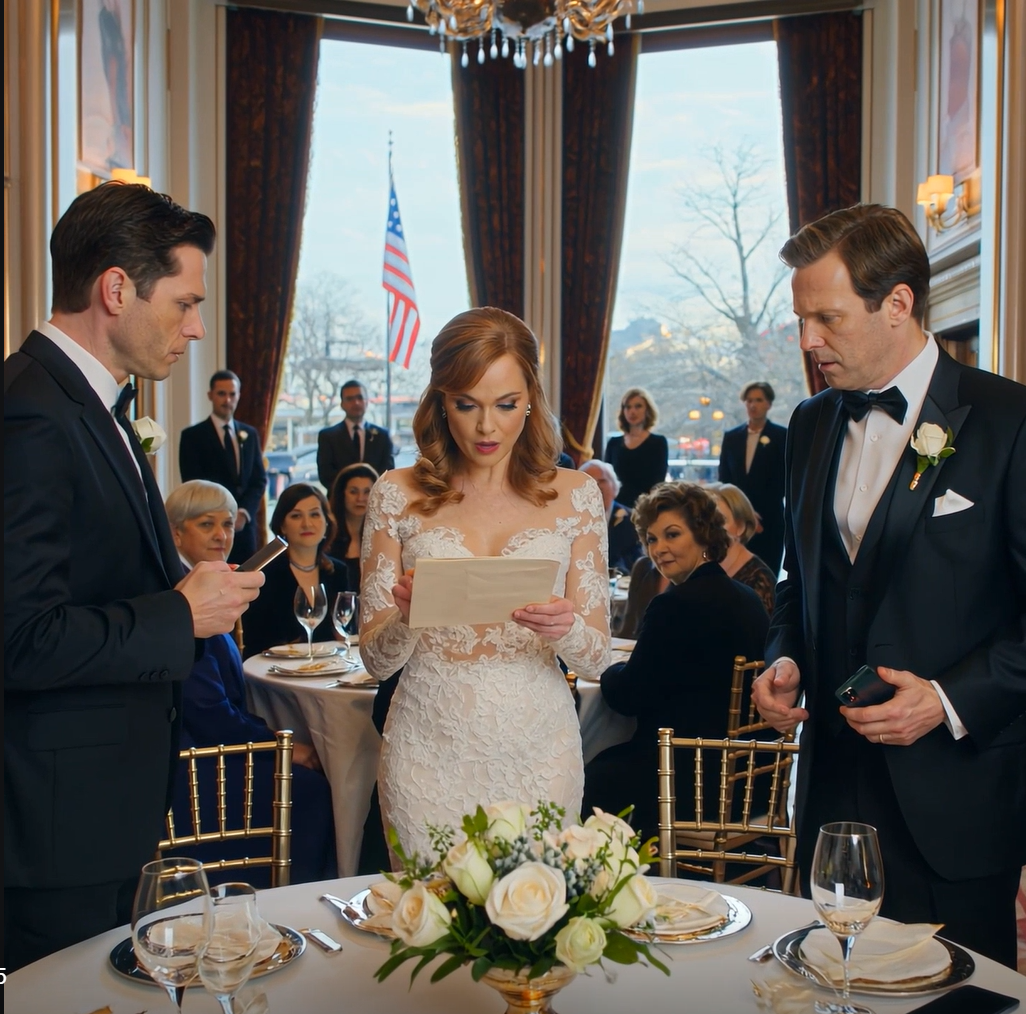
My name is Grace Mitchell and I’m 34 years old. Three months ago, I stood outside my sister’s $200,000 wedding while 500 guests celebrated inside because she decided I wasn’t successful enough to attend. The small envelope I left at the reception desk that night would cost her a $2.8 million penthouse and completely redefine what success means in our family.
Before I share what happened that night and the shocking aftermath, please take a moment to like and subscribe, but only if you genuinely connect with stories about setting boundaries with toxic family members. I’d love to know where you’re watching from and what time it is there. Drop it in the comments below.
Now, let me take you back to that evening when everything changed between my sister Victoria and me. The St. Regis Hotel on Fifth Avenue looked like something out of a fairy tale that evening. Crystal chandeliers cast golden light across the marble lobby, and I could hear the string quartet warming up in the grand ballroom. Victoria had been planning this wedding for 18 months, and from the glimpses I’d seen on Instagram, she’d spared no expense. I smoothed down my simple black cocktail dress, a $200 find from Nordstrom Rack that I’d thought was perfectly appropriate. But as I watched other guests sweep past in their designer gowns and custom tuxedos, I suddenly felt underdressed. These weren’t just wedding guests. They were Victoria’s new world. Tech executives, venture capitalists, the kind of people whose weekend homes cost more than most people’s primary residences.
“Name, please.” The receptionist behind the check-in desk wore a headset and held an iPad, her smile professionally bright.
“Grace Mitchell. I’m the bride’s sister.”
Her fingers swiped across the screen, then swiped again. Her smile faltered slightly. “Could you spell that for me?”
“G R A C E M I T C H E L L.”
I watched her face carefully as she searched through what must have been an extensive list. 500 guests, Victoria had told me—the biggest wedding the St. Regis had hosted this year. “I’m so sorry, Miss Mitchell, but I’m not seeing your name here.” She looked genuinely confused. “Perhaps you’re listed under a plus one.”
“No, I RSVPd directly 2 months ago.” I pulled out my phone, scrolling to find the confirmation email. “See, April 15th, confirmed for one.”
The receptionist bit her lip, clearly uncomfortable. Behind me, more guests were arriving, and I could feel their impatience. “Would you mind stepping aside for just a moment? Let me call the wedding coordinator.”
But I already knew something was wrong. Victoria was nothing if not meticulous. She didn’t make mistakes with lists, especially not for an event she’d been obsessing over for a year and a half. My stomach tightened as I moved to the side, watching happy couples check in and receive their table assignments. I pulled out my phone and dialed Victoria’s number. She answered on the third ring, and I could hear the excitement in her voice, the bustle of the bridal suite behind her.
“Grace, what is it? I’m about to walk down the aisle in 30 minutes.”
“Victoria, I’m at the check-in desk. They can’t find my name on the list.”
There was a pause, not the confused pause of someone trying to solve a problem, but the deliberate pause of someone choosing their words. In the background, I heard champagne glasses clinking and her bridesmaids laughing.
“Oh, that.” Her tone shifted, becoming cooler, more business-like. “Did you really think you’d be invited, Grace?”
“What?” “Victoria, I’m your sister. You sent me an invitation.”
“That was before Robert’s investors confirmed. Do you understand who’s here tonight? The founding partner of Sequoia Capital, three board members from Goldman Sachs, Robert’s entire executive team.” She lowered her voice, but I could still hear every cutting word. “I can’t have my underemployed sister mingling with these people, talking about her little real estate side hustle. It’s embarrassing.”
“Side hustle?” I kept my voice steady, though my hand trembled slightly. “I’ve been in real estate for 8 years.”
“Playing with house showings isn’t a career. Grace, look, I need you to understand this is about Robert’s future, our future. His investors need to see we run in the right circles. And frankly, a 34-year-old single woman who can barely afford her rent doesn’t fit the image we’re projecting tonight.”
I stood there for 10 seconds, maybe more, just breathing. The receptionist was pretending not to watch me. A couple in Armani evening wear brushed past, the woman’s diamonds catching the light. Somewhere in that ballroom, 500 people were about to watch my sister marry a man whose success apparently meant more than 20 years of sisterhood.
“I understand perfectly,” I finally said.
“Good. I knew you would. Maybe we can do lunch next month when things calm down.”
I hung up. My hands were surprisingly steady as I reached into my clutch and pulled out the small cream envelope I’d been carrying. Inside wasn’t the $500 cash I’d planned to slip Victoria during the reception—money I’d actually scraped together despite what she thought about my finances. Instead, there was something far more valuable, something that would have changed everything if she’d just given me 5 minutes at the microphone tonight.
I walked back to the reception desk. The coordinator had arrived looking flustered and apologetic, but I simply smiled and handed her the envelope. “Please make sure Victoria gets this. It’s her wedding gift.”
As I walked out of the Saint Regis that night, I thought about all the times Victoria had dismissed my career choice. It started 8 years ago when I left my corporate accounting job to get my real estate license. “You’re throwing away your degree,” she’d said, fresh out of her MBA program. “Real estate is for people who can’t handle real careers.”
Every family dinner became a comparison showcase. Victoria would arrive with stories about her latest marketing campaign, the Fortune 500 clients she was landing, the six-figure bonuses that came with her director title. Mom would beam, Dad would nod approvingly, and then all eyes would turn to me. “How’s the house selling going, Grace?” Mom would ask, her tone suggesting she was inquiring about a child’s lemonade stand. “It’s good,” I’d say simply, never mentioning the luxury properties I was starting to handle, the network I was building, the clients who trusted me with their biggest financial decisions. Why bother? In their eyes, I was playing pretend while Victoria was conquering the corporate world.
Last Christmas was particularly brutal. Victoria had just gotten engaged to Robert, and she couldn’t stop talking about their combined income, their 5-year plan, the investment property they were buying in the Hamptons. “You should really think about your future, Grace,” she’d said, cutting into her prime rib. “You’re not getting any younger, and freelance real estate isn’t exactly a retirement plan.”
Mom had chimed in, as she always did. “Victoria’s right, sweetheart. Maybe you could get a job at her company. I’m sure she could put in a word.”
“I’m doing fine,” I’d replied, taking another sip of wine.
“Fine isn’t thriving,” Victoria had shot back. “When Robert’s company goes public next year, we’ll be set for life. What’s your plan? Show houses until you’re 60?”
I’d wanted to tell them about the Blackstone opportunity that was already in motion, about the portfolio I was being considered to manage. But I’d learned long ago that defending myself to my family was like shouting into the wind. They’d already decided who I was, the underachieving older sister who couldn’t keep up with Victoria’s success.
What they didn’t know was that while Victoria was climbing the traditional corporate ladder, I’d been building something entirely different. Something that was about to make their definition of success look adorably small.
The second sign I’d become invisible to my family was more subtle, but somehow more painful. It wasn’t just about career comparisons anymore. It was about being erased from Victoria’s life milestones entirely. When Victoria got engaged last year, I found out through Instagram. Not a call, not a text, just a perfectly staged photo of her hand with a three-carat diamond hashtag #hesaidyes. By the time I called to congratulate her, she’d already told 50 other people.
“Oh, Grace, sorry it’s been so crazy. You know how it is.” Except I didn’t know how it was. I was 34 and single, something she never let me forget. The family group chat about wedding planning started without me. I discovered it existed only when mom accidentally texted me a screenshot meant for someone else. There was Victoria, mom, our aunts, our female cousins—everyone except me.
When I asked mom about it, she’d fumbled with an explanation. “Oh, honey, we didn’t want to make you feel bad, you know, since you’re not well, since you don’t have experience with these things.” “These things”—like I couldn’t possibly understand flower arrangements or venue selection without a ring on my finger.
Then came the bridesmaid selection. Victoria chose her three college roommates, Robert’s sister, and two cousins I barely knew she still talked to. When our aunt asked why I wasn’t in the wedding party, Victoria had laughed it off. “Grace isn’t really the bridesmaid type. She’s more comfortable behind the scenes.” Behind the scenes, invisible. The single sister who didn’t photograph well with the other couples in the wedding party.
But the final erasure, the one that should have prepared me for tonight, happened just last month. Victoria had posted a long emotional tribute to all the important women in her life who had supported her journey to the altar. She mentioned her mentor, her yoga instructor, even her hairdresser. My name was nowhere in those five paragraphs. I’d become the ghost at every family gathering, the placeholder at holiday dinners, the sister who existed only when they needed someone to feel superior to. And for too long, I’d let them. I’d smiled through the dismissals, stayed quiet through the comparisons, accepted my role as the family’s cautionary tale of what happens when you don’t follow the traditional path.
But ghosts have a funny way of haunting people when they least expect it. Standing outside the St. Regis, watching happy couples stream into my sister’s wedding, I had a choice to make. I could fight for my seat at that table, cause a scene, demand to speak to Victoria in person, maybe even convince security to let me in. The old Grace would have done exactly that, would have swallowed her pride and found a way to smooth things over, to make herself small enough to fit into whatever corner they’d allow me.
But as I stood there in my simple black dress, holding my clutch with that envelope inside, I realized something crucial. Some tables aren’t worth sitting at. If I walked away now, if I let Victoria have her perfect wedding without the embarrassment of her unsuccessful sister, I’d lose any chance of reconnecting with extended family I only saw at weddings and funerals. Our cousins from California were in there, our great aunt from Boston, who I hadn’t seen in 3 years. These were relationships that would likely never recover once word got out that I’d been excluded.
More than that, I’d be cementing my reputation as the family failure. Victoria would spin this story for years. How I couldn’t even show up to support her on her big day. How I was probably too embarrassed by my own life to face all those successful people. Every family gathering would include whispered updates about poor Grace, still single, still struggling, still trying to make it in real estate while everyone else thrived.
But the biggest loss, the one that made my chest tight, was that I’d lose any remaining claim to my place in this family. Not just Victoria’s family, but the entire Mitchell clan. I’d become the cautionary tale they’d tell their children. “Don’t end up like Aunt Grace, who chose career instability over a real job and ended up alone.”
The doorman glanced at me sympathetically. I must have looked pathetic standing there in the October cold, clearly dressed for a wedding I wasn’t attending.
“Can I call you a cab, miss?”
“No, thank you. I’m fine.”
And surprisingly, I was because losing all of those things—the family connections, the reputation, the place at their table—suddenly seemed like a small price to pay for keeping the one thing they’d been trying to take from me for years—my self-respect.
I thought about the email sitting in my drafts folder, the one I’d planned to send to Victoria tomorrow with photos from tonight congratulating her again on her happiness. I thought about the speech I’d written but would never give, about how proud I was of my little sister. I thought about all the ways I’d been prepared to celebrate her, even as she systematically erased me from her life.
My phone buzzed. A text from mom. “Where are you? Ceremony starting soon.”
I typed back, “Victoria uninvited me. I’m going home.”
Three dots appeared immediately, then disappeared, then appeared again. Finally, “there must be a misunderstanding.”
There was no misunderstanding. For the first time in years, everything was crystal clear. I turned my back on the St. Regis, on the warm light spilling from its windows, on the sound of celebration and belonging that I’d never really been part of anyway. Some bridges are meant to burn. Some doors are meant to close. And sometimes the most powerful thing you can do is simply walk away.
If you’ve ever been underestimated by your own family, you’ll understand what happens next. Before we continue, if this story resonates with you, please hit that like button. It really helps share these important messages about setting boundaries with toxic people, even when they’re related to you.
Now, let me tell you what was in that envelope I left at the reception desk and why Victoria tried to call me 47 times that night.
Back at the reception desk, I pulled the cream envelope from my clutch one last time. It was smaller than a typical wedding card, more like the kind that comes with flowers. I’d been carrying it for weeks, waiting for the perfect moment during the reception to slip it to Victoria. Maybe during our dance or when she was making rounds to thank guests.
The receptionist watched nervously as I borrowed her pen. On the front, in my neatest handwriting, I wrote, “Wedding gift for Victoria Mitchell. Please make absolutely sure she gets this,” I said, sliding it across the marble counter. “It’s important.”
“Of course, Miss Mitchell. I’ll personally deliver it to the bridal suite.”
“No.” I shook my head. “Not now. After the ceremony, during the reception, when she’s surrounded by all those important investors and executives she mentioned. The timing matters.”
The receptionist nodded, though she looked confused. I didn’t blame her. What kind of sister leaves a gift and disappears from her own sister’s wedding? The kind who’s about to change the game entirely.
I walked through those massive doors into the October night. The city was alive around me. Taxis honking, people laughing on their way to dinner, the endless energy of Manhattan on a Saturday night. Inside the St. Regis, 500 people were about to watch my sister marry into what she considered success. They’d toast with champagne that cost more than my monthly subway pass. They’d dance until midnight in a ballroom that looked like Versailles. And I’d be sitting in my favorite restaurant three blocks away eating pasta arrabbiata and drinking a perfectly reasonable glass of Chianti alone.
As I walked, my phone stayed silent. The ceremony must have started. I imagined Victoria floating down the aisle in her $30,000 dress. Robert waiting at the altar in his custom Tom Ford tuxedo, their venture capitalist friends dabbing at tears while calculating the couple’s combined net worth. None of them knew what was waiting in that envelope. None of them could imagine that the absent sister, the family disappointment, the one whose name had been literally erased from the guest list, had left behind something that would redefine every assumption they’d made about success and failure.
30 minutes. That’s how long I estimated it would take for Victoria to open my gift once the reception started. 30 minutes before my phone would explode with calls I’d never answer. I turned my phone to silent and kept walking.
I was halfway through my pasta when it started. My phone, face down on the table, began to glow like a strobe light. The vibrations were so intense that it actually moved across the table. I flipped it over. The screen was chaos. 47 missed calls from Victoria. 23 text messages, each more frantic than the last. Grace, what is this? Is this real? Call me now. Please, this can’t be real. Where are you, Grace? Please. I’m sorry. Okay, just call me. 15 messages from mom. What did you do? Victoria is having a breakdown. This is her wedding day. How could you do this to your sister? Answer your phone. Eight calls from Robert. I’d never even had his number saved, but there it was, lighting up my screen again and again. Three calls from numbers I didn’t recognize. Probably Victoria borrowing other people’s phones when I didn’t answer hers.
The restaurant was small and intimate, the kind of place where everyone can hear your phone buzzing. Other diners were starting to stare. The waiter approached, concerned. “Is everything all right, miss?”
“Perfect,” I said, and I meant it. I held down the power button until the screen went black. “Could I get another glass of wine?”
For the first time in years, maybe the first time in my adult life, I felt completely in control. Not because I’d hurt Victoria—that wasn’t the point, and never had been—but because I’d finally stopped accepting the role they’d assigned me. I’d stopped being the family’s designated failure. The cautionary tale, the one they could always point to and say, “At least we’re not Grace.”
The truth was, I’d been keeping secrets for months. Not malicious secrets, not the kind meant to hurt anyone, but the kind you hold close when you’re not sure who you can trust with your success. The email had come through on a Tuesday morning six months ago while I was showing a cramped two-bedroom in Queens to a young couple. My phone buzzed with a notification from an address I didn’t recognize—jtompson@blackstone.com. I almost deleted it, thinking it was spam. Real estate agents get all kinds of bogus investment offers. But something made me open it.
Dear Ms. Mitchell, following your exceptional handling of the Riverside portfolio disposition and your innovative approach to our Chelsea development project, Blackstone Real Estate Partners would like to discuss a senior position within our New York office.
I read it three times, standing in that musty Queens apartment while my clients debated square footage. Blackstone—the largest real estate investment firm in the world, managing over $300 billion in assets. They wanted me.
The interviews were intense. Six rounds over three months, flying to their offices in Manhattan, meeting with executives whose names I’d only read in the Wall Street Journal. They grilled me on market analysis, portfolio management, international real estate trends—everything I’d taught myself over eight years of what my family called playing with houses.
The final offer had come just one week before Victoria’s wedding: Senior Vice President, Real Estate Acquisitions, managing a $500 million portfolio focused on luxury residential properties in the tri-state area. The salary was more than Victoria and Robert’s combined income. The signing bonus alone was more than I’d made in the past two years.
But there was something else. Something that sat in my safe deposit box at Chase Bank. Something I’d been planning to reveal at the wedding in the most gracious way possible.
Six months ago, right after that first Blackstone interview, I’d done something impulsive. There was a penthouse on the Upper East Side, a three-bedroom with floor-to-ceiling windows overlooking Central Park. It was the exact apartment Victoria had dragged me to see two years ago, back when she was window-shopping for her future. She’d taken photos in every room, posted them on her vision board, told everyone it was her dream home for when Robert’s company went public.
The owner was going through a divorce and needed a quick cash sale. With my real estate connections and confidence that Blackstone would come through, I made an offer. Cash. Closed in thirty days.
The key to that $2.8 million penthouse was supposed to be my wedding gift to Victoria. I planned to stand up during the toasts, tell everyone how proud I was of my little sister, and hand her the key in front of all those important people she wanted to impress. It would have been perfect: the underestimated sister giving the ultimate gift, proving that success comes in many forms.
But that key was still in my safe deposit box. And after tonight, it was going to stay there. Or rather, it was going to find a much better home.
I already had the donation papers drawn up for the Women’s Shelter of New York. They could sell it or use it for transitional housing. Either way, it would actually help people who deserved it. Victoria would find out about the penthouse eventually. She’d probably even recognize the address when she saw it in the donation announcement, but by then it would be too late. Some gifts, once refused, can’t be taken back.
By Sunday morning, the voicemails had evolved from angry to desperate. I finally turned my phone back on to find 127 missed calls and a voicemail box so full it had stopped accepting new messages.
Victoria’s voice in the first message was shrill, disbelieving. “Grace, what kind of joke is this? Blackstone—please call me back and explain.”
By the tenth message, she was crying. “I googled it, Grace. Oh my God, I googled it. Senior Vice President—is this real? Please, please call me. I’m so sorry about yesterday. I didn’t mean it.”
Robert’s message was more measured, but equally shocked. “Grace, Victoria is having a complete meltdown. Half our investors are asking about you. Apparently three of them know you professionally. Please call us back.”
But it was Mom’s final voicemail that really captured the family’s panic. “Grace Elizabeth Mitchell, you answer this phone right now. How could you hide this from us? From your own family? Victoria says you’re some kind of executive at Blackstone—that you manage hundreds of millions of dollars. This can’t be true. You sell houses. You can barely pay your rent. What is going on?”
Barely pay my rent. Even now, even with the evidence literally in Victoria’s hands, they couldn’t quite believe it.
The business card I’d left in that envelope was elegant in its simplicity:
Grace Mitchell
Senior Vice President, Real Estate Acquisitions
Blackstone Real Estate Partners
345 Park Avenue • New York, NY
On the back, in my handwriting: I was going to announce this at your reception and give you the keys to the Riverside Penthouse, the one you loved. But it seems successful people don’t belong at your wedding. Congratulations on your marriage. The penthouse will be donated to charity in your name.
According to the text from my cousin Sarah, the only family member who’d reached out with congratulations rather than demands, Victoria had opened the envelope during the reception’s cocktail hour, surrounded by at least fifty guests. She’d laughed at first, thinking it was a prank. Then someone had pulled up Blackstone’s website on their phone, found the leadership page that had been updated just three days ago with my photo and bio.
The reception had essentially stopped. Three of Robert’s investors had immediately recognized my name. I’d been managing their personal real estate portfolios for the past year, though they’d known me only through email and phone calls. The founding partner of Sequoia Capital—the one Victoria had been so desperate to impress—had tried to poach me for his private family office just last month.
Every assumption, every dismissive comment, every moment they treated me as the family failure—it all came crashing down in front of the exact audience Victoria had been trying to impress. The Google searches must have been frantic. I could picture Victoria still in her wedding dress, huddled with Robert and her bridesmaids around someone’s iPhone, typing my name into search bar after search bar.
The first result would have been Blackstone’s official announcement from three days ago: Blackstone Real Estate Partners appoints Grace Mitchell as Senior Vice President of Real Estate Acquisitions. Then the details that would have made their jaws drop: Mitchell will oversee a $500 million portfolio of luxury residential properties across the New York metropolitan area. She brings eight years of experience in high-end real estate transactions, including the record-breaking Riverside portfolio disposition that generated a 47% return for investors. The Wall Street Journal mention from last month, before my official appointment: Grace Mitchell, the independent broker who orchestrated the $127 million Chelsea development deal, represents a new generation of real estate professionals disrupting traditional models. The Real Deal’s profile from six months ago: The Quiet Power Broker—How Grace Mitchell Became the Go-To for Ultra-High-Net-Worth Real Estate. And the number that would have really stunned them was right there on Blackstone’s website: Assets under management—$1 trillion. My division alone—$15 billion.
Sarah’s text included a photo from the reception: Victoria holding my business card, her face a mixture of shock and devastation, surrounded by guests who were all staring at their phones. Robert was beside her, his hand on her back, but his expression was equally stunned. In the background, I could see some of his investors huddled together, clearly discussing this revelation. “Everyone’s asking where you are,” Sarah had written. “Three of Robert’s investors want your contact info. They said they’ve been trying to get a meeting with you for months. Victoria had to admit she doesn’t even have your work email.”
She didn’t have my work email. She didn’t know where my office was. She didn’t know anything about my professional life because she’d never asked. For years, every conversation had been about her achievements, her milestones, her success. The moment I’d try to share anything about my work, she’d wave it off. “Oh, you’re still doing the house thing?” The house thing—that’s what she’d called the career that had just made me one of the youngest SVPs in Blackstone’s history.
My phone buzzed with another text from Sarah. “Victoria just announced she needs to leave her own reception early. She looks sick. Your mom is telling everyone you must have made a mistake on the business card.”
A mistake. Because even with all the evidence, they still couldn’t quite accept that the family failure had become more successful than any of them. Victoria spent her entire wedding reception trying to reach me instead of enjoying her big day. But the real shock came three days later when she discovered what I’d done with her dream penthouse.
If you’re finding value in this story about setting boundaries with toxic family members, please subscribe and hit the bell icon so you don’t miss similar stories. Also, I’d love to hear from you. Have you ever had to cut off a family member who didn’t value you? Share your experience in the comments below.
Now, let me tell you about the emergency family meeting that changed everything.
Three days after the wedding, my phone rang with a call from Dad. Not Victoria, not Mom—Dad, who usually stayed out of family drama. “Grace, we need you at the house. Family meeting tonight at seven.”
“I’m not coming, Dad.”
“Your sister is devastated. Your mother is beside herself. The least you can do is explain yourself.”
“Explain what? That I got a job promotion? That I’m successful? What exactly needs explaining?”
He sighed heavily. “Just please—one hour. We need to understand what happened.”
I almost felt bad for him. Almost. “They can have their meeting. I won’t be there.”
The family meeting happened anyway. Sarah, bless her, gave me the play-by-play through texts. The entire Mitchell clan had assembled in my parents’ living room. Mom, Dad, Victoria, and Robert; three aunts, two uncles, and several cousins. The same people who’d been at the wedding, who’d witnessed Victoria’s meltdown over my business card.
According to Sarah, Victoria had stood in front of everyone, still in her honeymoon-canceled casual wear, and read my business card out loud like it was evidence in a trial. “Grace Mitchell, Senior Vice President, Real Estate Acquisitions, Blackstone Real Estate Partners.” Her voice had cracked on the word Senior.
Then came the questions from the relatives. How long has she been working there? Why didn’t anyone know? Is this why she wasn’t at the wedding? Wait—Victoria, you uninvited your own sister?
That last question had come from Aunt Patricia, Mom’s sister, who’d driven down from Boston specifically for the wedding. The room had gone silent. Victoria had tried to explain, justify, minimize. “She wasn’t uninvited exactly. There was a mix-up with the list and honestly I thought she’d be uncomfortable around Robert’s business associates. I was trying to protect her.”
“Protect her?” Uncle James had laughed. Actually laughed. “Your sister is an SVP at Blackstone and you were trying to protect her from some startup investors?”
The truth had started to unravel then. How Victoria had deliberately removed my name. How she’d called me an embarrassment. How she’d said I didn’t belong with successful people.
Robert had tried to salvage the situation. “We didn’t know about her position. If we had known—”
“You would have invited her,” Aunt Patricia had interrupted. “You only want Grace around if she’s successful enough? What kind of family operates like that?”
Mom had attempted damage control. “Grace should have told us about her job. We’re her family. Why would she hide this?”
Sarah had spoken up then. “Maybe because you’ve spent eight years telling her she was a failure. Just a thought.”
The meeting had devolved from there—relatives taking sides, Victoria crying, Robert making excuses, Mom insisting this was all a misunderstanding—and everyone, everyone asking the same question: Where was Grace?
I was at my apartment reviewing contracts for a new acquisition, living my life exactly as I had been for months—successfully, quietly, and without their approval.
The penthouse revelation came the next morning, when Victoria did what she should have done months ago: she actually paid attention to my life. Sarah told me Victoria had spent hours going through my social media looking for clues she’d missed. She found the photo I’d posted six months ago, standing in front of a building on the Upper East Side with the caption, “Big Moves coming.” Victoria had liked it at the time without even reading it, probably scrolling through while half paying attention. But now she recognized the building. It was the same one where she’d dragged me two years ago to look at her dream home, a three-bedroom penthouse with Central Park views that she’d talked about incessantly. She’d even made it the wallpaper on her laptop.
“That’s the Riverside building,” she’d apparently whispered to Robert. “That’s my penthouse.”
My penthouse. She still called it hers even though she’d never made an offer, never had the money, never did anything but dream and post photos. But in her mind, she’d claimed it.
The real estate records were public. It took Robert less than five minutes to pull up the sale from six months ago: Unit 47B sold for $2.8 million, cash purchase. Buyer: Grace Mitchell.
Victoria’s call came immediately. For once, I answered.
“You bought it?” Her voice was barely a whisper. “You actually bought my dream apartment?”
“I bought an apartment,” I corrected. “It became yours only in your imagination.”
“But—But you knew I wanted it. You knew it was my dream home.”
“And I was going to give it to you. The keys were going to be my wedding gift. I had a whole speech planned about how proud I was of my little sister, how she deserved her dream home. I was going to hand you the keys in front of all those important investors you mentioned.”
The silence stretched so long I thought she’d hung up.
“You were going to give me a $3 million apartment?”
“Two-point-eight. And yes. But then you decided I wasn’t successful enough to attend your wedding, so I decided you weren’t grateful enough to receive my gift.”
“Grace, please. I’m sorry. I was wrong. I was so, so wrong. Can we talk about this? Can we fix this?”
“Some things can’t be fixed, Victoria. You didn’t just uninvite me from your wedding. You erased me from your life because you thought I was beneath you. And you did it publicly, cruelly, on what should have been a day of celebration.”
“I’ll do anything, please. Robert and I—we’ve been saving for years for a place like that. It would change our lives.”
I thought about all the times my success could have changed my life in their eyes if they’d only bothered to look. “It’s already changing lives,” I said. “Just not yours.”
The donation paperwork had been signed that very morning. I’d met with the director of the Women’s Shelter of New York at 9:00 a.m. sharp in the conference room of my attorney’s office in Midtown.
“Miss Mitchell, I need to make sure you understand,” the director, Maria Santos, had said, her eyes wide. “This is a $2.8 million property. You’re certain you want to donate it entirely?”
“Completely certain. I want it to house women who are starting over, who’ve been told they’re not enough, who need a chance to prove everyone wrong.”
The tax benefits were substantial—a $2.8 million charitable deduction that my accountant was thrilled about. But more importantly, the penthouse would be sold and the proceeds would fund the shelter’s operations for the next five years. Or if they chose, they could convert it into transitional housing for twelve women at a time.
I’d had my attorney send a copy of the donation receipt to Victoria’s email that afternoon. The subject line was simple: Your wedding gift has found a better home. The attachment showed everything—the deed transfer, the donation valuation, the tax documents, and a letter from the shelter thanking me for the most generous single donation in our organization’s history.
Victoria called seventeen times in the next hour. Robert called ten. Mom called twenty-three. I answered none of them.
Instead, I was sitting in my new office at Blackstone—corner unit, forty-second floor, overlooking Park Avenue. My assistant James knocked and entered with my afternoon coffee. “Miss Mitchell, you have three messages from a Robert Chen insisting it’s urgent, and someone named Victoria has called reception four times trying to get past security.”
“Thank you, James. Please add them to the no-call list.”
He nodded without question. That’s what I loved about Blackstone. Professional boundaries were sacred here.
My phone buzzed with a text from Sarah. “Victoria just told everyone you gave away her apartment to charity. Uncle James said it wasn’t her apartment if she didn’t own it. She ran out crying.”
I set my phone aside and turned back to my computer. I had a portfolio to manage, deals to close, a career to build—the same career they’d dismissed as playing with houses for eight years. The penthouse was gone, donated, making a real difference in the world. And Victoria—she was learning what it felt like to have something you thought was yours disappear in an instant. The difference was she’d only lost a dream. When she’d uninvited me from her wedding, she tried to take my dignity. One of those things could be replaced. The other was priceless.




Leave a Reply